
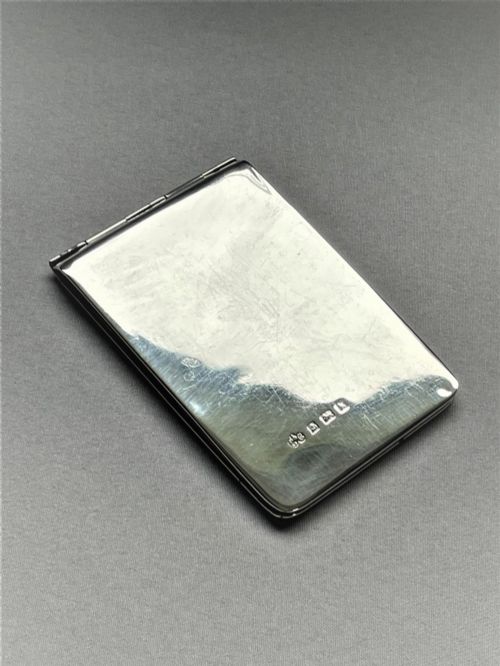
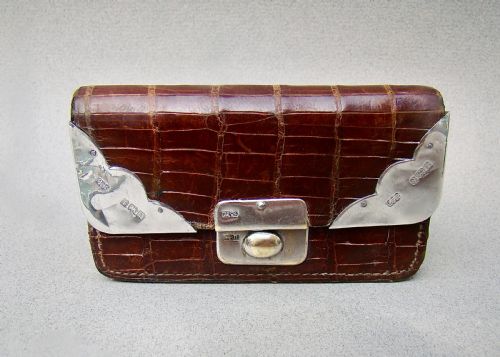
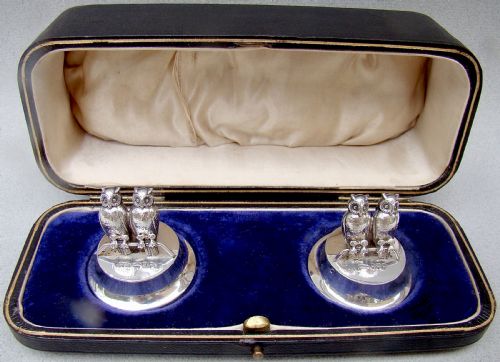
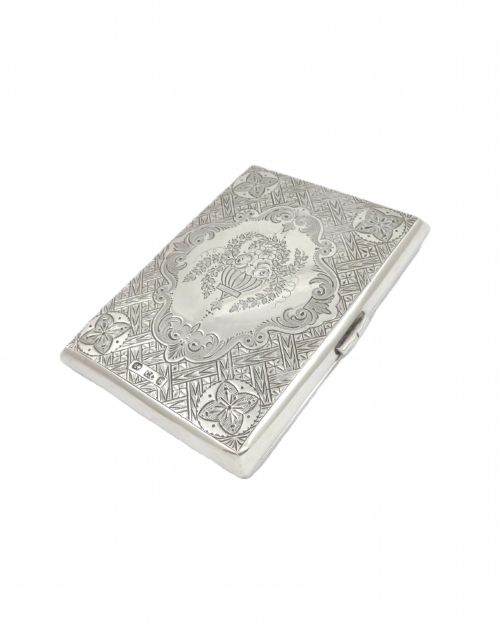



Hallmarked Silver Card Case
A hallmarked silver card case slips into a pocket with the quiet weight of late Victorian and Edwardian society.
Hallmarked Silver Card Case
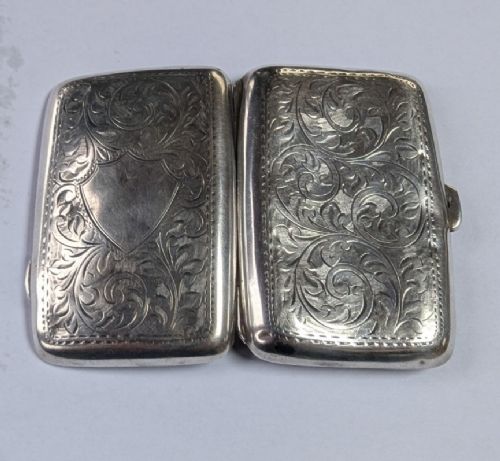
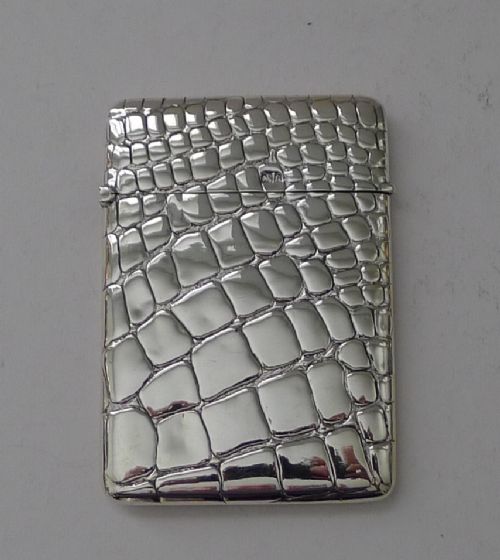
A hallmarked silver card case is a pocket accessory designed to hold visiting cards, calling cards, or small personal papers, originating primarily from the Victorian and Edwardian eras. Buyers searching for this phrase encounter a variety of forms including slim sliding or folding cases, envelope designs, and more complex compendiums incorporating leather, silk, or stamp compartments.
Most examples originate from British assay offices, carrying full hallmarks that anchor their date and maker. Edwardian and Victorian specimens form the backbone of the selection, reflecting a period when the exchange of calling cards governed social interaction.
Craftsmanship and Preservation
The distinction between ordinary production and finer work lies in the crispness of the engraving and the structural integrity of the hinges and spring mechanisms. Superior examples retain deep, legible hallmarks and precise engine-turned patterns that have not been softened by excessive polishing over the decades.
Internal appointments also dictate quality, separating basic metal sleeves from pieces lined in rich silk, fitted with compartments for stamps or pencils, or combined with crocodile skin and silver gilt. The weight of the silver itself shifts the balance, with heavier gauge metal offering greater resistance to denting.
Hallmarked Silver Card Case Retail Price Guide 2026
Typical asking prices for hallmarked silver card case among the pieces listed under this phrase on Sellingantiques today, from the lower quarter to the upper quarter. They describe what is for sale here now, not the wider market.
Charles Penny Brown·Levi & Lalaman·Wright & Davies·Ludwig Krumm·Colen Hewer Cheshire·Henry Matthews·Adie & Lovekin Ltd·Nathaniel Mills·Sampson Mordan & Co
The Hallmarked Silver Card Case Glossary
- Hallmark
- Official stamps struck into precious metals to guarantee purity, showing the maker, assay office, and year of testing. These marks are essential for dating British silver accurately.
- Sterling silver
- An alloy of silver containing 92.5 percent pure silver and 7.5 percent other metals, usually copper, ensuring durability for pocket items. This is the standard metal composition found across these pieces.
- Bright-cut engraving
- A surface decoration technique using faceted cuts to reflect light from the metal. It creates sharp, geometric patterns common on Victorian card cases.
- Engine-turning
- A mechanical method of engraving precise, intricate geometric patterns onto metal surfaces using a lathe. This finish reduces the visibility of fingerprints and minor scratches.
- Silver gilt
- Sterling silver that has been coated with a thin layer of gold on the interior or exterior surfaces. This treatment provides a warm contrast to the polished silver outside.
- Aide-memoire
- A small notebook or memorandum pad combined with a card case and pencil, designed for recording social engagements. These multi-functional pieces often feature attached leather or silk linings.
Hallmarked Silver Card Case: Frequently Asked Questions
What is a hallmarked silver card case?
A hallmarked silver card case is a small protective container made of sterling silver, used historically to carry visiting or calling cards during the Victorian and Edwardian periods. These portable accessories protected delicate paper cards from bending or soiling in pockets and reticules.
Craftsmen decorated the exterior surfaces with hand engraving, repoussé motifs, or engine-turning, while interiors frequently featured silk linings, leather dividers, or compartments for stamps.
How were these cases used?
Victorians and Edwardians used these cases to store calling cards when visiting acquaintances, leaving a clean card behind if the host was not home. The cases served as portable statements of personal taste and social standing.
Many designs doubled as dance cards, stamp holders, or cigarette cases, adapting to the varied social engagements of the upper and middle classes.
How do I date a silver card case?
Dating relies primarily on the stamped hallmarks, which include a date letter corresponding to the specific year and assay office of testing, such as Birmingham or London. Stylistic clues like Art Nouveau curves or Victorian bright-cut engraving also narrow down the era.
Comparing the maker's mark against historical records confirms the exact window of production, typically ranging from the mid-nineteenth century to the early twentieth century.
Can I still use a vintage card case today?
These cases remain functional for modern business cards, credit cards, or folded notes, provided the dimensions match standard sizes. Their slim profiles fit easily into modern pockets or bags.
Careful handling protects the original hinges and delicate internal silk or leather linings from unnecessary wear.