




Antique Silver Calling Card Case
An antique silver calling card case is a pocket-sized repository for social visits, offering collectors tactile pieces of Victorian and Edwardian etiquette.
What an antique silver calling card case is
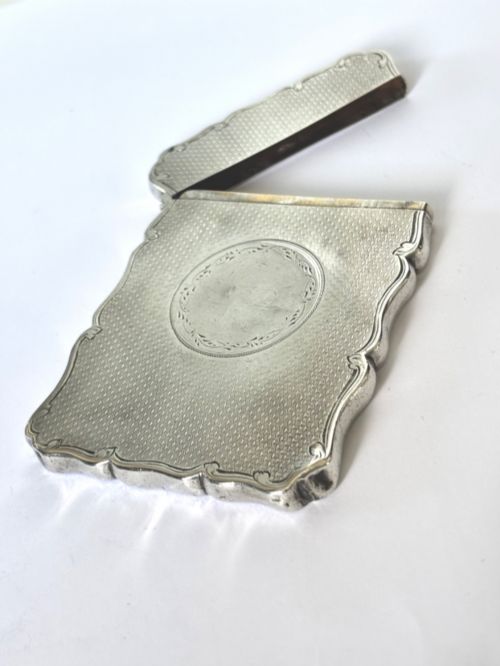
An antique silver calling card case is a compact pocket container designed to hold visiting cards for social exchanges during the nineteenth and early twentieth centuries. These pieces reflect the rigid formalities of Victorian and Edwardian society where leaving a card was an essential ritual of polite intercourse.
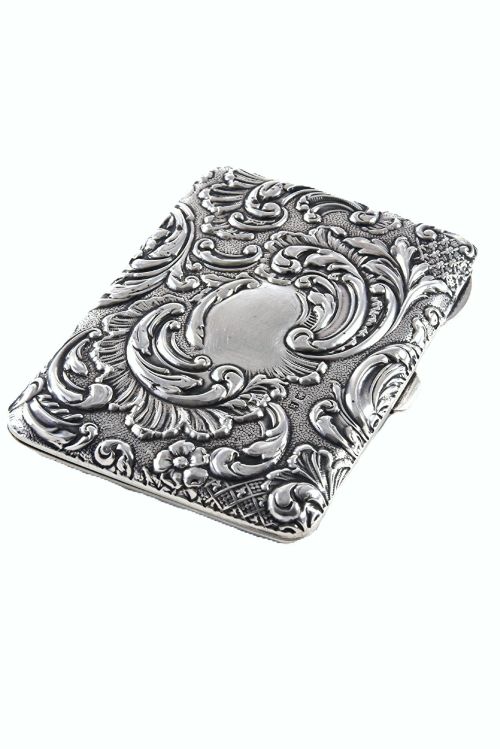
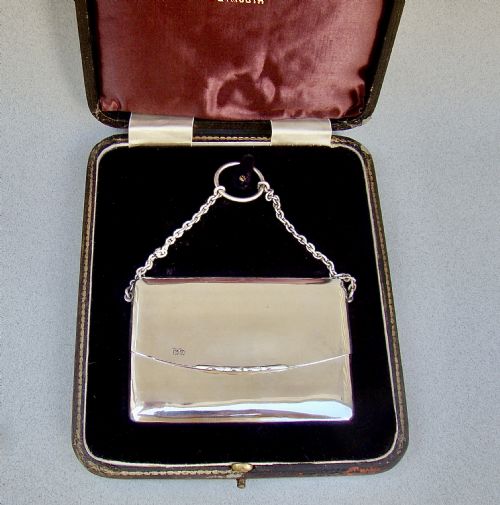
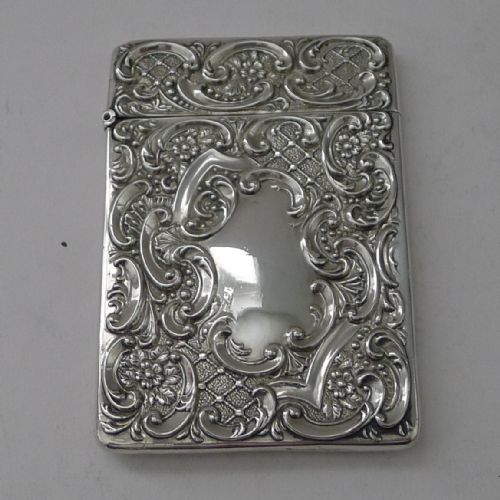
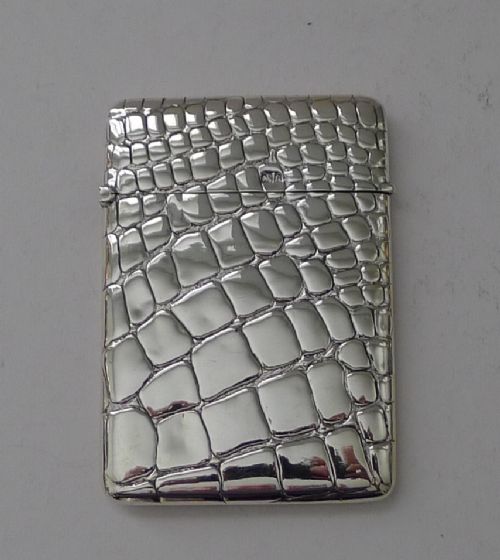
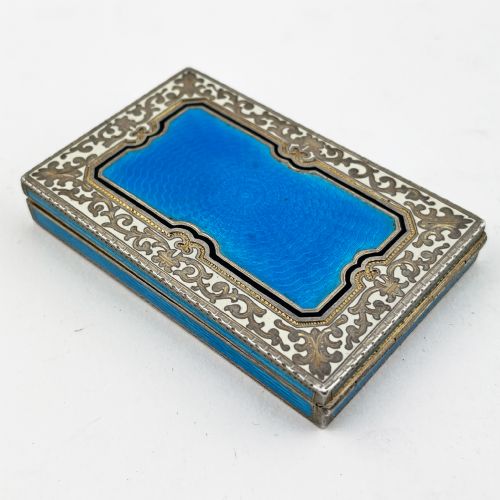
Buyers browsing this selection will encounter varied forms ranging from plain polished sterling silver to highly ornate embossed designs. The examples found here span the Victorian era, the Edwardian period, and the early twentieth century, showing standard regional British hallmarks alongside international export work.
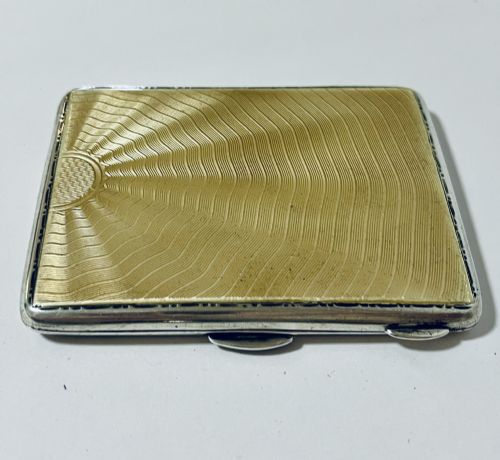
The objects take the form of small rectangular boxes with hinged lids, shaped precisely to fit paper calling cards without bending them. Collectors frequently meet Victorian and Edwardian specimens, with occasional pieces from specific makers such as Nathaniel Mills appearing in the record.
How they were made
Sterling silver forms the primary material for these objects, providing a durable yet malleable substance for detailed surface work. Silversmiths shaped the metal sheets through pressing, folding, and joining, fitting hinged lids closely to protect the paper contents within.
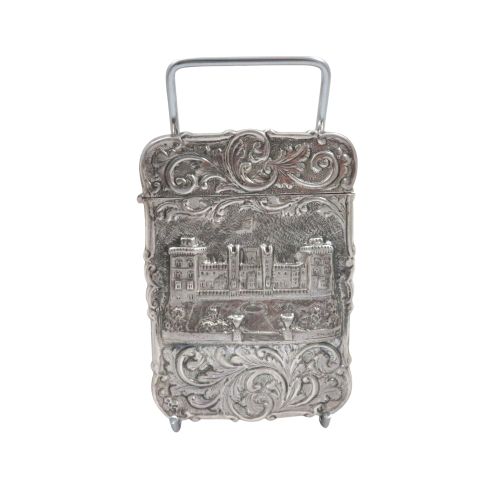
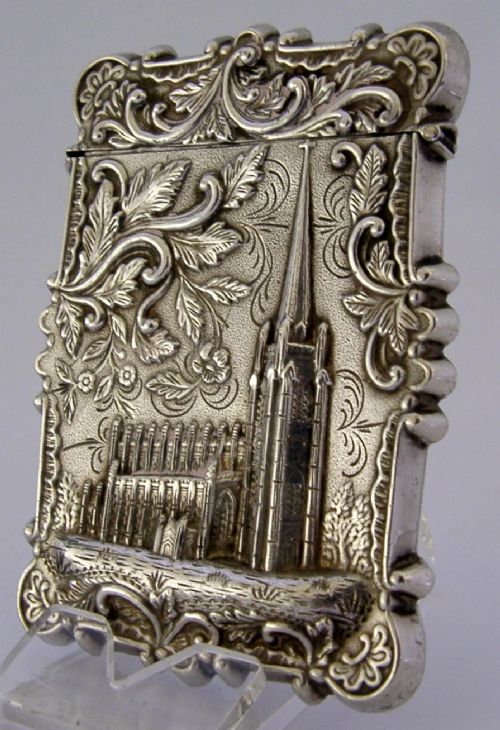
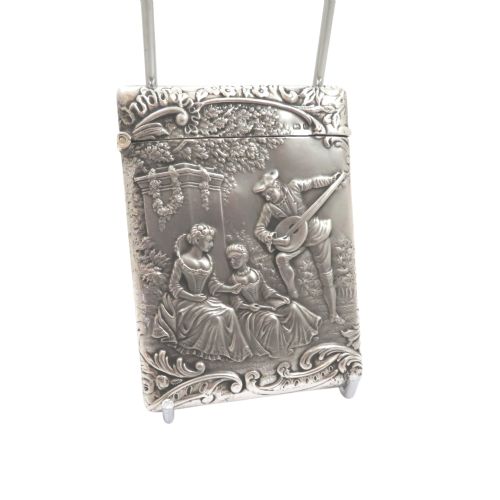
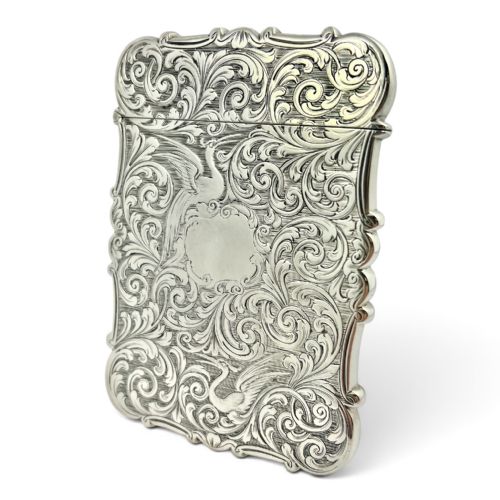
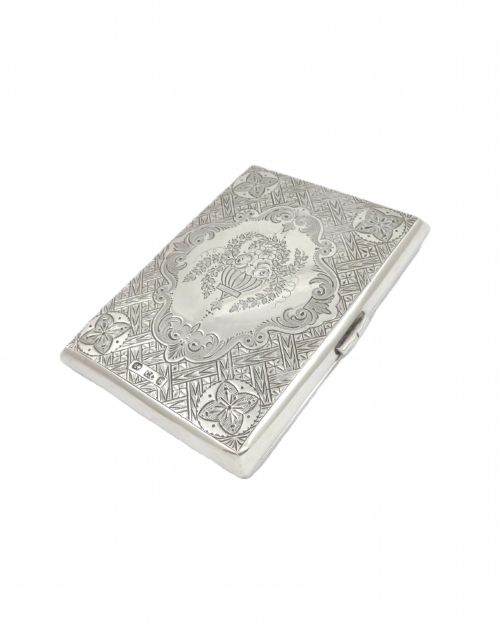
Decoration on these containers relied heavily on embossing, chasing, and engraving techniques applied directly to the sterling silver surface. Scenes such as musical lessons, birds, butterflies, and architectural landmarks were worked into the metal to create deeply textured relief designs.
Listings for this phrase include pieces from the Victorian and Edwardian periods, executed entirely in sterling silver.
What varies in quality
The distinction between standard examples and superior pieces rests on the depth and clarity of the chased or engraved decoration. Finer specimens display crisp architectural details or intricate natural motifs like birds and flowers, whereas simpler items rely on plain polished surfaces.
Attribution to notable makers or specific historic locations elevates certain items above anonymous production. Pieces associated with prominent silversmiths or featuring distinct pictorial scenes command greater attention from collectors who value documented provenance and artistic execution.
Nathaniel Mills·Joseph Gloster
The Antique Silver Calling Card Case Glossary
- Sterling silver
- A standard alloy consisting of 92.5 percent silver by mass, with the remainder usually copper. This composition provides the necessary durability for pocket items while maintaining a bright metallic lustre.
- Calling card
- A small printed card used during the nineteenth century to announce a social visit. These cards required slim protective containers to prevent damage while carried in pockets or reticules.
- Hallmark
- An official stamp applied to precious metals indicating standard purity and origin. British pieces typically show assay office marks, date letters, and maker's initials.
- Castle top
- A specific style of card case featuring a detailed embossed depiction of a famous building or stately home on the lid. These pictorial scenes represent some of the most sought-after examples in nineteenth-century silverwork.
- Chasing
- A metalworking technique where the smith pushes metal inward from the front using punches and a hammer to create a raised design. This method defines the textured pictorial scenes found on many period card cases.
Frequently Asked Questions
What is a calling card case?
A calling card case is a small, rigid pocket container created to hold visiting cards during the Victorian and Edwardian eras. They protected paper cards from bending while being carried to social engagements.
These pieces reflect strict period etiquette where visitors left cards to signal their presence. Their slim proportions allowed them to fit easily into pockets or small handbags.
How do I date a silver case?
Dating these objects relies primarily on the stamped hallmarks found on the sterling silver metal. Assay office marks and date letters provide precise years of manufacture for British items.
Stylistic cues such as Art Nouveau curves or Victorian floral motifs also offer broad chronological context. Comparing decorative techniques helps narrow down the era when hallmarks are rubbed.
How were these cases used?
Owners carried these containers when making formal social calls to friends, acquaintances, or prospective business contacts. Upon arrival, the visitor presented a card to the household servant to announce their visit.
If the host was not at home, the card was left on a hall tray as proof of the call. The sturdy silver construction ensured the delicate paper cards remained crisp throughout the journey.