






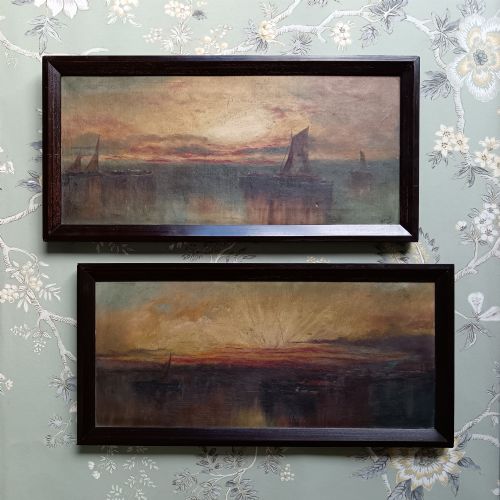
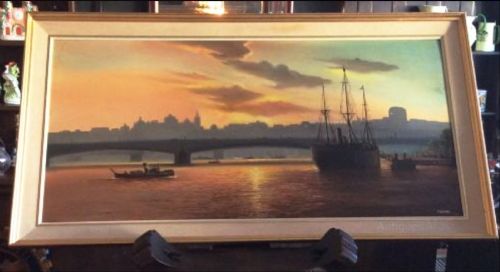

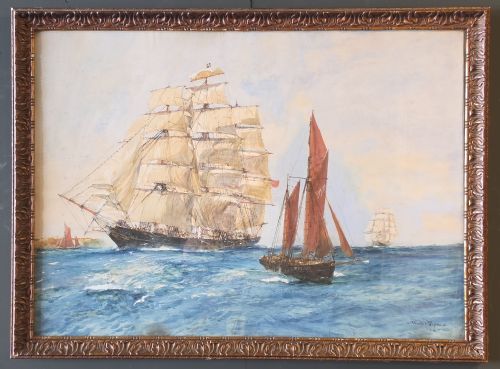
Antique Seascape Artwork
Antique seascape artwork captures the power and movement of the ocean through nineteenth and twentieth century paintings.
Antique Seascape Artwork
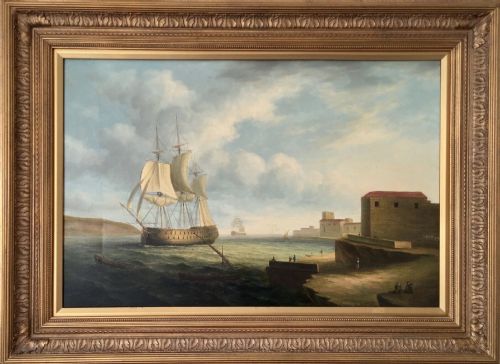
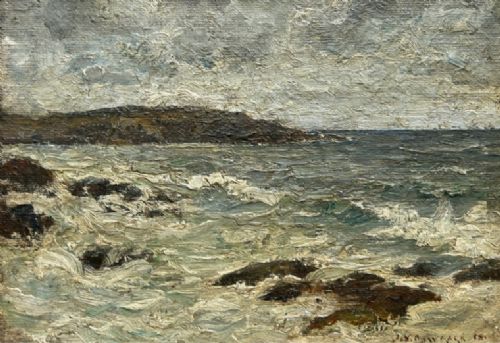
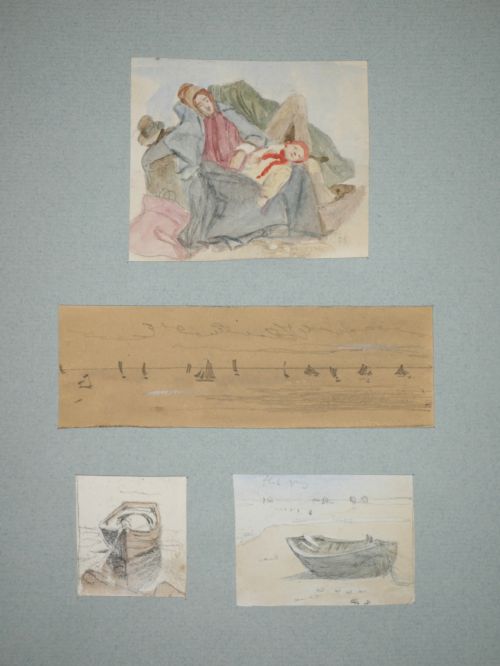
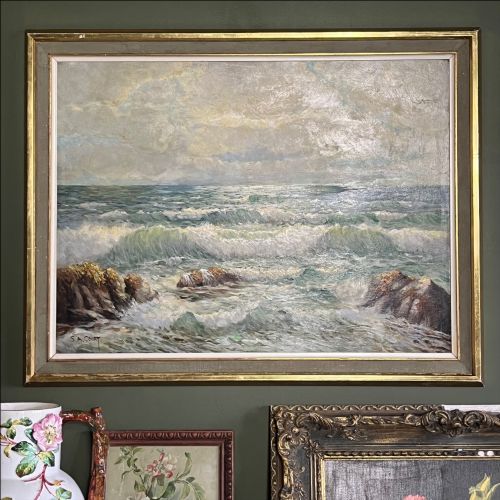
Buyers seeking antique seascape artwork encounter oil paintings and watercolours depicting coastal scenes, harbours, and ships at sea.
The pieces on this page span the Victorian and Edwardian eras, alongside works from the early twentieth century.
Subjects range from calm river canals and fishing boats to dramatic storms and warships in rough waters.
Materials and Construction
Artists painted primarily with oil on canvas or panel, or applied watercolour and gouache onto paper and board.
Many works retain their original gilt wood frames, adding depth and structure to the paper or canvas supports.
Materials recorded include canvas, wood panels, paper, and decorative gilt wood frames.
Assessing Quality in Marine Art
Quality rests in the artist's ability to render light, water movement, and atmospheric conditions convincingly.
Finely detailed rigging on ships and expressive brushwork in stormy seas distinguish superior works from standard decorative pieces.
James Hardy·James Orrock·Eugène-Louis Gillot·William McAlpine·Charles Edward Dixon·William Banks Fortescue·John Rose Miles·James Kay·Frank Watson Wood·Bonaventura Peeters·Frank William Scarbrough·Francis Moltino·Hector Caffieri·Richard Henry Wright·Bernard Benedict Hemy·Thomas Creswick·Willem Bos·John Wilson Carmichael
The Antique Seascape Artwork Glossary
- Oil on Canvas
- Pigment mixed with drying oil applied to a woven fabric stretched across a wooden frame. This medium allowed artists to build rich textures and deep colours.
- Watercolour
- Paint made of water-soluble pigments suspended in a water-based solution, typically painted on paper. It creates luminous, transparent effects.
- Impasto
- Paint applied thickly to a surface, leaving brush or palette knife marks visible. This technique adds tactile relief and energy to crashing waves.
- Gilt Wood
- Wood carved and coated with gold leaf or a gold-coloured finish. It provides a traditional ornamental border for framed paintings.
- Gouache
- An opaque water-based paint that includes a white pigment filler, resulting in a denser and flatter finish than traditional watercolour.
Antique Seascape Artwork: Frequently Asked Questions
How do I identify a Victorian seascape painting?
Victorian seascapes often feature dramatic maritime battles, merchant shipping, or coastal fishing vessels rendered in rich oil or detailed watercolour. The framing and signature styles from this period typically align with nineteenth-century academic standards.
Examining the canvas preparation and stretcher bars can also help confirm the age of the piece.
What subjects are common in antique marine art?
Common subjects include bustling harbour scenes, tranquil river canals, fishing boats on beaches, and dramatic shipwrecks in rough seas. Naval vessels and historical warships also feature prominently in works from the nineteenth and early twentieth centuries.
Artists frequently documented specific ports, coastal towns, and famous naval engagements.
How should I care for antique oil paintings?
Keep oil paintings away from direct sunlight and fluctuating humidity to prevent the canvas from sagging and the paint from cracking. Dust the surface gently with a soft, dry brush without applying pressure.
Professional cleaning should be left to conservators to avoid damaging the original varnish.
Where should I hang maritime watercolours?
Watercolours on paper are highly sensitive to light and should be displayed on interior walls away from direct sunlight. Framing with UV-filtering glass provides essential protection against fading.
Maintain stable room temperatures to preserve both the paper support and the surrounding mount.