




Antique Satinwood Server
An antique satinwood server brings pale timber and delicate inlay into a dining room or hall, offering surface space and storage.
Antique Satinwood Server
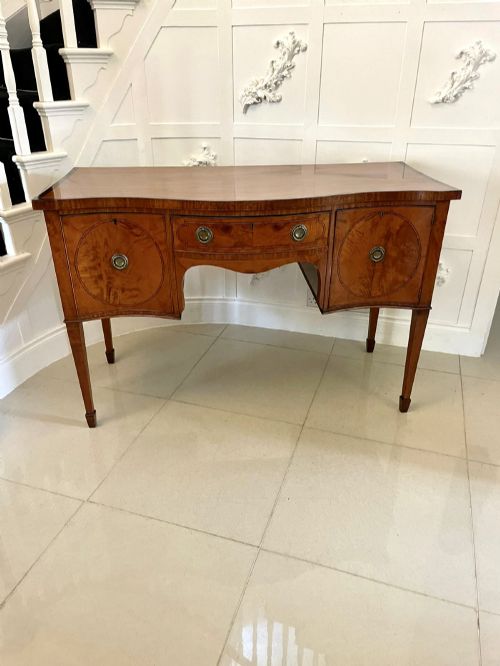
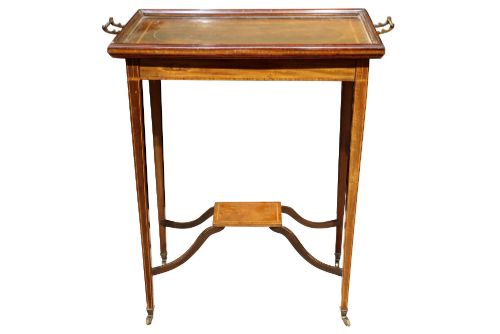
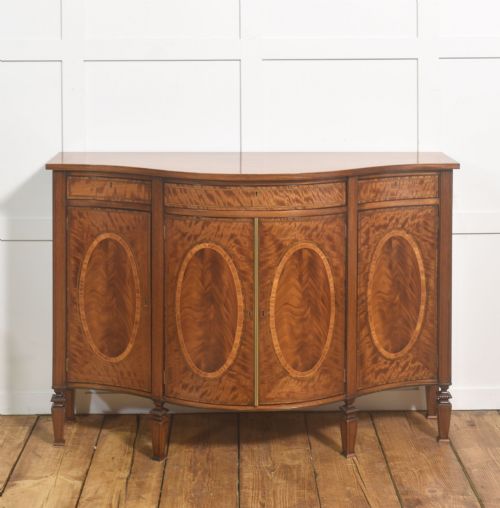
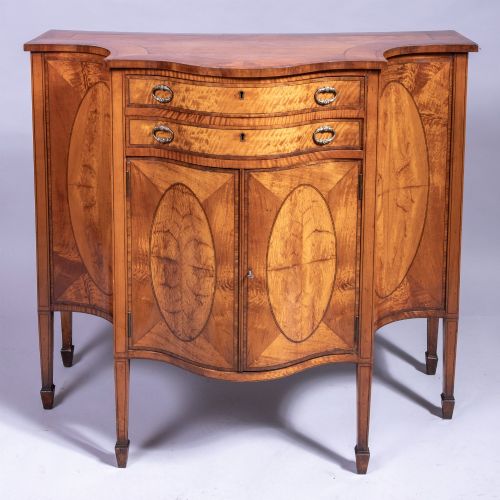
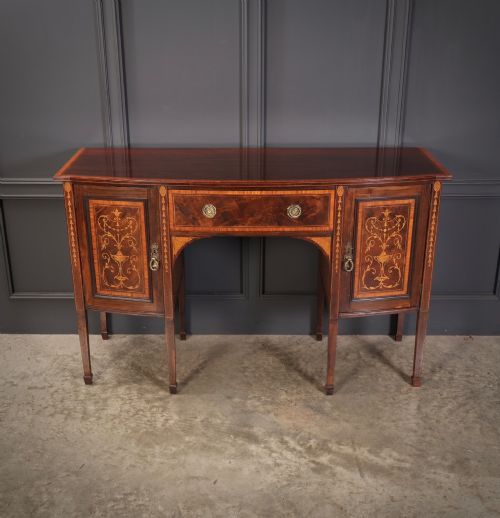
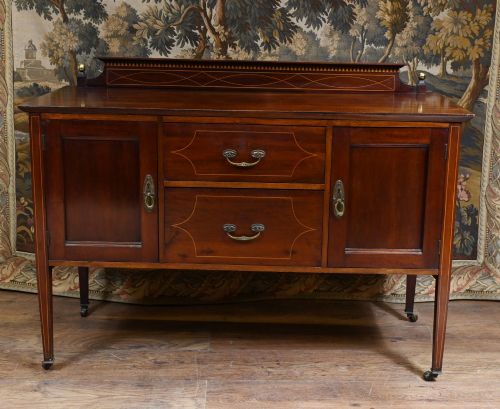
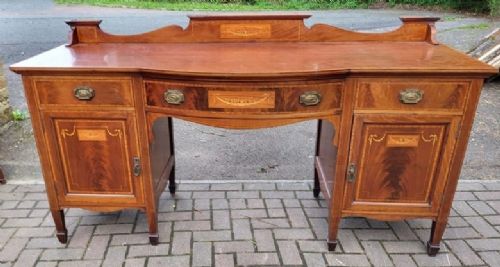
An antique satinwood server appears on this page as a sideboard, side cabinet, serving table, or lowboy, originating primarily from the Georgian, Victorian, and Edwardian periods.
Makers of the late nineteenth and early twentieth centuries frequently produced Sheraton Revival designs, combining satinwood and mahogany with detailed boxwood and wood inlay.
The buyer meets serpentine, bow-front, and breakfront shapes, ranging from compact side tables to large serving cabinets fitted with brass galleries and drawers.
Indicators of Quality
Quality rests in the precision of the wood inlay, the selection of figured timber veneers such as flame mahogany or satinwood, and the crispness of carved or shaped edges.
Subtlety of proportion and the integrity of structural joinery distinguish finer examples from standard production pieces of the period.
Forms span sideboards, side cabinets, serving tables, and lowboys, with serpentine and bow-front profiles predominating.
The Antique Satinwood Server Glossary
- Satinwood
- A hard, dense timber with a lustrous, golden-yellow sheen used extensively for veneers and decorative panels. It forms the primary visual signature of many late nineteenth-century revival pieces.
- Bow-Front
- A convex, curved front shape popular in sideboard design from the Georgian era onwards. This contour softens the profile of the furniture while increasing central storage depth.
- Serpentine
- A horizontally undulating front edge featuring a convex centre flanked by concave curves. It requires advanced carpentry to execute smoothly.
- Cross-Banding
- A border technique where thin strips of veneer are laid across the grain of the primary wood panel. It creates a framed visual effect along table tops and drawer fronts.
- Boxwood
- A pale, fine-grained wood utilised for delicate stringing and inlay lines. It provides sharp contrast against darker timbers like mahogany.
Antique Satinwood Server: Frequently Asked Questions
What is a satinwood server?
A satinwood server is a dining or reception room piece designed for serving food and storing tableware. These tables and sideboards utilise light-toned satinwood veneers for decorative effect.
Most examples found here date from the Georgian, Victorian, and Edwardian eras, often following Sheraton Revival aesthetic principles.
How do I date an Edwardian server?
Edwardian servers date from roughly 1901 to 1910 and frequently display Sheraton Revival characteristics. They typically combine mahogany with satinwood cross-banding and fine boxwood stringing.
Construction methods, interior secondary woods, and hardware styles help confirm this specific period against earlier nineteenth-century pieces.
Where should I place a side cabinet?
These cabinets suit dining rooms, grand hallways, or living spaces as serving surfaces or display consoles. Their shallow profiles allow them to sit flush against walls without dominating the room.
Consider the clearance needed for opening drawers or cupboard doors when positioning bow-front or serpentine shapes.
What distinguishes Sheraton Revival from Georgian?
Georgian pieces date from the eighteenth century and represent original neoclassical design. Sheraton Revival furniture dates from the Victorian and Edwardian periods, reinterpreting those earlier forms.
Revival pieces often employ machine-cut veneers and distinct labelling or construction traits typical of late nineteenth-century workshops.
How do I care for satinwood?
Protect satinwood furniture from direct sunlight to prevent the pale golden timber from darkening unevenly. Regular dusting with a soft, dry cloth maintains the polished surface.
A light application of appropriate furniture wax preserves the timber without building up heavy residues.