


Inlaid Timber Sideboard
An inlaid timber sideboard brings rich figured grains and crisp stringing into a dining room or hall, offering substantial storage with decorative flair.
Inlaid Timber Sideboard
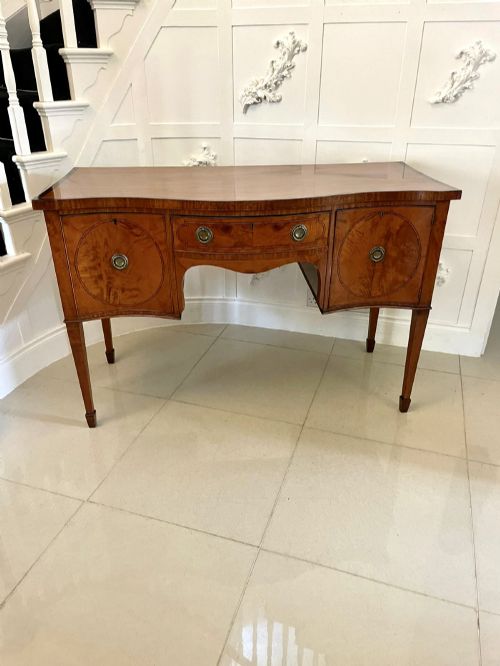
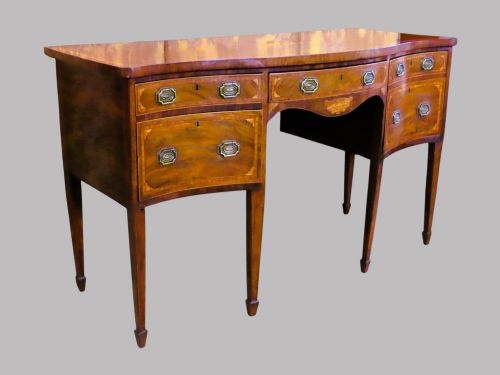
An inlaid timber sideboard is a substantial dining room or entertaining piece designed for serving and storage, appearing across Georgian, Victorian, and Edwardian periods. You will most frequently encounter mahogany and satinwood examples on this page, often featuring bowfront or serpentine shapes.
The form spans straightforward serving tables and commodes to elaborate cabinets with brass mounts, marble tops, and intricate marquetry. Georgian and Sheraton Revival pieces dominate the selection, bringing restrained classical lines or dramatic curved fronts to the category.
How they were made
Cabinetmakers constructed these sideboards using solid timbers and fine veneers of mahogany, satinwood, rosewood, burr elm, and burr yew. The foundational carcase work relied on traditional joinery methods suited to large furniture forms.
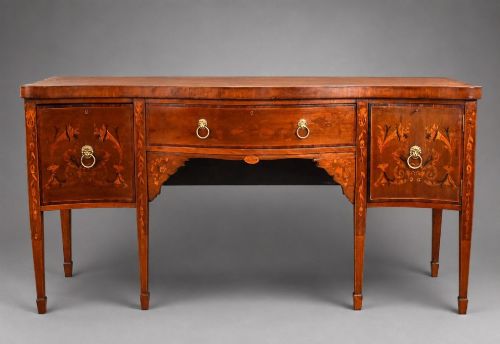
Decoration relied on contrasting boxwood and general wood inlay, creating sharp geometric stringing or elaborate floral and figurative marquetry. Brass handles, escutcheons, and occasional gallery rails finished the construction.
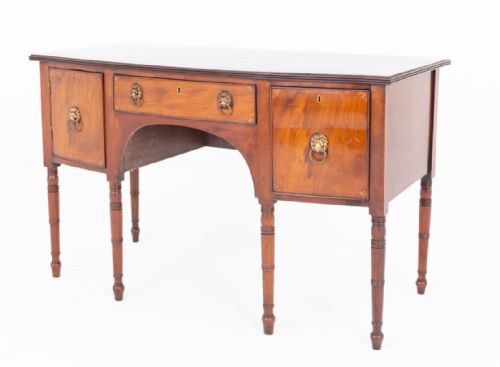
A washstand occasionally sneaks into the sideboard category, proving that Georgian cabinetmakers were remarkably relaxed about morning ablutions.
What varies in quality
The distinction between ordinary and exceptional pieces lies in the choice of timber and the precision of the cabinetwork. Highly figured grains like satinwood or burr elm, combined with crisp, tight wood inlay, elevate a piece above standard mahogany carcases.
Design complexity also defines the tier, moving from flat fronts to challenging bowfronts and serpentine shapes that require advanced woodworking skill. The integration of quality brass hardware and marble tops further separates standard storage from high-status furniture.
Gillows
The Inlaid Timber Sideboard Glossary
- Serpentine
- A furniture front curving inward centrally and outward at the ends in an undulating line. This shape demands high carpentry skill and indicates a finer commission.
- Bowfront
- A convex, outward-curving front profile popular in Georgian and later cabinetmaking. It softens the severe corners of a room while maximising internal storage.
- Marquetry
- The art of forming decorative patterns using fitted pieces of various wood veneers. It appears on tabletops and cabinet doors to create pictorial or abstract designs.
- Stringing
- Thin inlay lines of contrasting wood used to outline drawers, panels, and borders. This linear detail defines classical and revival furniture decoration.
- Demilune
- A half-moon or semicircular shape used for commodes and serving tables. It allows furniture to sit flush against a wall while offering a distinctive footprint.
Inlaid Timber Sideboard: Frequently Asked Questions
How do I date an inlaid timber sideboard?
Dating relies on combining the timber species, overall style, and construction traits visible in the drawers and carcase. Georgian pieces tend to show restrained classical lines, whereas Victorian and Edwardian examples often utilise brighter satinwood or heavier marquetry.
Examining the secondary woods inside the drawers and the style of the brass hardware helps confirm the production era.
Where should I place a sideboard?
These pieces suit dining rooms, large hallways, or drawing rooms where their surface acts as a serving area or display space. A serpentine or bowfront shape works well against a main wall, drawing the eye without blocking natural walkways.
Ensure the room has adequate clearance for drawers and cabinet doors to open fully.
How do I care for antique timber and inlay?
Maintenance requires keeping the wood away from direct sunlight and sudden temperature shifts that can dry out veneers and cause warping. Regular dusting with a soft cloth preserves the polished surface without harsh chemical buildup.
Applying a gentle wax occasionally helps nourish the grain and protects delicate boxwood stringing.
What is the difference between a sideboard and a commode?
A sideboard is traditionally a longer piece designed for dining rooms to hold cutlery, linen, and serving dishes. A commode is typically more compact and ornamental, originating as a chest of drawers or cabinet for formal rooms.
Both forms frequently feature rich timber veneers and intricate inlay work.