


Antique Satinwood Cabinet
An antique satinwood cabinet brings bright timber and refined inlay into a room, offering both display and storage.
Understanding Antique Satinwood Cabinet
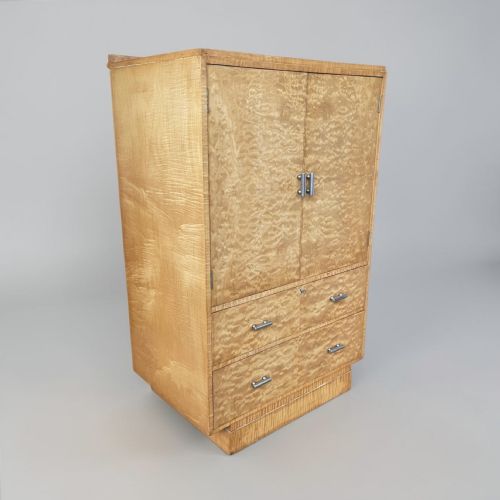
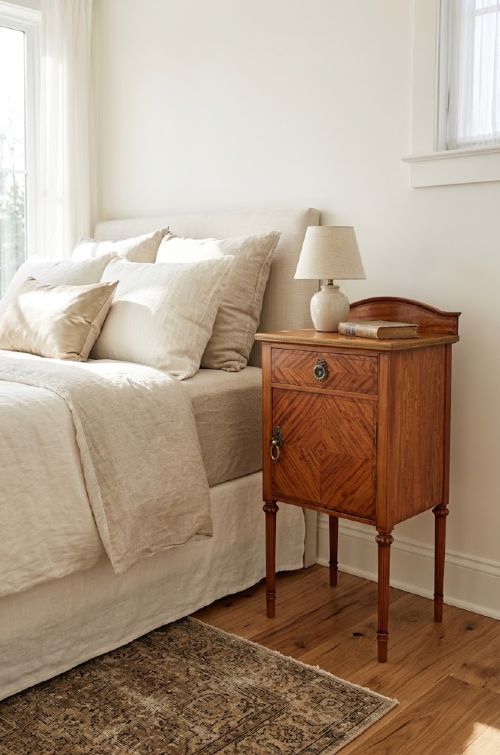
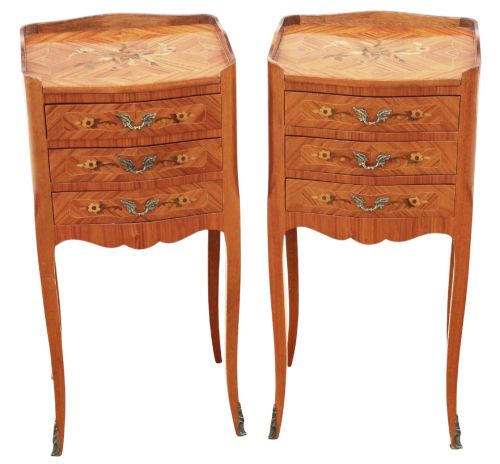
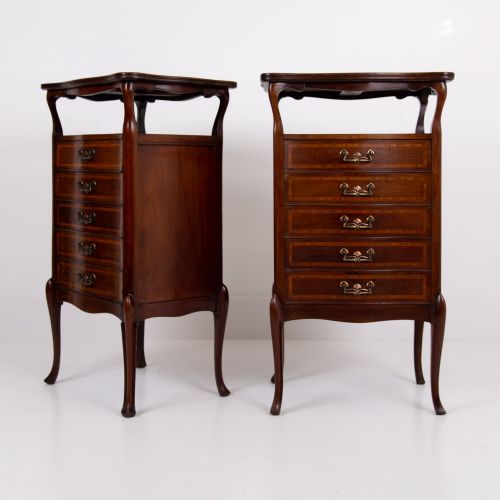
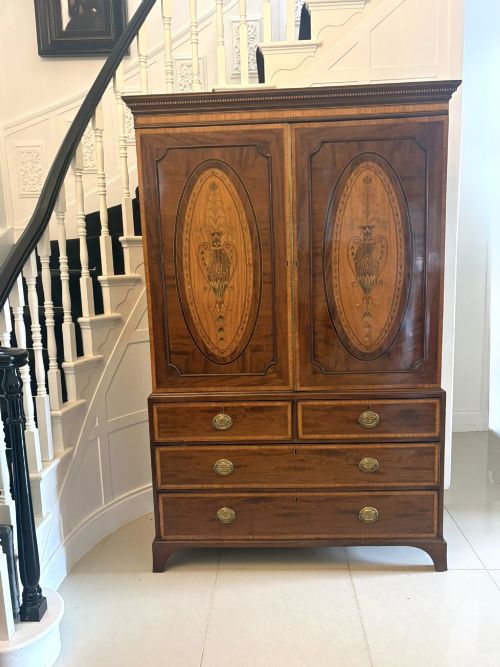
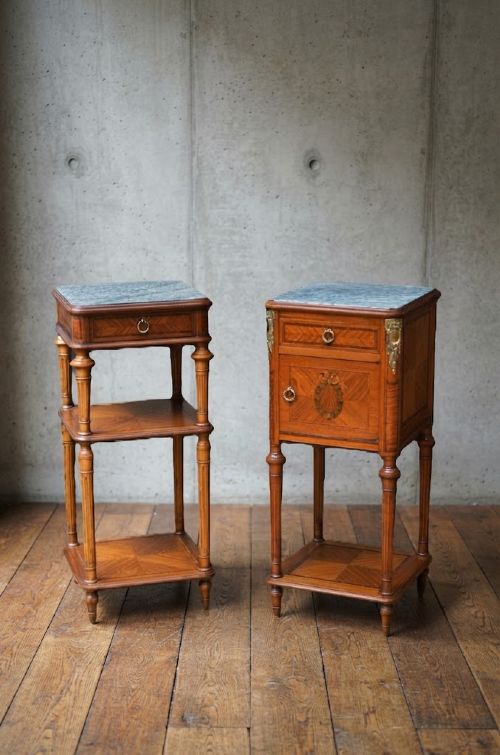
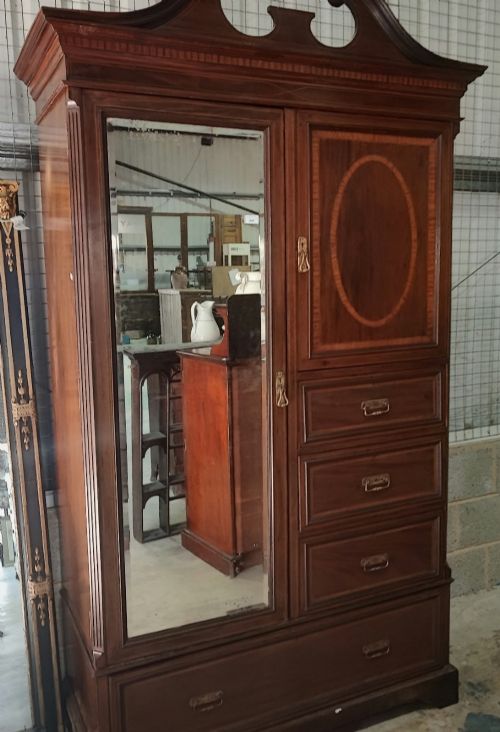
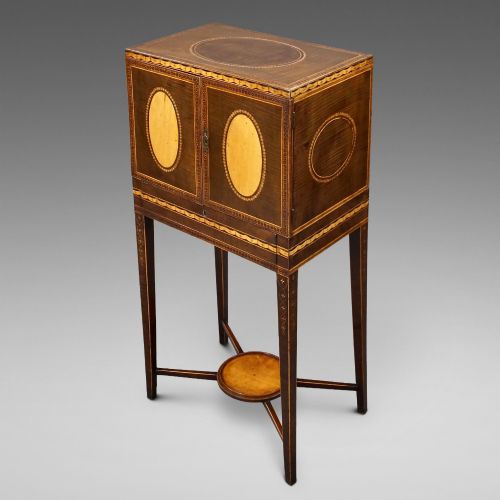
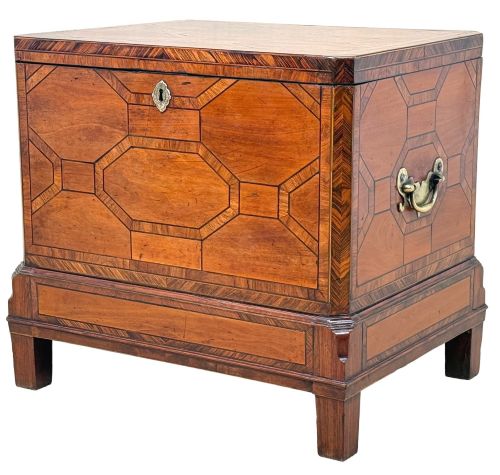
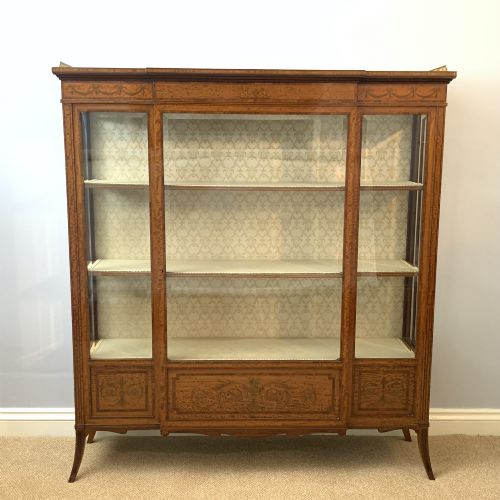
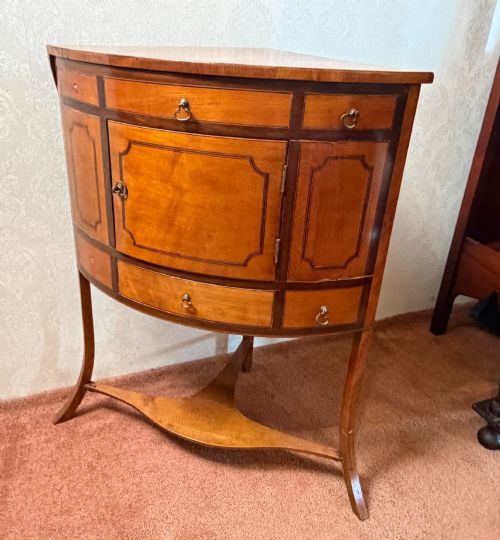
An antique satinwood cabinet is a piece of furniture defined by its pale, lustrous wood, taking forms such as bedside cabinets, bookcases, credenzas, and side cabinets. These pieces emerge across several periods, including George III, Victorian, Edwardian, and French Neoclassical styles.
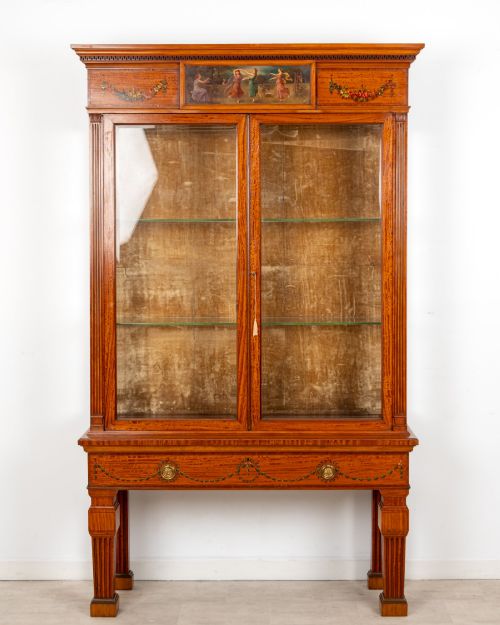
The version most commonly met on this page is the compact bedside cabinet or larger display cabinet, often detailed with contrasting stringing or painted decoration. Makers working within the Sheraton Revival style also produced these items with distinct classical lines.
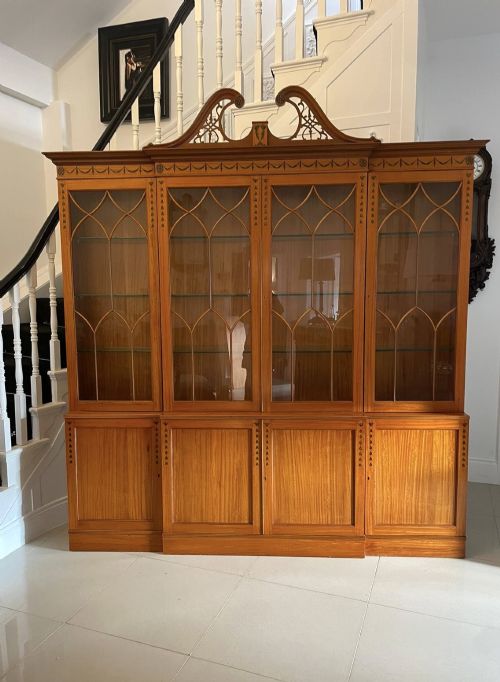
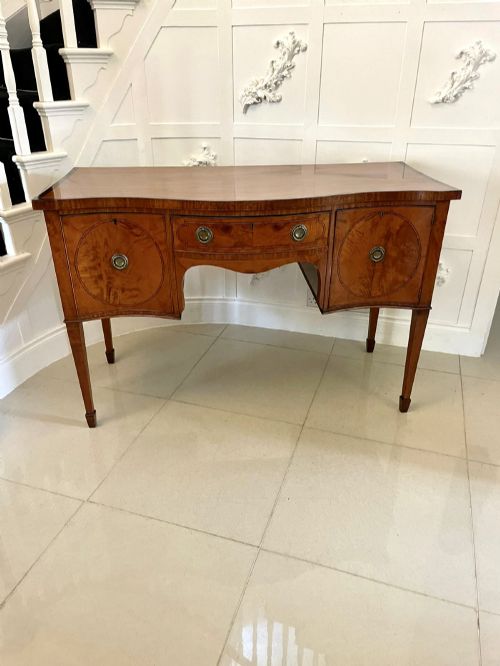
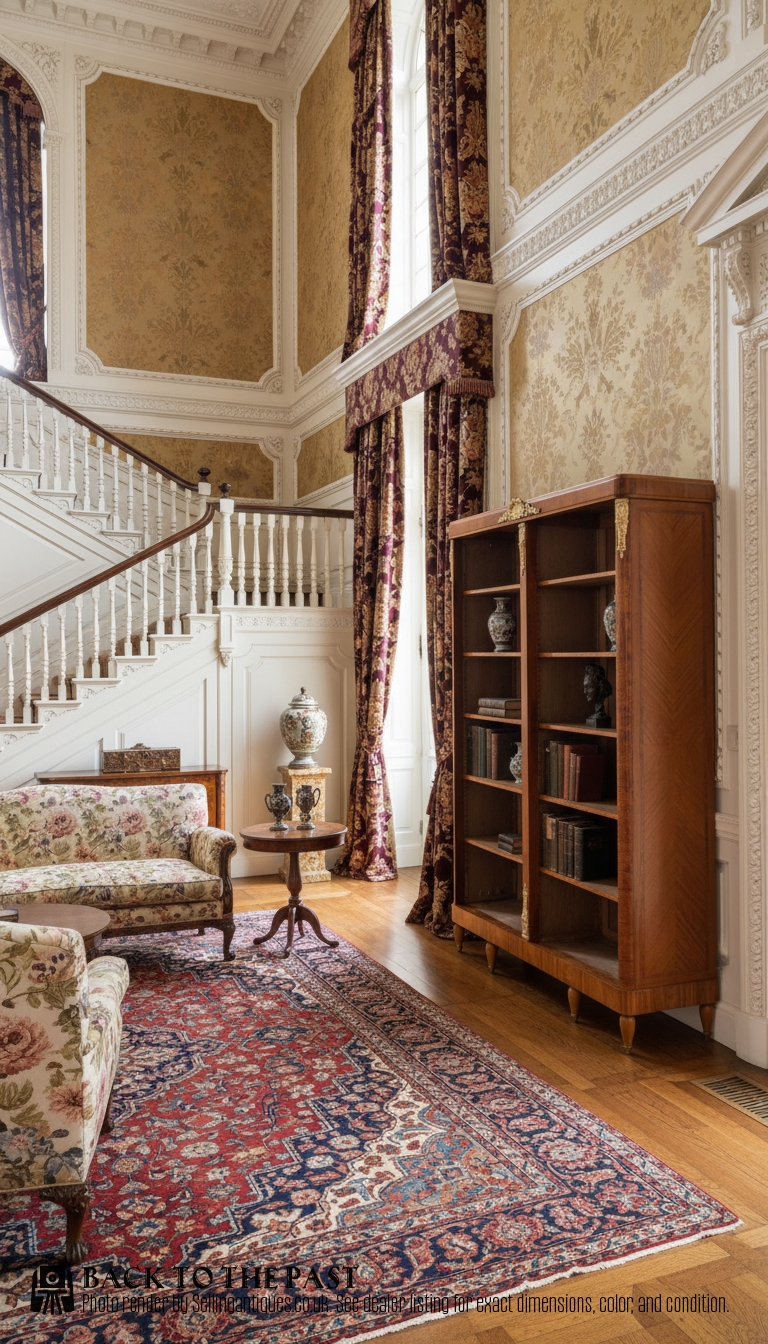
The structural forms range from open bookcases and bowfront nightstands to breakfront display pieces mounted with ormolu. Each object utilises the distinctive grain of the timber to create a luminous surface.
Materials and Construction
Cabinet makers utilised satinwood as a primary timber or as a decorative veneer over carcase woods like mahogany and walnut. Surfaces frequently incorporate ebony inlay, mahogany banding, and painted Neoclassical motifs.
Metal mounts in brass and gilt bronze complement the woodwork on grander display pieces and credenzas. Glazed doors feature astragal frames, whilst interior spaces incorporate porcelain plaques and glass shelving.
Retail Price Guide 2026
Typical UK retail prices for satinwood cabinet, calculated from the Sellingantiques database of over a million retail prices indexed since 2003. This retail price guide relies exclusively on Sellingantiques data; no external sources or auction records are used, so the figures do not describe the wider market.
Smokers' cabinets made of satinwood remind us that Victorians liked their tobacco kept under lock and key.
Distinctions in Quality
The standard of an antique satinwood cabinet rests on the selection of figured timber and the precision of its marquetry or painted decoration. Pieces bearing hand-painted floral or classical scenes show a higher degree of artisan skill.
Structural integrity and the retention of original fittings, such as brass locks, ormolu mounts, and glass panes, determine the standing of an individual piece within its period.
Hobbs & Sons·Maple & Co·Waring & Gillows·Hille
The Antique Satinwood Cabinet Glossary
- Satinwood
- A dense, light-coloured tropical timber known for its chatoyant grain and smooth finish. It became a favoured medium for fine cabinet making during the eighteenth and nineteenth centuries.
- Marquetry
- The art of applying pieces of veneer to a structure to form decorative patterns and pictures. In these cabinets, contrasting woods create floral or geometric motifs.
- Ormolu
- Gilded bronze mounts applied to furniture for decorative effect. This technique appears on French Neoclassical and grand Victorian pieces.
- Astragal
- Moulding used to hold panes of glass within a cabinet door. These slender wooden bars divide the glazing into geometric segments.
- Bowfront
- A convex curved cabinet front that swells outward in the centre. This shape softens the profile of bedside cabinets and sideboards.
Frequently Asked Questions
What is satinwood?
Satinwood is a dense hardwood valued for its pale, golden colour and reflective sheen. It takes a high polish and provides a striking surface for fine inlay.
Cabinet makers used it extensively during the Sheraton Revival and Victorian eras for high-status furniture.
How do I date an antique satinwood cabinet?
Dating relies on stylistic clues, construction methods, and secondary woods like mahogany or pine. Victorian and Edwardian pieces often show machine-sawn timber or specific hardware.
Earlier examples from the George III period display hand-cut dovetails and distinct Neoclassical painted motifs.
Where were these cabinets used?
Bedside cabinets and pot cupboards served bedrooms as nightstands, whilst larger display cabinets and credenzas occupied drawing rooms and parlours.
Bookcases and side cabinets were designed for libraries and reception rooms to store books and display porcelain.
How do I care for satinwood furniture?
Keep satinwood out of direct sunlight to prevent the pale timber from darkening or fading. Maintain a stable indoor humidity to protect the veneer and inlay.
Dust gently with a dry, soft cloth and avoid commercial silicone polishes that can damage the antique finish.