




Large Satinwood Bookcase
A large satinwood bookcase is a grand storage piece that anchors a room with pale timber and fine classical inlay, combining display with utility.
Large Satinwood Bookcase
When you search for a large satinwood bookcase, you encounter pieces spanning the Georgian, Victorian, Edwardian and later periods, including Sheraton Revival designs and French Neoclassical examples. These substantial furnishings take several structural forms, from breakfront glazed cabinets and open shelving units to fitted drawing room pieces.
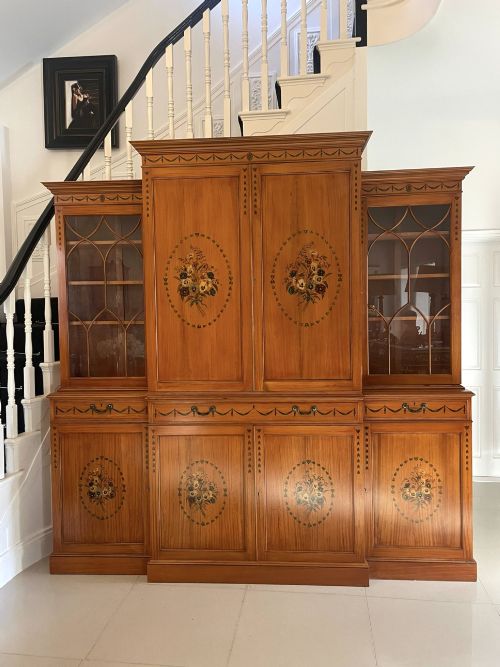
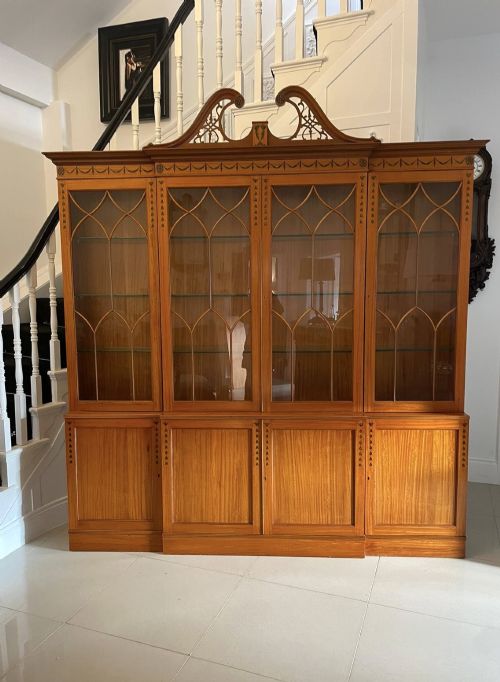
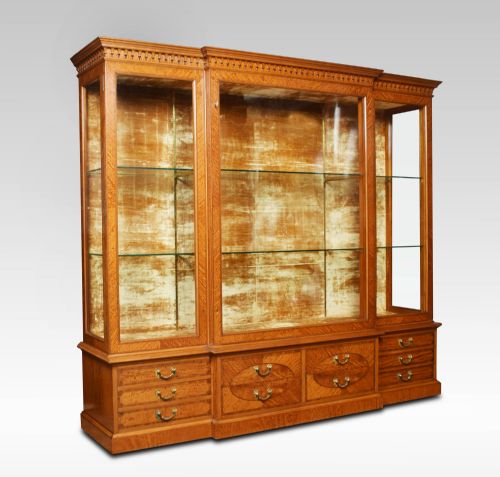
The version you are most likely to meet on this page is an Edwardian or Sheraton Revival breakfront bookcase or display cabinet, often featuring satinwood timber complemented by mahogany or enhanced with painted decoration, glass doors and brass details.
How they were made
Cabinet makers constructed these substantial pieces primarily using satinwood, frequently paired with mahogany for structural stability and contrasted with delicate marquetry inlays. Glazed doors incorporate glass panels, while fine examples feature original painted decoration or gilt bronze mounts.
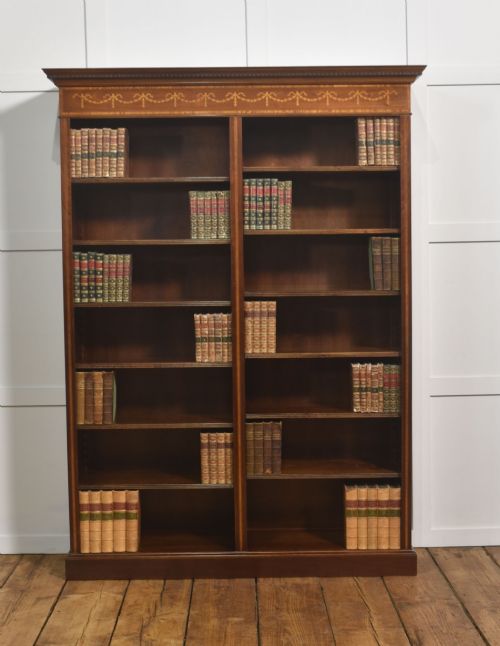
Internal elements often include adjustable bookshelves, and backings may incorporate fabric or mirror panels, particularly in display cabinets designed for drawing rooms.
What varies in quality
The refinement of the timber and the precision of the inlay set the finest examples apart from standard production, with superior pieces showing careful grain selection and intricate banding. Original painted decoration executed by skilled hands elevates a cabinet above plain counterparts.
Structural complexity also dictates the tier, where breakfront configurations and stamped maker attribution indicate higher workshop status than simpler open shelf formats.
Gillows
The Large Satinwood Bookcase Glossary
- Satinwood
- A hard, pale yellow timber with a natural sheen that takes a fine polish and serves as the primary veneer for classical English furniture. It provides a luminous surface that catches the light in a drawing room.
- Breakfront
- A piece of furniture where the central section projects forward from the flanking wings. This architectural arrangement creates depth and shadow across large bookcases.
- Astral glazing
- Door framing bars arranged in intricate geometric patterns, often intersecting to form arches or gothic motifs. It allows maximum light into the bookcase interior while securing the glass panes.
- Sheraton Revival
- A late nineteenth and early twentieth century design movement that reinterpreted the light, neoclassical furniture forms of the eighteenth century. Pieces in this style utilise satinwood banding, classical urn motifs and painted details.
- Marquetry
- Decorative patterns formed by fitting together contrasting veneers of wood, shell or metal onto a structural carcase. Craftsmen use this technique to create floral swags and ribbon trails.
Large Satinwood Bookcase: Frequently Asked Questions
What rooms suit a large satinwood bookcase?
These grand pieces fit spacious drawing rooms, libraries and formal studies where their scale and pale timber can anchor the interior design.
They require adequate wall space and balanced lighting to highlight the intricate inlay and glazed doors without overwhelming smaller furnishings.
How do I care for satinwood surfaces?
Maintain the timber by keeping the bookcase away from direct sunlight and sudden temperature shifts that might dry the veneer.
Dust regularly with a dry cloth and apply occasional specialist wax to preserve the natural sheen of the wood.
Are the shelves adjustable in these bookcases?
Many examples feature adjustable shelving supported by traditional wooden racks or metal pins, allowing you to alter the interior spacing for varied book sizes.
Open bookcases and enclosed display cabinets both utilise this flexible configuration to accommodate diverse collections.
How do I distinguish Edwardian pieces from Georgian originals?
Edwardian and Sheraton Revival pieces often display machine-assisted precision in their inlays and lighter structural framing compared to authentic eighteenth-century Georgian furniture.
Examining the construction methods, secondary timbers and overall patination helps determine the correct period of origin.