

Satinwood Bookcase
Satinwood bookcase designs bring pale timber and delicate inlay into domestic rooms, offering classical refinement alongside practical shelving for collections.
Satinwood Bookcase
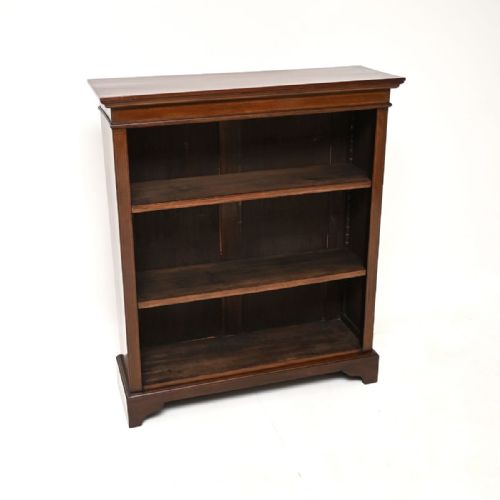
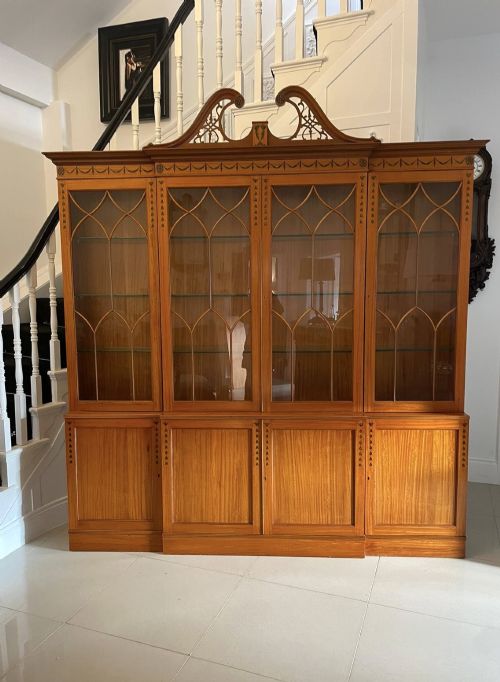
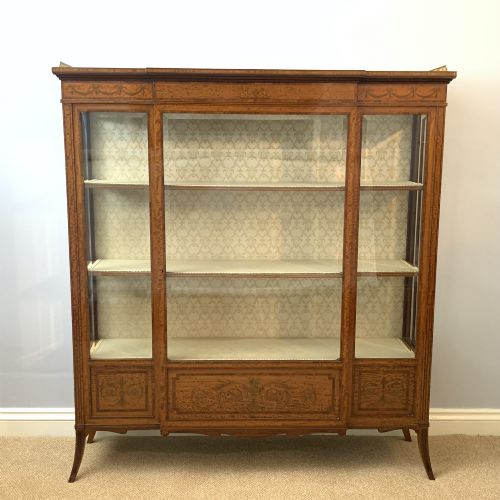
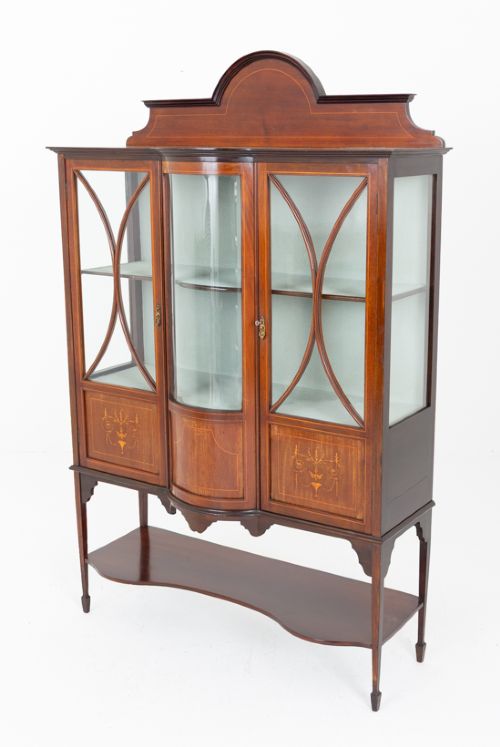
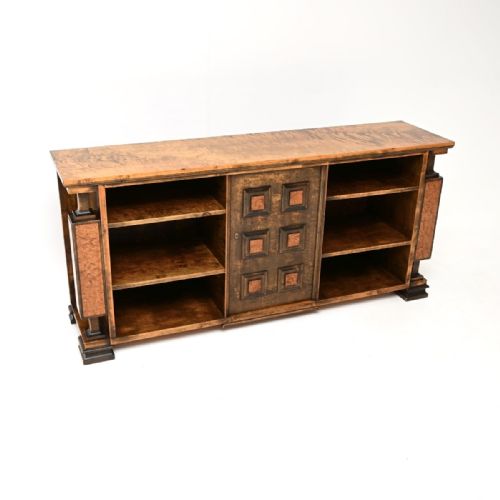
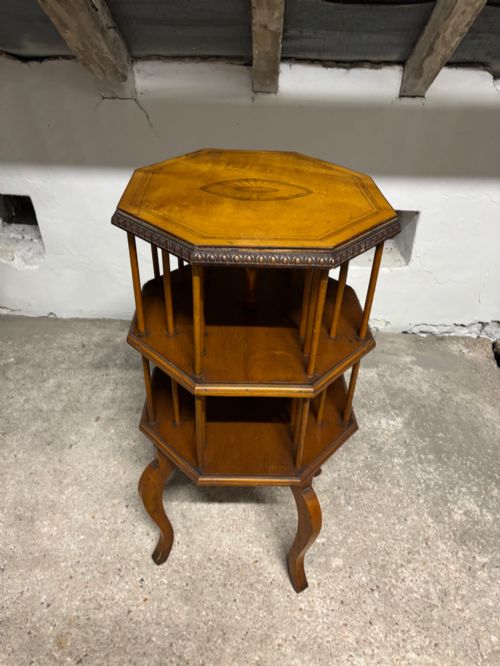
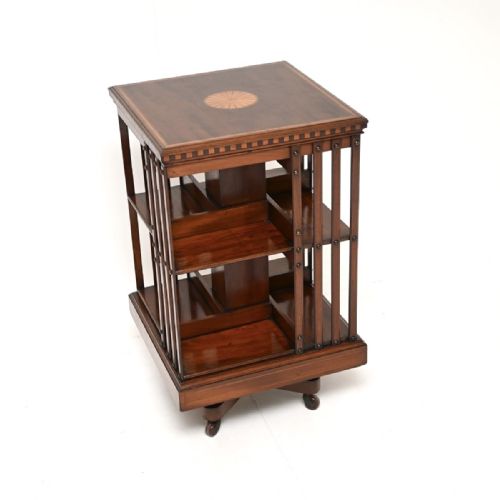
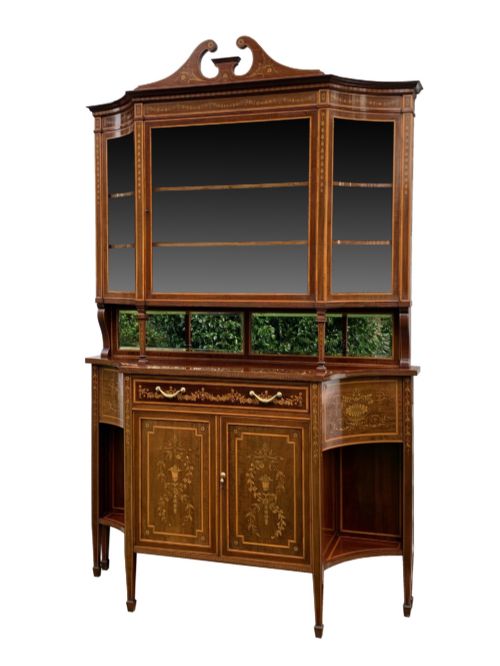
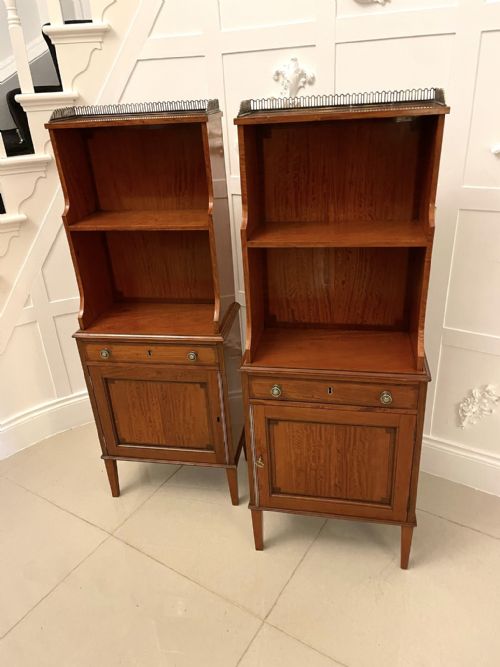
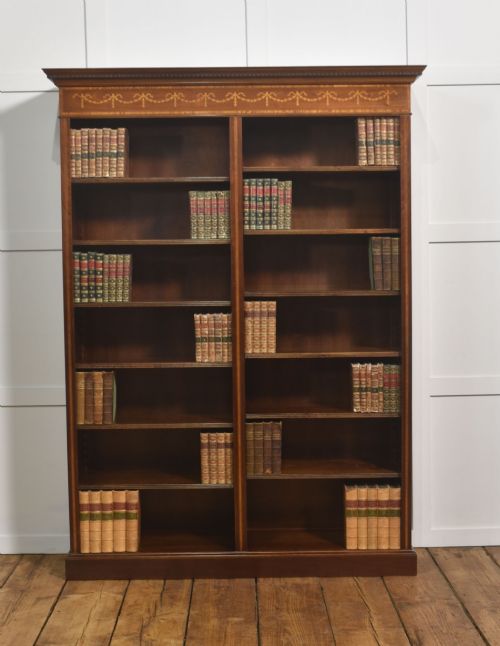
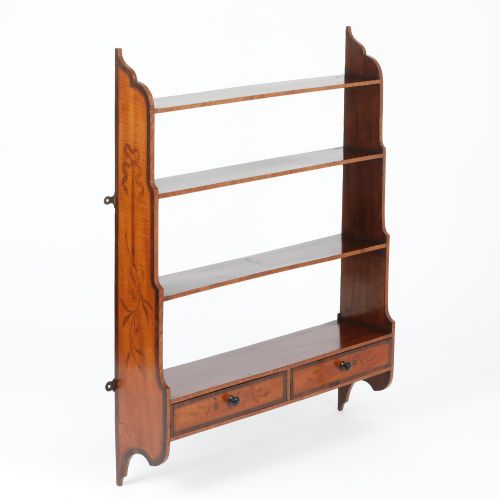
A satinwood bookcase search reveals a diverse range of furniture forms, spanning compact revolving table versions to large breakfront display cabinets and bureau bookcases.
The pieces appearing most frequently belong to the Edwardian era and the late nineteenth century, often executed in the Sheraton Revival style alongside earlier eighteenth-century Georgian examples.
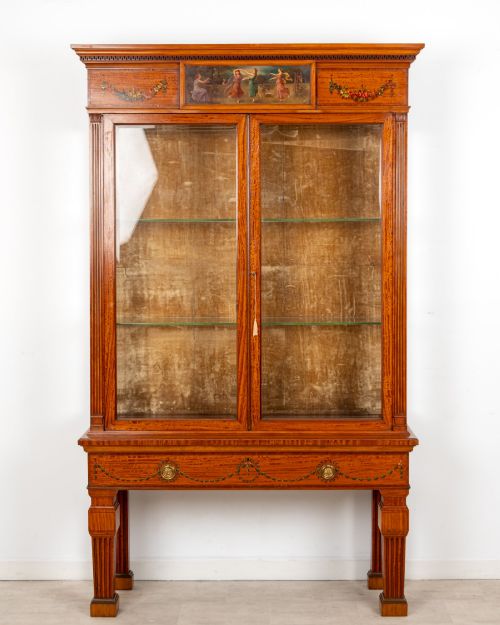
Makers frequently combined satinwood with mahogany, incorporating glass doors, mirrored backs and painted neoclassical decoration to create sophisticated library and drawing room pieces.
Materials and Technique
Cabinetmakers utilised dense tropical satinwood veneers laid over stable secondary woods like mahogany, frequently adding contrasting boxwood and ebony stringing to delineate shelves and panels.
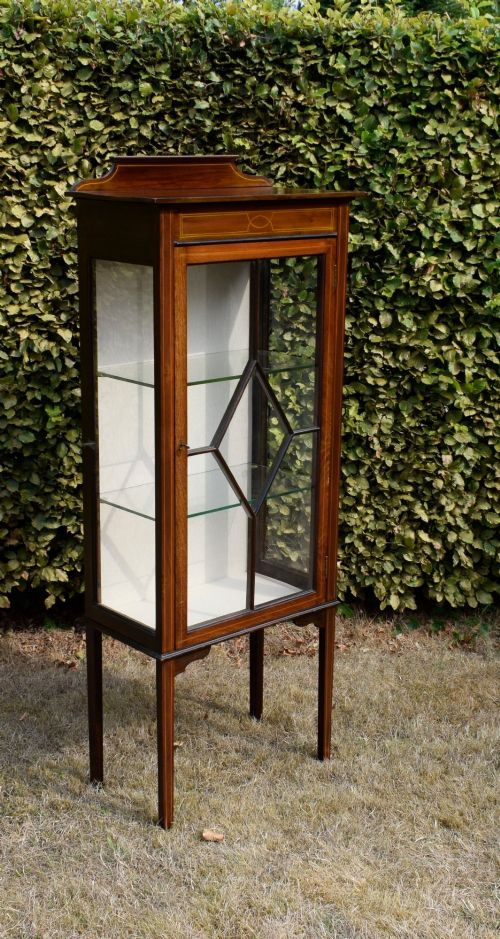
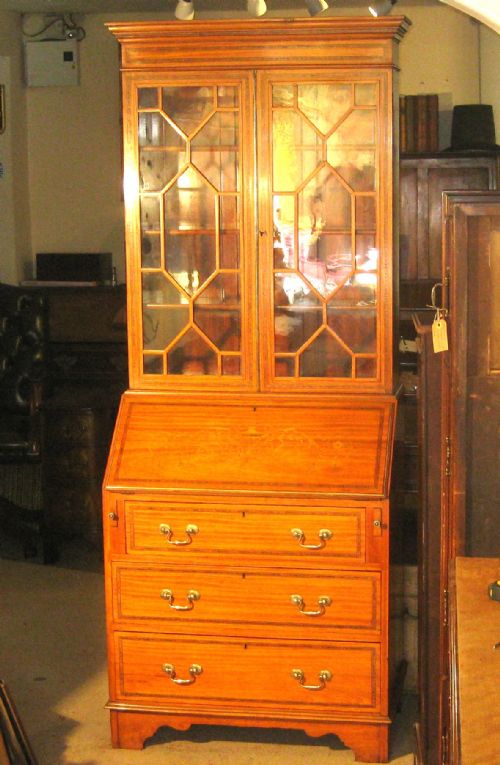
Glazing bars fashioned into delicate astragal patterns secured individual panes of glass within cabinet doors, while specialised joinery accommodated revolving book drum mechanisms on revolving desk models.
Listings feature satinwood combined with mahogany, walnut, rosewood, and glass across Georgian, Victorian, and Edwardian periods.
Craftsmanship and Proportion
Superior examples display balanced proportions where hand-painted floral panels or intricate marquetry integrate harmoniously with the grain of the timber rather than appearing crowded.
The distinction between standard production and fine workshop output rests in the crispness of the boxwood inlay, the tightness of the mitred joints, and the retention of original brass hardware and glass.
Hampton and Sons·Edwards and Roberts·Gillows·Maple and Co·Mercier Freres
The Satinwood Bookcase Glossary
- Astragal glazing
- Framework of slender wooden bars dividing glass panes into geometric panels. These mouldings dictate the rhythm of the cabinet front.
- Marquetry
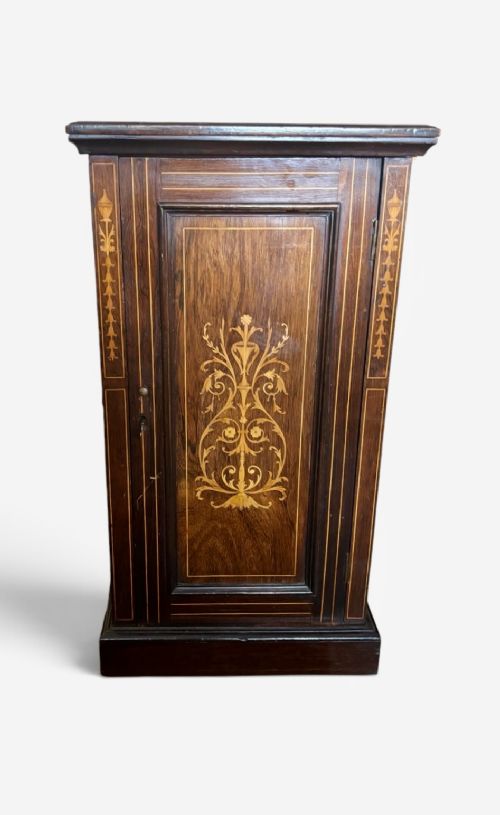
- Elaborate patterns created by fitting thin veneers of various coloured woods together. Artisans use this technique to render floral urns and ribbon motifs.
- Secretaire bookcase
- A tall cabinet incorporating a drop-front writing drawer fitted with pigeonholes and small drawers above standard book storage. This hybrid form gained popularity in the eighteenth century.
- Revolving bookcase
- A low or table-top bookholder mounted on a concealed internal pivot mechanism. It allows easy access to volumes from a seated position.
- Breakfront
- A cabinet facade where the central section projects forward from the flanking wings. This architectural arrangement creates depth and shadow.
Satinwood Bookcase: Frequently Asked Questions
How do I date a satinwood bookcase?
Dating relies on combining stylistic markers like Sheraton Revival proportions with structural clues such as secondary timber choices and backboard construction methods.
Eighteenth-century pieces typically show hand-cut dovetails and solid timber carcases, while Edwardian revivals often utilise machine-cut elements beneath decorative veneers.
Were these cabinets used for displaying china?
Many glazed satinwood cabinets served a dual purpose as vitrines for displaying delicate porcelain alongside leather-bound volumes.
Mirrored backs and glass side panels were incorporated specifically to reflect light through the interior shelves.
How should I care for satinwood furniture?
Protecting the polished surface requires keeping pieces away from direct sunlight and maintaining stable room humidity to prevent veneer lifting.
Applying microcrystalline wax occasionally helps nourish the timber without building up heavy residue.
What is a bureau bookcase?
A bureau bookcase combines a sloping desk flap that opens for writing with enclosed shelving above for books and papers.
This form provides concealed storage for stationery alongside display space for a personal library.