


Antique Sailing Ship Art
Antique sailing ship art captures the drama of maritime history, offering collectors evocative watercolours and oils that bring nineteenth-century waters alive on the wall.
What They Are
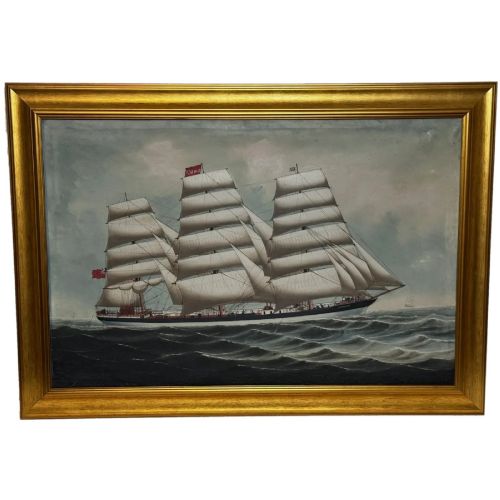
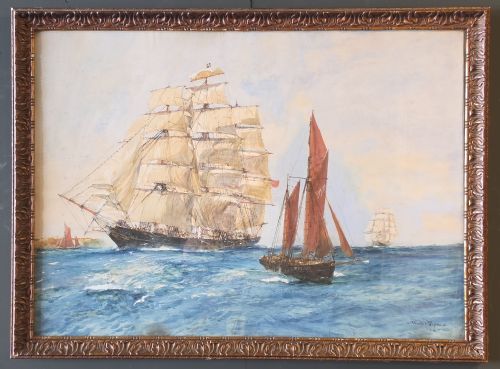
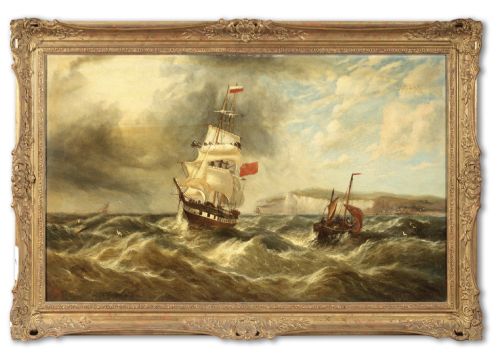
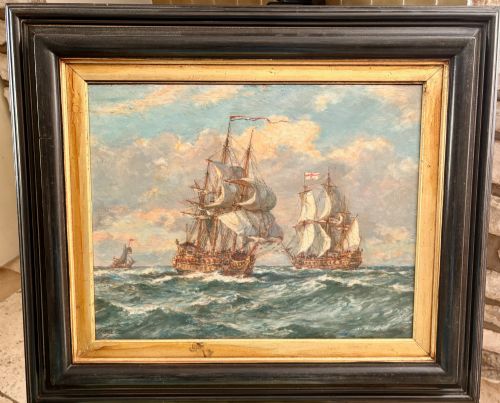
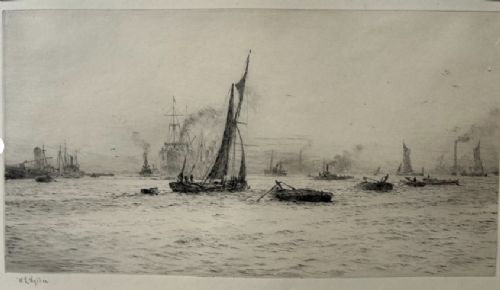
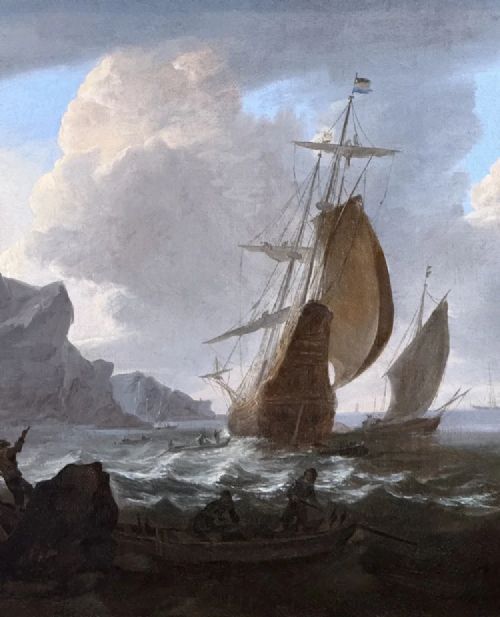
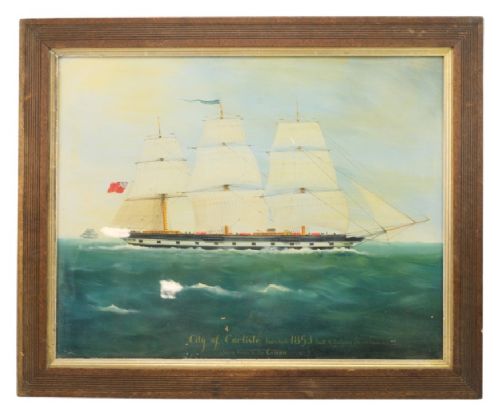
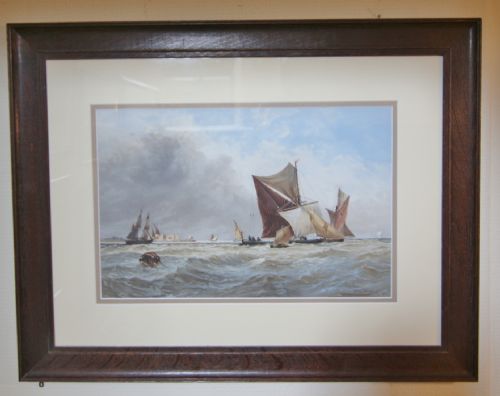
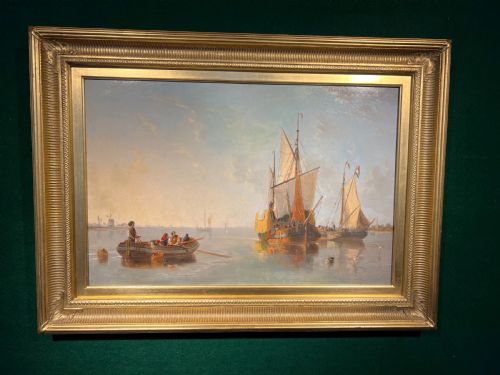
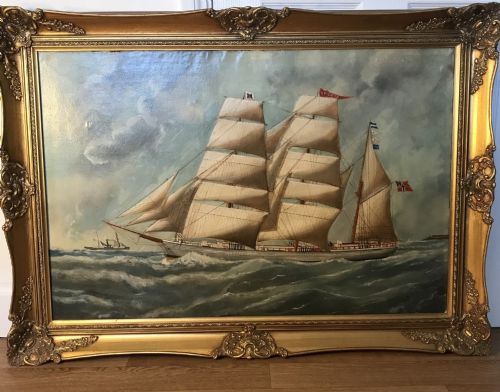
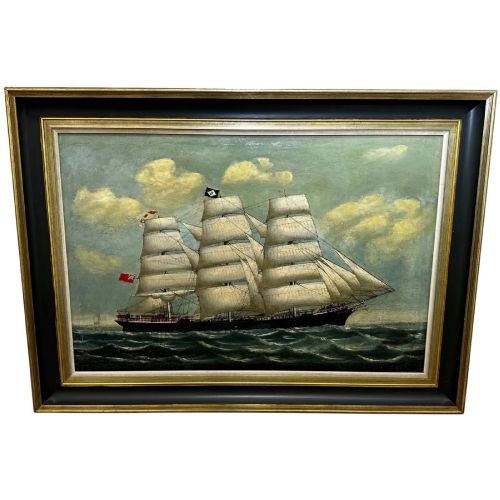
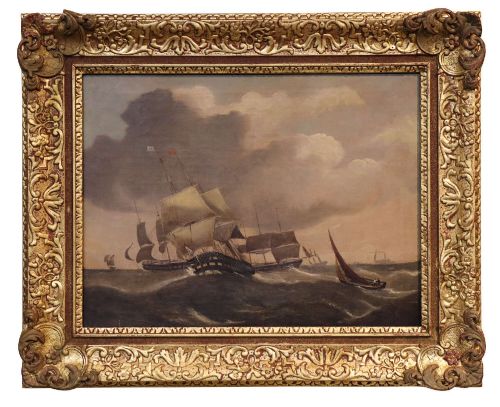
Antique sailing ship art encompasses nineteenth-century marine paintings and watercolours depicting maritime scenes, dock views, and coastal shipping. These works document an era of sail through detailed portrayals of moored yachts, harbour activity, and open seas.
Buyers browsing this selection will most frequently encounter nineteenth-century watercolours and oil paintings presented in period frames. The subjects range from Dutch coastal views to busy dock scenes rendered in traditional mediums.
The objects span the Victorian, Edwardian, and Regency eras, reflecting diverse approaches to maritime illustration. Creators working during these periods utilised paper, canvas, and board to record the shifting moods of the sea and harbour.
How They Were Made
Artists created these works using oil on canvas, oil on board, and watercolour on paper, capturing light and water with traditional brushwork. Pigments were applied to prepared surfaces to achieve tonal depth in sky and sea.
Many of these paintings survive within gilt wood and giltwood frames that complement the maritime subject matter. Glass protects fragile paper watercolours, while oil paintings remain mounted on stretched canvas or rigid wooden boards.
Retail Price Guide 2026
Typical UK retail prices for sailing ship art, calculated from the Sellingantiques database of over a million retail prices indexed since 2003. This retail price guide relies exclusively on Sellingantiques data; no external sources or auction records are used, so the figures do not describe the wider market.
Listings feature works from the Victorian, Edwardian, and Regency periods executed in oil and watercolour on paper, canvas, and board.
What Varies in Quality
Quality rests in the precision of the draughtsmanship and the artist's ability to render rigging, hull construction, and atmospheric light convincingly. Stronger works demonstrate confident handling of water and sky, whereas lesser pieces rely on formulaic compositions.
The condition and period integrity of the surrounding gilt frame influence the overall visual impact of the piece. Intact framing materials matching the era of the painting elevate the presentation of the artwork.
Thomas Bush Hardy·Rowland Henry Hill·Charles Martin Powell
The Antique Sailing Ship Art Glossary
- Marine painting
- A genre of art that depicts ships, harbours, and coastal views. These works focus centrally on maritime subjects and naval architecture.
- Watercolour
- A painting method where fine pigments are suspended in a water-based solution on paper. This medium allows for transparent washes of colour to represent sea and sky.
- Giltwood
- Wood that has been coated with a thin layer of gold leaf or gilt finish. Frames of this material are frequently found surrounding nineteenth-century paintings.
- Seascape
- A thematic category representing the sea, similar to a landscape depicting land. Artists use this term to describe views dominated by open water and coastal weather.
Frequently Asked Questions
How do I hang antique marine art?
Hang these watercolours and oil paintings away from direct sunlight to protect pigments and paper from fading over time.
Ensure the wall fixings safely support the weight of the heavier gilt wood frames typically found on nineteenth-century canvases.
What subjects appear in this art?
The works depict docked shipping, coastal landscapes, moored sailing yachts, and open sea voyages from the Victorian era.
Artists focused heavily on recording working vessels and naval architecture during a period of industrial transition.
How do I clean antique frames?
Dust giltwood frames gently with a soft, dry brush to prevent accumulation without disturbing the delicate gold leaf finish.
Avoid using liquid cleaners or abrasive cloths on antique timber and gilt surfaces.
Are these works signed by artists?
Some pieces bear the recorded names of period painters such as Thomas Bush Hardy or Rowland Henry Hill.
Unsigned nineteenth-century maritime works remain common, often attributed through style and subject matter alone.