


Antique Saddlebag Face
When you search for antique saddlebag face, you are looking at fragments of tribal life woven for practical transport by nomadic makers.
Antique Saddlebag Face
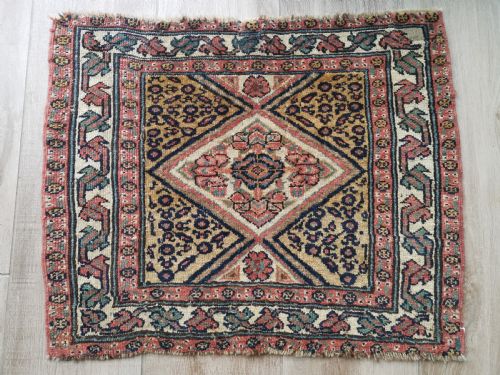
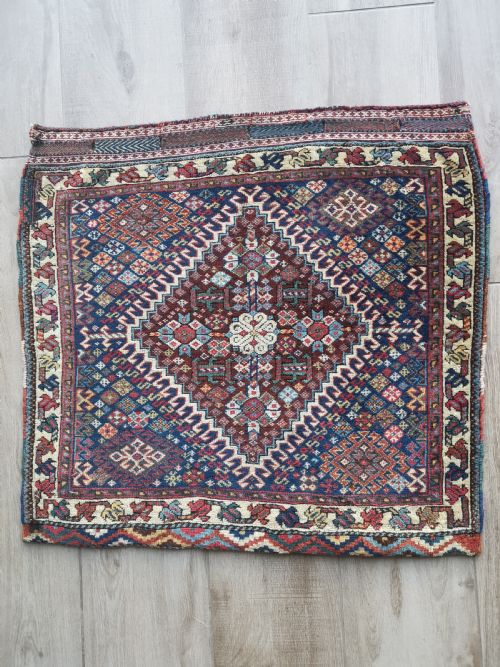
An antique saddlebag face is the surviving front panel of a larger nomadic carrier, usually separated from its original pairing or back. These pieces originate from tribal and nomadic groups across Persia, the Caucasus, and surrounding borderlands, created during the nineteenth and early twentieth centuries.
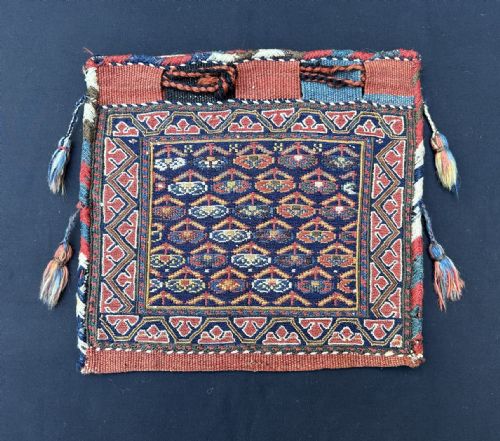
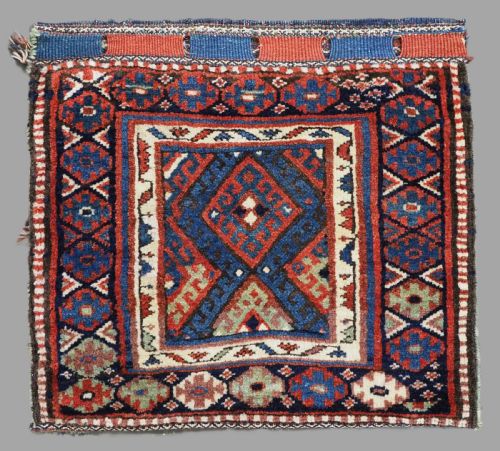
The objects on this page appear as square or rectangular fragments, complete bag faces, or half-bag sections intended for animal transport or storage. They display regional motifs linked to specific tribal confederations such as the Qashqai, Shahsavan, Afshar, and Jaf Kurd.
Buyers encounter numerous variations in format, ranging from complete khorjin faces retaining plain weave backs to fragments and panels. Each piece reflects the utilitarian output of pastoral groups transitioning through regional territories.
Materials and construction methods
Weavers utilised hand-spun wool and cotton foundations, working with natural dyes to create the palette seen across these nomadic textiles. The tactile quality relies heavily on the natural grease retained in the wool fibres.
Construction varies between pile knotting and flatwoven techniques, including soumac work and banded weft designs. These methods provided the structural durability required for functional storage items.
Many pieces spent decades slung across stubborn pack animals before ending up neatly mounted on modern walls.
Factors determining quality
Quality rests on the fineness of the knotting or weave density and the handling of the natural dyes. Superior examples display crisp geometry, secure wool integrity, and well-balanced regional designs.
The clarity of the central medallion or tribal motif and the preservation of the edges influence the overall standing of an individual piece. Workmanship from specific nomadic centres demonstrates distinct technical mastery in handling wool and structural backings.
The Antique Saddlebag Face Glossary
- Khorjin
- The Persian term for a double saddlebag used by nomadic groups for transport and storage.
- Soumac
- A flatweave technique involving wrapping weft threads over the warp to create a textured, durable surface.
- Boteh
- A recurring motif resembling a stylised almond, pear, or curved floral spray found in regional textiles.
- Plain weave
- A simple, unpatterned structural weave often utilised for the backs and structural elements of bags.
- Medallion
- A central decorative focal point positioned in the middle of the textile field.
Antique Saddlebag Face: Frequently Asked Questions
How were these bags used?
Nomadic groups used double bags thrown across horses, donkeys, or camels to transport personal possessions during seasonal migrations. The compartments held household goods, clothing, and provisions.
Over time, wear often destroyed the connecting bridge or the back panel, leaving the durable front face intact.
How do I identify different tribal origins?
Regional attribution relies on specific design vocabulary, structural techniques, and colour palettes associated with groups such as the Qashqai, Afshar, or Shahsavan. Each tribe utilised distinct geometric motifs and weaving structures.
Comparing the border arrangements and wool characteristics helps connect a piece to its specific geographic area.
How should I display a bag face?
These textile fragments are frequently mounted and framed or displayed directly on walls as flat art. Their manageable dimensions suit smaller wall spaces where traditional rugs might prove too large.
Proper mounting ensures the wool structure remains supported without sustaining tension or distortion.