

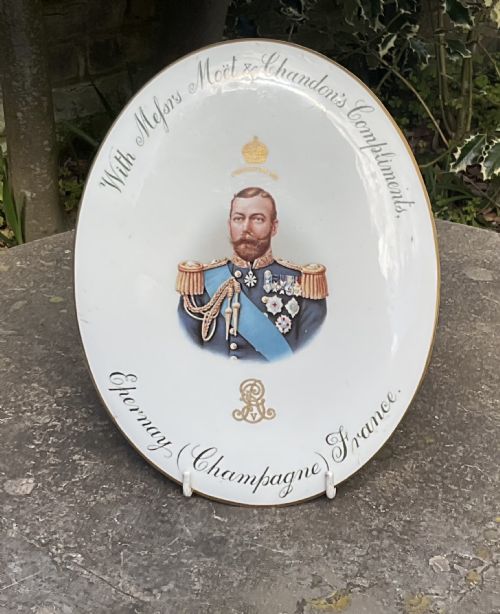


Antique Royal Memorabilia
Antique royal memorabilia captures centuries of allegiance, taking the form of commemorative ceramics, portraits and presentation pieces that record coronations and royal milestones.
Antique Royal Memorabilia
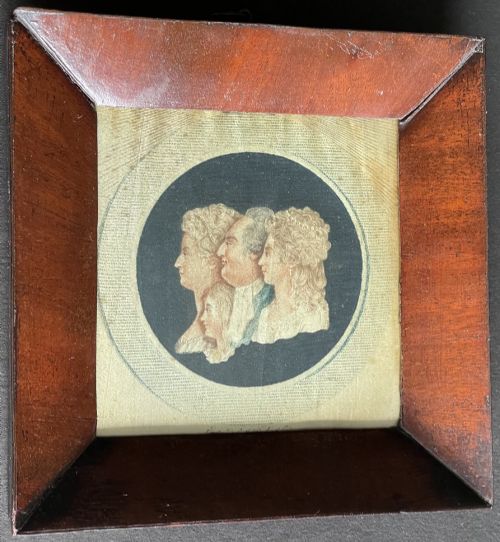
When you examine antique royal memorabilia on this page, you encounter pieces that span from the eighteenth century through to the mid-twentieth century. The selection ranges from Staffordshire portrait figures and earthenware jugs to framed flags, oil paintings and presentation boxes.
You are most likely to meet ceramics and plaques celebrating monarchs such as Queen Victoria, King George V and Queen Mary. These objects function as tangible records of coronations, jubilees and royal marriages across successive reigns.
Materials and construction
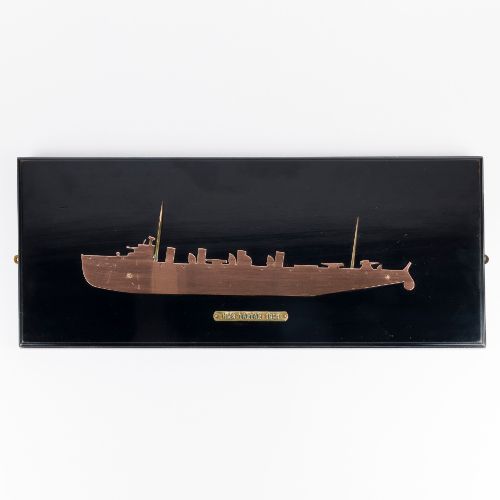
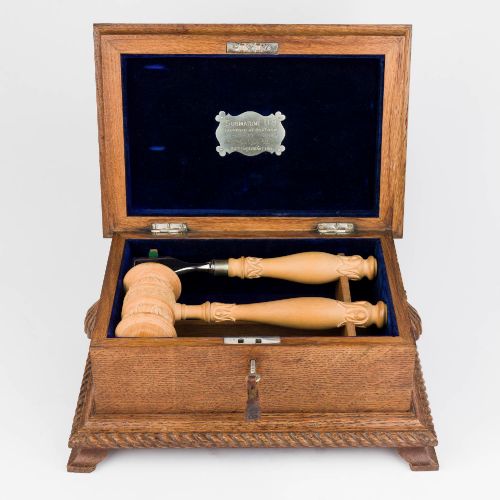
Makers utilised earthenware, stoneware and bone china for commemorative ceramics, applying glazes and hand-painted details to capture royal likenesses. Metalwork pieces employ brass, copper, bronze and silver plate, often shaped into presentation boxes, frames and plaques.
Distinctions in quality
In painted works and textiles, the precision of the brushwork or needlework defines the tier of execution. Original framing and documented provenance further distinguish museum-grade examples from standard commemorative items.
Royal Doulton·Elkington and Company·Doulton Lambeth·B North and Son·Kershaw Schofield
The Antique Royal Memorabilia Glossary
- Staffordshire figure
- A ceramic portrait figure produced in the Staffordshire potteries, often depicting monarchs or notable historical figures. These pieces range from flatback figures designed for mantelpieces to large standing models.
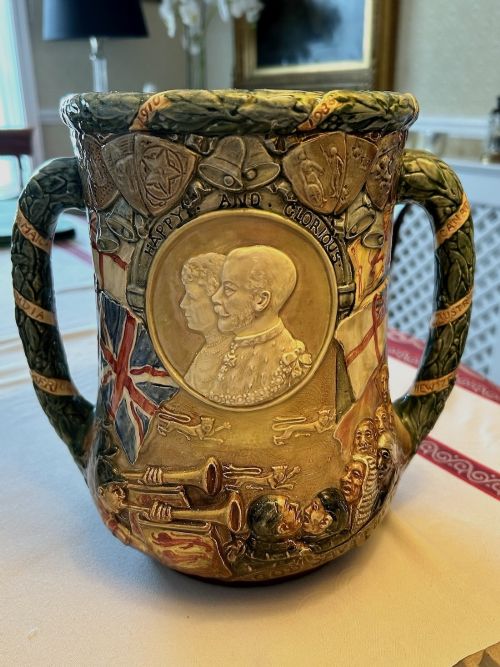
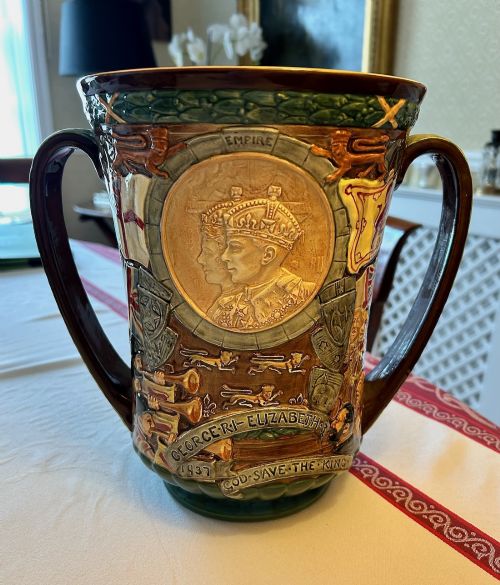
- Loving cup
- A large ceramic or metal drinking vessel with two or more handles, traditionally passed among guests during celebrations. Commemorative editions mark royal jubilees and coronations.
- Trench art
- Decorative or utilitarian objects fashioned by soldiers, prisoners of war or civilians from discarded military materials. Pieces often incorporate brass shell cases and royal coats of arms.
- Lithograph
- A print produced through the process of planographic printing from a stone or metal plate. Nineteenth-century examples frequently portray royal family members.
- Flatback figure
- A Staffordshire ceramic figure modelled with a detailed front and a flat, unglazed or minimally finished back. These were designed to sit flush against a wall on a shelf or mantelpiece.
Antique Royal Memorabilia: Frequently Asked Questions
How do I date antique royal memorabilia?
Dating relies on the specific royal event commemorated, such as a coronation, jubilee or royal wedding recorded in the title or inscription. Maker marks, registry numbers and stylistic traits also help determine the period of manufacture.
Analysing the materials, such as early earthenware glazes or nineteenth-century lithography techniques, provides further confirmation of the era in which the piece was created.
Were these items made for everyday use?
Many ceramic mugs, jugs and plates were produced as commemorative souvenirs for the general public to mark national celebrations. Other items, such as presentation boxes and oil paintings, served a decorative or ceremonial function in public buildings and private homes.
Textiles like framed flags and silk works were primarily intended for display during national events and patriotic exhibitions.
What is the difference between Staffordshire figures and chimney ornaments?
Staffordshire figures are ceramic sculptures modelled to represent specific individuals, such as Queen Victoria or Prince Albert. They were designed primarily as mantelpiece ornaments for domestic display.
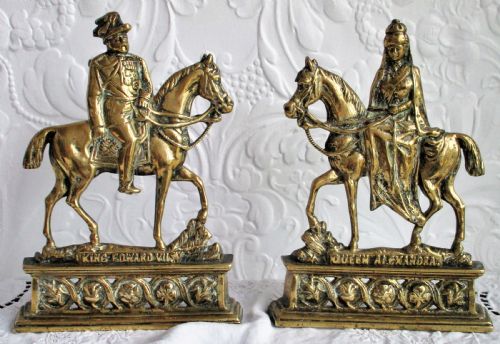
Chimney ornaments encompass a broader range of decorative objects, including brass pairs and ceramic groups, placed on mantelpieces around the hearth.
How should I display framed flags and textiles?
Framed flags and needlework pieces require protection from direct sunlight to prevent the fading of silk and cotton threads. Archival framing methods help preserve fragile textiles over time.
Keeping these items in stable environmental conditions away from excessive moisture ensures the longevity of the fabric and any accompanying paper documents.