




Glazed Pottery Cup
These glazed pottery cup examples span centuries of ceramic tradition, offering both decorative charm and tactile history for daily use.
Glazed Pottery Cup
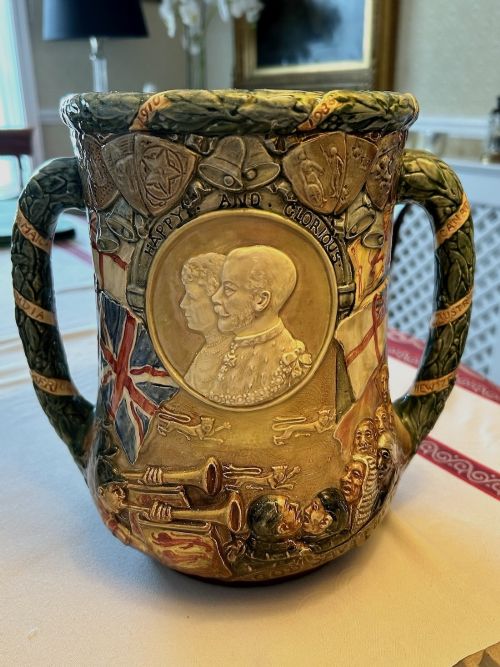
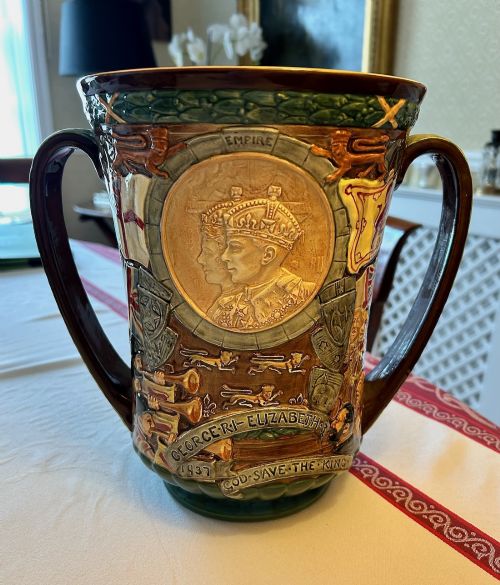
A glazed pottery cup encompasses a diverse array of drinking vessels, ranging from utilitarian mugs and tankards to commemorative loving cups and delicate teacups. When exploring this selection, buyers encounter functional forms designed for ale, tea, or custard alongside decorative vessels produced for royal coronations and jubilees. The pieces bridge everyday domestic objects and commemorative art.
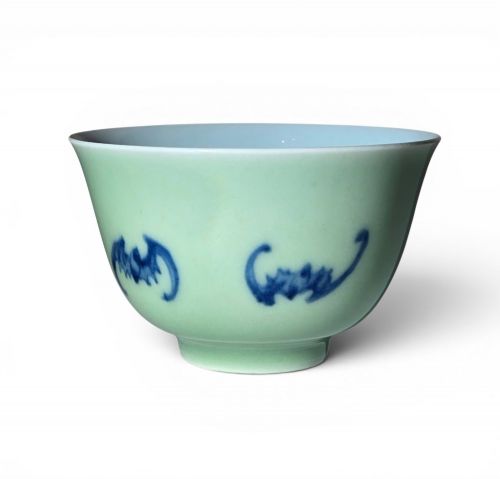
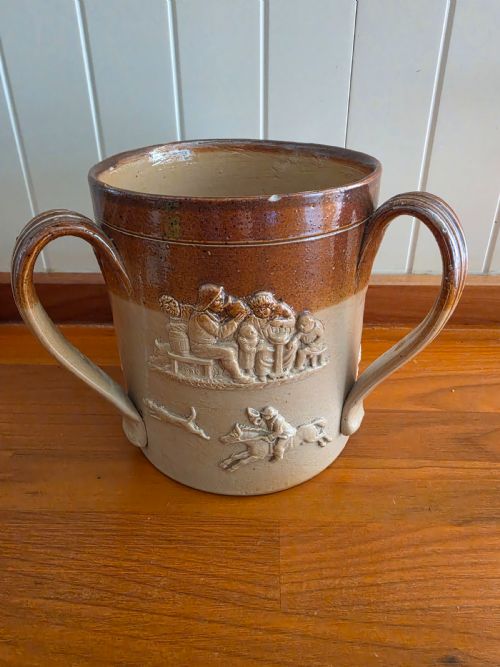
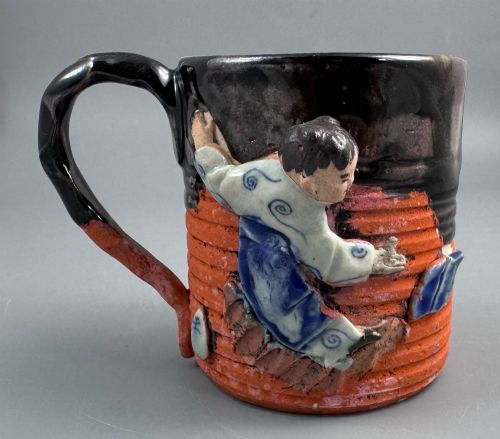
The inventory on this page reflects multiple origins and periods, spanning English country pottery, Victorian wares, and Qing Dynasty pieces. Alongside these traditional forms sit Japanese Sumida Gawa cups and specialised vessels like posset pots and three-handled tygs. Buyers are most likely to encounter earthenware, stoneware, and ceramic bodies finished with various glaze treatments.
How they were made
Potters utilised foundational materials including earthenware, stoneware, and porcelain, shaping the clay by hand or on the wheel before applying glazes to seal the porous body. Specialised techniques such as tin glazing, underglaze blue painting, and applied figural decoration created varied surface textures and visual depth. These methods combined structural durability with decorative appeal.
Makers enhanced standard vessels with functional additions like multiple handles, silver mounts, and fitted lids, as seen on tygs and posset pots. Distinctive regional and factory methods, from Japanese Sumida Gawa applications to Fulham Pottery styling, dictated the final appearance of each ceramic piece.
Listings feature earthenware, stoneware, and porcelain materials spanning the eighteenth through the twentieth centuries.
What varies in quality
Quality in a glazed pottery cup rests on the precision of the throw, the stability of the handle attachment, and the evenness of the glaze application across the body. Superior examples demonstrate careful control during firing, resulting in consistent colour and well-defined applied decorations rather than muddy or obscured details.
Historical significance and provenance elevate certain pieces, particularly commemorative items tied to specific royal reigns or produced by recognised potteries like Royal Doulton. The sophistication of hand-modelled figures, such as applied sages or karako characters, further separates standard utilitarian wares from exceptional studio and factory output.
Royal Doulton·Fulham Pottery·Sarreguemines
The Glazed Pottery Cup Glossary
- Tyg
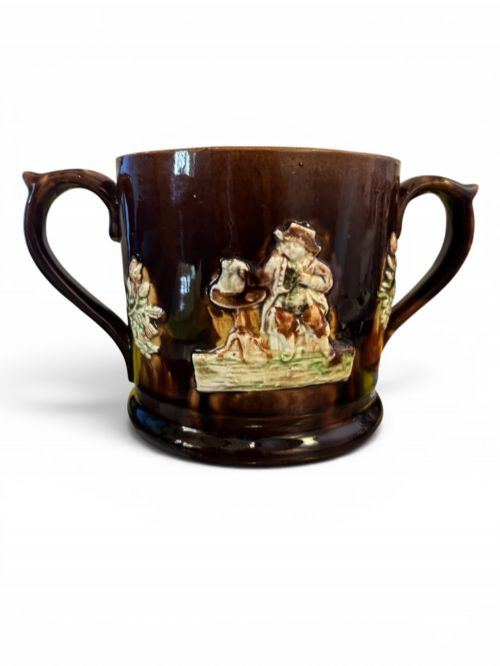
- A large drinking vessel featuring three or more handles, designed so multiple drinkers could pass it around a table. These ceramic mugs often date from earlier centuries and appear in stoneware or earthenware bodies.
- Posset pot
- A historical lidded vessel used for serving posset, a hot drink made of curdled milk mixed with wine or ale. They typically include spouts and multiple handles for communal drinking.
- Stoneware
- A robust, vitrified ceramic pottery fired at high temperatures until semi-vitreous and impermeable to liquids. This durable material forms the body of many historical beakers and tankards.
- Tin glaze
- An opaque white glaze containing tin oxide, used extensively on pottery to provide a smooth surface for painted decoration. It is characteristic of traditional Delft wares.
- Loving cup
- A large two-handled or multi-handled drinking vessel passed among guests at banquets or commemorative events. They frequently celebrate royal coronations and jubilees.
Glazed Pottery Cup: Frequently Asked Questions
What is a multi-handled tyg used for?
A tyg is a traditional drinking vessel designed with three or more handles to allow communal passing around a table during gatherings.
Historically, each drinker would use a different section of the rim, ensuring a shared experience among guests.
How do I identify a commemorative loving cup?
Commemorative loving cups usually feature specific royal names, dates, and portraits marking coronations, jubilees, or historic national events.
They often incorporate two or more handles and special inscriptions tied to the reigning monarch of the period.
What distinguishes stoneware from earthenware?
Stoneware is fired at higher temperatures until the clay body becomes vitrified and non-porous, offering greater durability than standard earthenware.
Earthenware remains more porous and requires a complete glaze layer to hold liquids effectively.
How do I care for antique glazed ceramics?
Antique glazed ceramics require gentle hand washing in lukewarm water with mild soap to protect the historic glaze and any applied decoration.
Avoid abrasive sponges, soaking, and modern dishwashers to preserve the structural integrity of the ceramic body.