



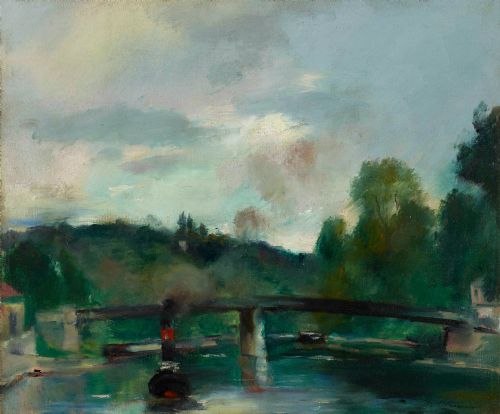
Antique River Landscape Canvas
An antique river landscape canvas brings the quiet pull of nineteenth-century waterways and pastoral riverbanks directly into a room.
Antique River Landscape Canvas
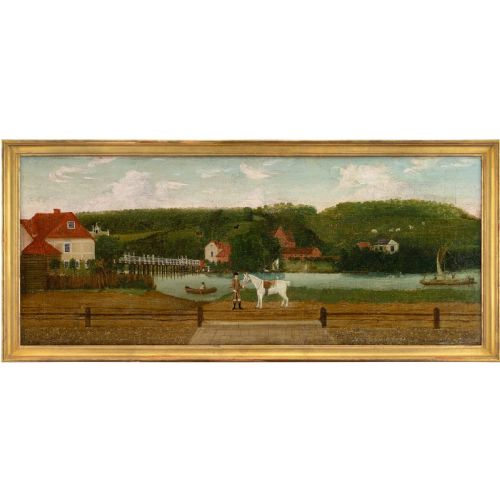
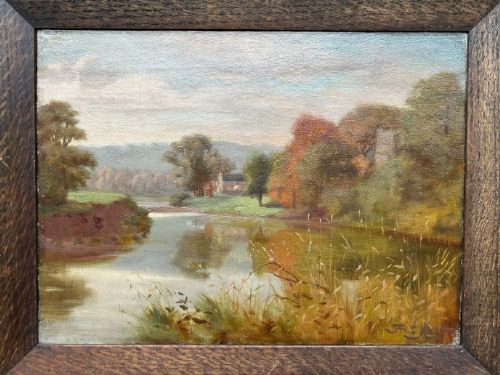
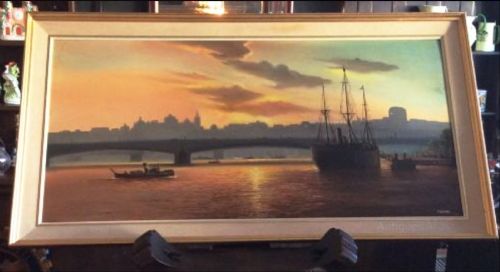
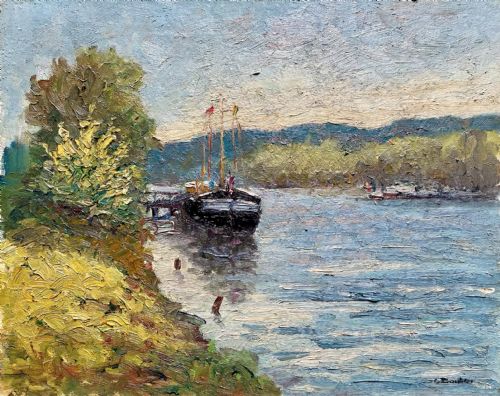
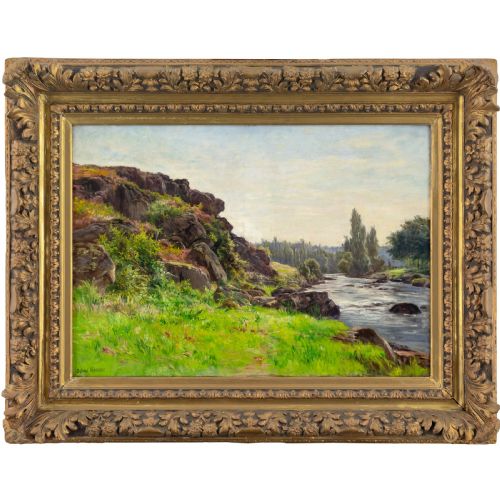
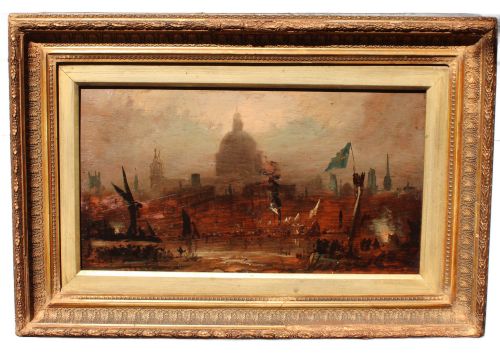
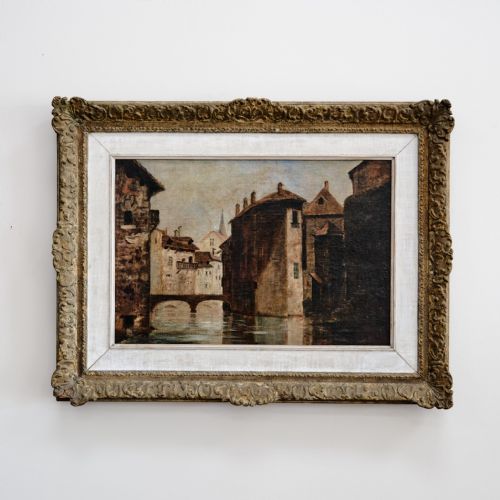
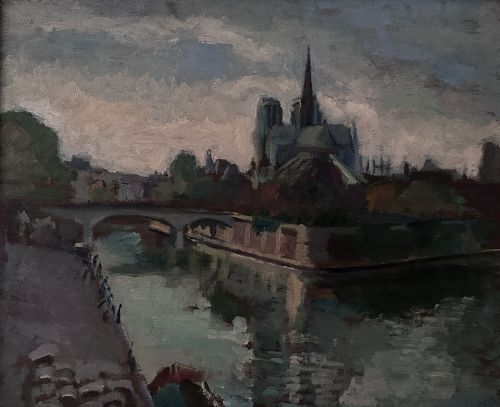
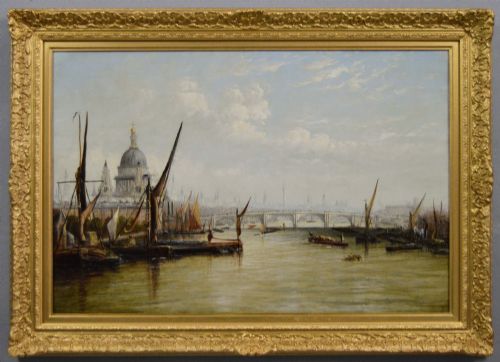
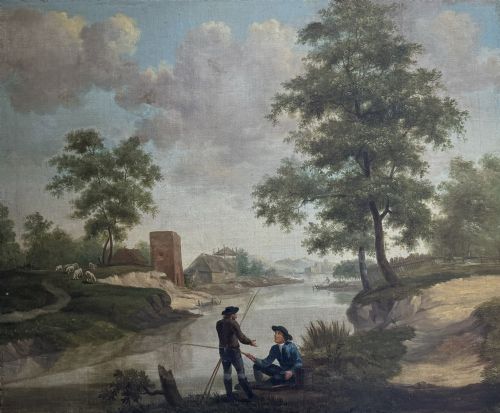
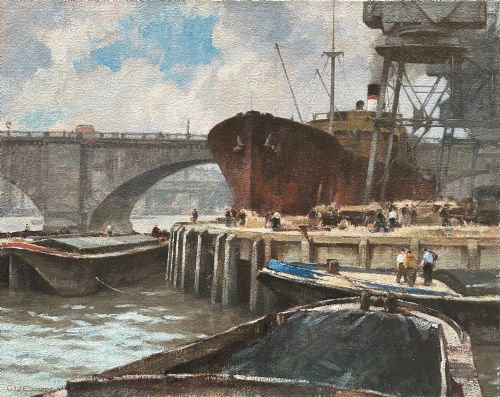
When searching for an antique river landscape canvas, collectors encounter original oil paintings depicting pastoral streams, bustling industrial bridges, and quiet rural waterways.
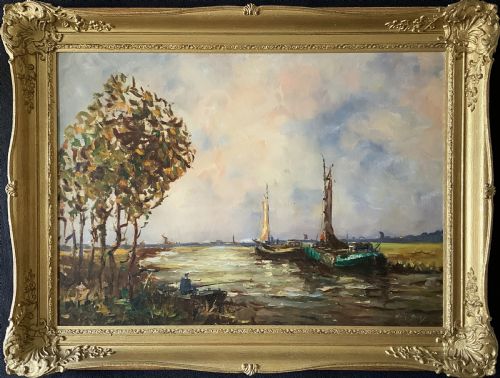
The selections span nineteenth-century British, French, and Dutch schools, capturing scenes from misty morning river paths to sunlit European canals.
Common formats include framed works on stretched canvas or canvas board, rendered in styles ranging from detailed realism to early impressionism.
How They Were Made
Artists built these compositions using oil paint applied to stretched canvas, frequently supported by wood stretcher frames and housed within decorative gilt wood mouldings.
Brushwork varies from tight academic precision to looser, textured applications of pigment, sometimes enhanced by the underlying application of gesso.
Several canvases capture cows pausing mid-stream to cool off.
What Varies in Quality
The distinction between standard works and finer examples lies in the artist's handling of atmospheric light, depth, and spatial perspective along the watercourse.
Superior execution shows confident brushwork and harmonious tonal balance, whereas lesser pieces rely on formulaic foliage and rigid composition.
Frederick Marriott·Francis Moltino·Willem Bos·Sir Alfred East·Herbert Royle·Paul Desire Trouillebert·Henry H Parker·Sydney Yates Johnson·John Horace Hooper·John Ferneley Senior·Archibald Kay·Henri Jaques Delpy·Charles William Wyllie·Alexandre Le Bihan·James Aumonier·AF de Breanski·Robert Gallon·George Vicat Cole
The Antique River Landscape Canvas Glossary
- Canvas
- A heavy woven fabric stretched across a wooden frame to serve as a sturdy support for oil paintings.
- Gilt Wood
- Timber framing coated with a thin layer of gold leaf or metallic gilt, typical of period frames.
- Impressionism
- A nineteenth-century painting style focusing on loose brushstrokes and the shifting qualities of natural light.
- Barbizon School
- A mid-nineteenth-century movement of French painters dedicated to naturalistic landscape and rural scenery.
- Provenance
- The documented history of ownership that helps authenticate the origin and age of a fine art painting.
Antique River Landscape Canvas: Frequently Asked Questions
How do I identify the period of a river canvas?
Examine the style of the brushwork, the framing materials, and the canvas preparation behind the stretcher bars. Nineteenth-century works often exhibit traditional oil grounds and distinct regional painting characteristics.
Signatures, artist registry records, and period framing styles also offer reliable clues to narrow down the decade of creation.
Were these paintings always framed in wood and gilt?
Most surviving nineteenth-century works retain their original or period-appropriate wooden frames, frequently finished with ornate gilt details. These frames were designed to complement the tonal depth of the oil painting.
Frames sometimes received updates later in the nineteenth or twentieth century depending on prevailing domestic tastes.
How should I care for an antique oil painting?
Keep the canvas away from direct sunlight, damp environments, and sudden temperature fluctuations that can cause the oil paint or gesso to crack. Stable indoor humidity preserves both the fabric support and the wooden stretcher.
Dust the surface gently with a soft, dry brush and avoid using chemical cleaning agents on the paint layer.
What subjects are most common in these landscapes?
Popular motifs include rural riverbanks with figures fishing, cattle watering near bridges, bustling industrial waterways like the Thames, and French pastoral canals. Artists frequently focused on the interplay of water reflections and changing skies.
Regional topography ranges from Scottish highlands and Welsh streams to Dutch canals and French river valleys.