




Blue River Landscape Artwork
A blue river landscape artwork brings natural watercourses and open skies into an interior through traditional painting and watercolour.
Blue River Landscape Artwork
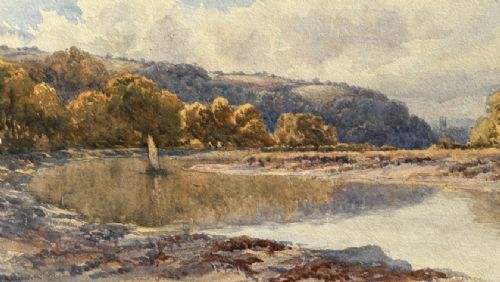
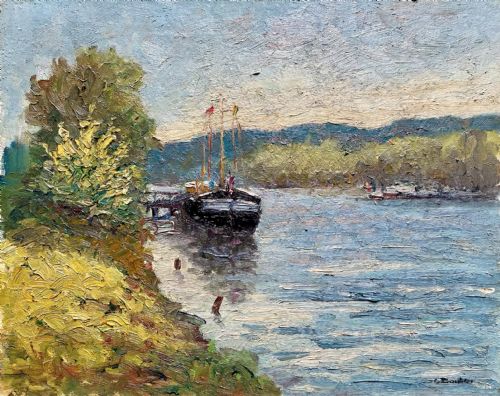
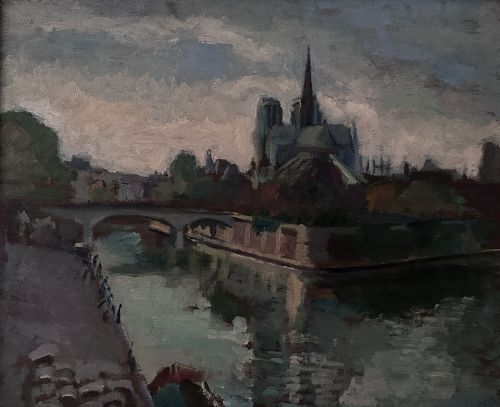
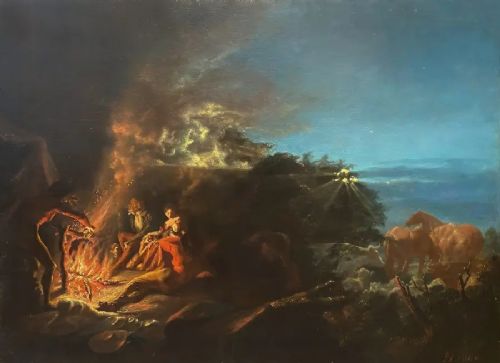
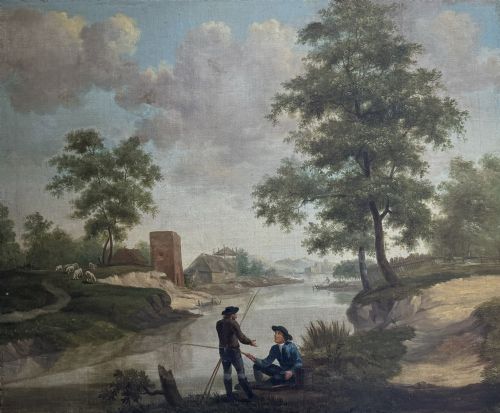
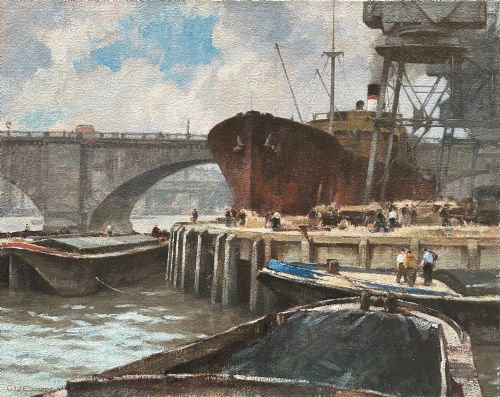
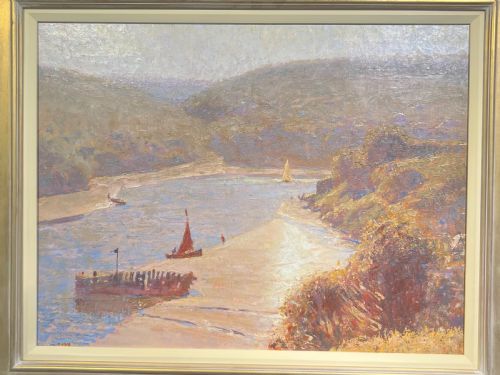
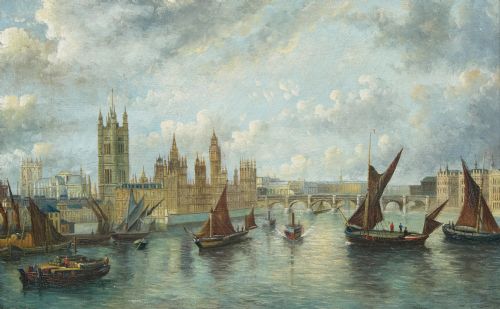
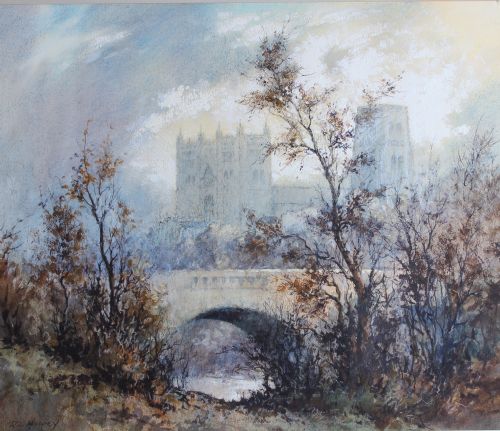
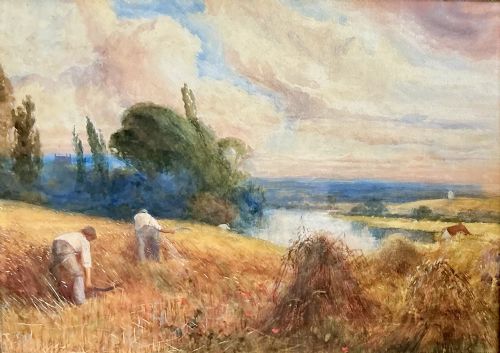
A blue river landscape artwork encompasses paintings and watercolours depicting rivers, estuaries, and coastal waterways from various historical periods. The selection here leans heavily towards nineteenth-century British watercolours and twentieth-century impressionist oils on canvas or wood panel.
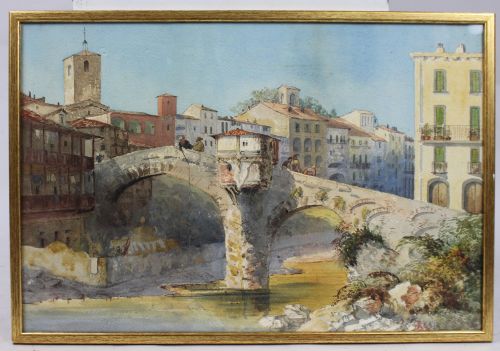
Buyers encounter rural riverbanks, busy bridges, and quiet coastal scenes created by named artists and regional schools. These works capture specific topographical locations across Britain, France, and wider Europe through diverse painting traditions.
The formats range from intimate framed watercolours suited to smaller studies to large mid-century impressionist oil paintings intended as focal interior pieces. Each item records a distinct perspective on water landscapes using the dominant painting methods of its decade.
How they were made
Artists built these compositions primarily using watercolour pigment on paper or oil paint applied to canvas and wood panels. Watercolour works rely on transparent washes and fine brushwork to capture moving water and atmospheric skies, while oil paintings utilise heavier impasto and layered pigments.
Support materials reflect the working methods of different eras, moving from traditional stretched canvases and heavy paper sheets to wood panels favoured for smaller plein air studies. Framing materials typically include period wood and gilt mouldings chosen to complement the individual palette.
At least one canvas captures a quiet moment of a figure sunbathing beside a river, reminding us that artists chased the sun long before modern holidays.
What varies in quality
Quality depends on the surety of the brushwork, the balance of the composition, and how effectively the artist handles natural light upon the water. Stronger examples demonstrate confident handling of perspective and atmospheric depth rather than mere technical execution.
The preservation of the pigment and the condition of the paper surface or canvas support determine the longevity and visual impact of the piece. Works that retain their original colour intensity and show minimal surface disruption command greater attention from collectors.
Alfred Young Nutt·Albert Bierstadt·Cyril Walduck Edwards·Robert Leslie Howey·Florence Adelina Hess·Frederick Hines·Hubert Wellington·Archibald Kay·William Frederick Settle·Cornelius Pearson·Arthur Reginald Smith·Henry John Kinnaird·Thomas Bush Hardy·Stanley Leader·George Vicat Cole·John Wright Oakes·William Joseph Boyes·Charles Harmony Harrison·Phyllis Morgans·Armand Guillaumin·Frederick Williamson·Edmond Defonte·Noel Harry Leaver·Frederick George Coleridge
The Blue River Landscape Artwork Glossary
- Impressionism
- A nineteenth-century painting style focusing on accurate depiction of light and its shifting qualities. Artists using this approach favoured visible brush strokes and open compositions.
- Plein air
- The act of painting outdoors to capture direct natural light and environmental conditions. This method became central to nineteenth and twentieth-century landscape artists.
- Impasto
- Paint applied thickly to a canvas or panel so that the brush or palette knife marks stand out visibly. This technique adds tactile texture and depth to water and foliage.
- Aquatint
- A printmaking technique that produces tonal areas resembling watercolour washes. It was frequently used for reproducing landscape scenes during the eighteenth and nineteenth centuries.
Blue River Landscape Artwork: Frequently Asked Questions
How do I hang a watercolour painting safely?
Keep watercolours away from direct sunlight to prevent the pigments from fading over time. Glazing with conservation glass offers additional protection against ultraviolet light.
Ensure the hanging wall remains dry and stable, avoiding areas prone to dampness that might affect the paper or mount board.
What is the difference between oil and watercolour?
Oils use slow-drying pigments suspended in medium, allowing artists to build thick layers and rework the surface. Watercolours use water-soluble pigments on paper, demanding rapid and decisive brushwork.
Oils generally require sturdy canvas or panel supports, whereas watercolours need paper protection under glass.
How do I identify the period of a landscape painting?
Examine the framing style, the pigments used, and the signature or label on the reverse of the canvas or panel. Costume details or architectural elements within the landscape often provide clues to the decade of creation.
Consulting artist registries helps narrow down dates when working with listed nineteenth and twentieth-century painters.
Are these river landscapes based on real locations?
Many works depict identifiable rivers, bridges, and coastal estuaries across Britain and Europe, such as the Thames, the Seine, or regional Yorkshire waterways. Titles often record the exact spot where the artist set up their easel.
Some historical works represent idealized or composite compositions inspired by actual topography rather than strict photographic records.