



Country River Scene Painting
A country river scene painting captures pastoral life along the water, offering a quiet view of rural waterways from earlier centuries.
Country River Scene Painting
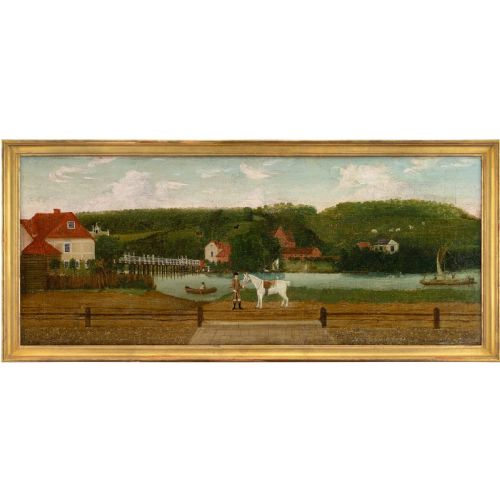
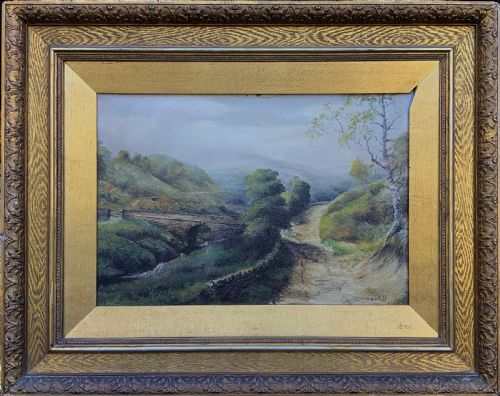
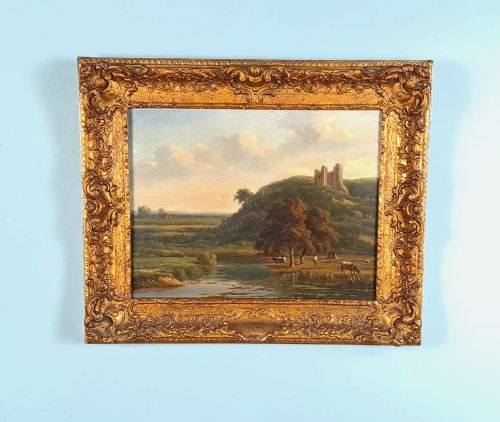
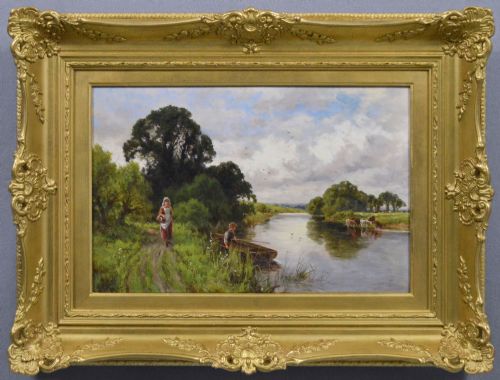
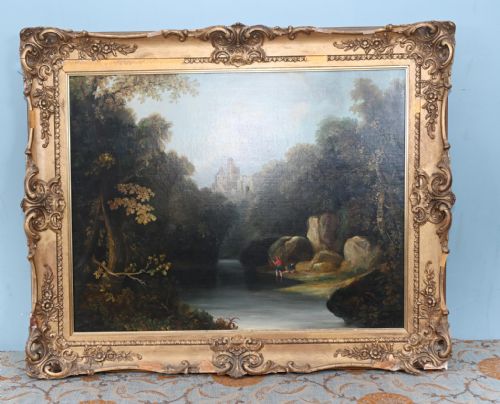
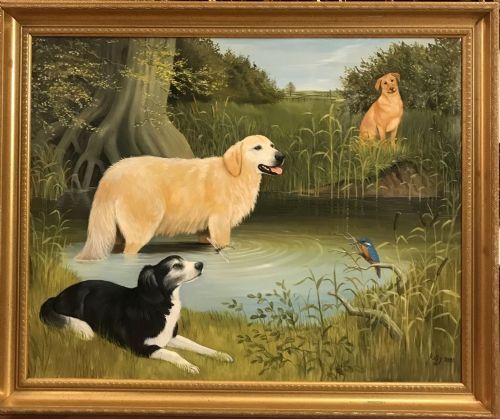
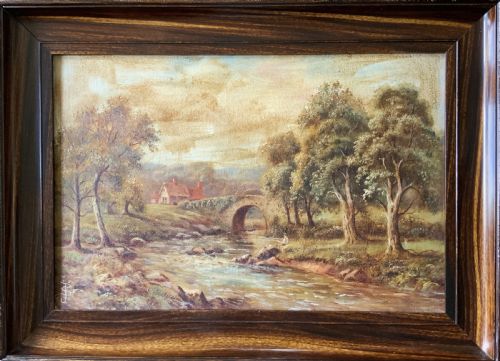
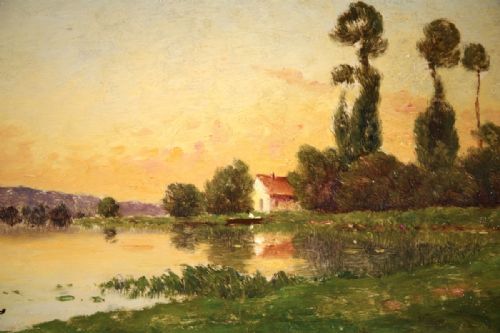
A country river scene painting depicts rural waterways, pastoral landscapes, and riverbanks populated by figures, animals, or fishermen. These works span the nineteenth and twentieth centuries, capturing locations from English and Welsh rivers to broader European countrysides.
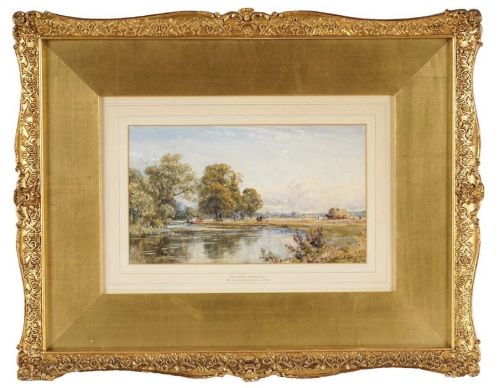
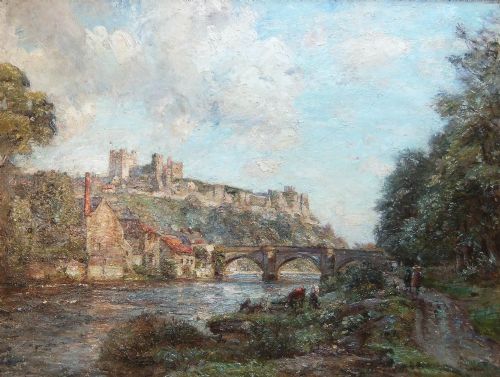
The selections on this page feature oils on canvas, wood panels, and watercolours created within Victorian, Edwardian, and mid-century movements. Buyers frequently encounter framed works by named British and continental artists depicting pastoral scenes, livestock by the water, and quiet backwaters.
Subjects range from tranquil morning stretches of the Thames and Severn to moody winter river views and Impressionist interpretations. Each piece records changing rural topographies through traditional brushwork and regional palettes.
How they were made
Artists painted primarily with oil paint on canvas, wood boards, or panels, while others utilised watercolour and acrylic pigments on paper. Canvases were stretched over wooden frames and secured with traditional tacks, often bearing the stamp of period colourmen.
Frames generally consist of moulded wood or giltwood surrounds that match the period of the painting. Support substrates vary from sturdy wooden panels to fine linen canvases, reflecting the standard studio practices of nineteenth and twentieth-century painters.
Listings feature works executed in oil on canvas, oil on board, and watercolour on paper by various British and European artists.
What varies in quality
Quality rests upon the handling of light, atmospheric depth, and the naturalistic rendering of water and foliage. Superior works display confident brushwork and precise tonal control, creating a convincing sense of place and natural movement along the river.
The distinction between standard decorative pieces and finer works lies in the artist's ability to capture the specific quality of light at different hours of the day. Compositional balance, the integration of figures or livestock into the landscape, and the preservation of original framing contribute to a piece's standing.
Robert Thorne Waite·Herbert Royle·Henry H Parker·Sydney Yates Johnson·Henri Jaques Delpy·John Bell·Henry John Kinnaird·Peter Deakin·William Langley·Charles Harmony Harrison·Thomas Baker·William Manners·Phyllis Morgans·Claude Cardon·Paul H Ellis·Harry Pennell·John Syer Junior·Henry Cheadle·Robert Winchester Fraser·Alois Arnegger·Ebenezer Wake Cook
The Country River Scene Painting Glossary
- Giltwood
- Wood carved and coated with gold leaf or metallic powder, commonly used for traditional picture frames. This finish adds a reflective border that complements the tones of an oil painting.
- Tondo
- A circular painting or relief sculpture. This distinct format requires specific compositional balance from the artist to fit the rounded edges.
- Impressionism
- An art movement focusing on accurate depiction of light in its changing qualities and ordinary subject matter. Works in this style use visible brushstrokes and open compositions.
- Watercolour
- A paint consisting of colour pigment suspended in a water-based solution, typically applied to paper. It yields translucent washes that capture atmospheric river mist and light.
- Pastoral
- A genre of art depicting the rural life of shepherds, farmers, and country folk in idealized natural settings. These scenes emphasise tranquility and harmony with nature.
Country River Scene Painting: Frequently Asked Questions
What periods do these paintings come from?
The works originate largely from the nineteenth and twentieth centuries, spanning Georgian, Victorian, Edwardian, and mid-century periods. Many carry dates or stylistic markers tied to these eras.
Artists during these times recorded both traditional rural scenes and evolving impressions of British and European waterways.
How should I hang a heavy oil painting?
Heavy oil paintings on canvas require robust picture hooks secured directly into wall studs or masonry using appropriate fixings. Traditional giltwood frames add considerable weight that standard plaster wall plugs cannot support.
Ensure the hanging wire or brackets on the back of the frame match the weight distribution of the artwork before mounting.
Are watercolours framed differently than oils?
Watercolour paintings require glass protection and acid-free mounts to prevent moisture and light damage to the paper beneath. Oil paintings on canvas or wood panels are displayed unglazed to let the texture of the paint remain visible.
Frames for watercolours are generally lighter and narrower than the heavy giltwood surrounds typical of large nineteenth-century oil paintings.
How can I tell if a painting is original?
Original paintings show visible brush texture, raised paint edges, and natural ageing such as fine craquelure across the surface. Examining the back reveals the texture of the canvas, panel grain, or period stamps from canvas makers.
Signatures, artist inscriptions, and old exhibition labels provide further documentation of a work's authenticity and age.