

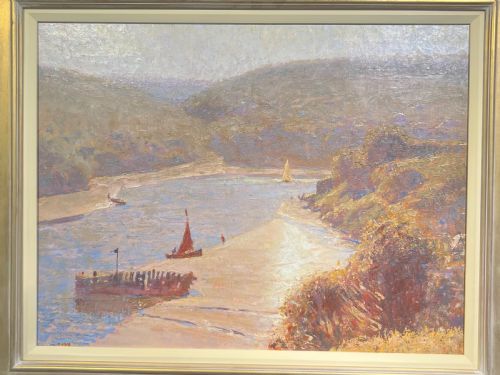
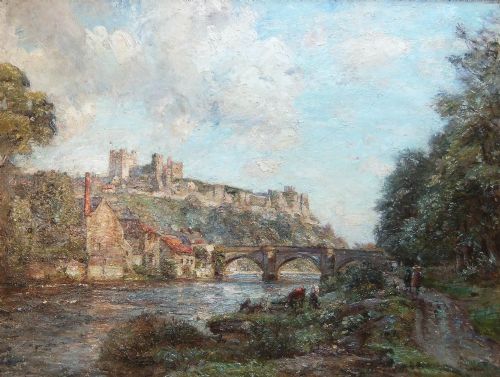


Impressionist River Painting
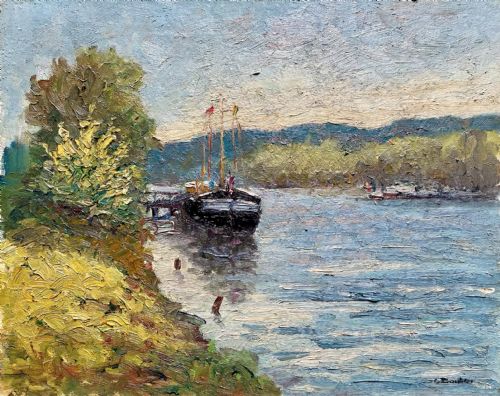
Impressionist river painting captures light on water through loose brushwork, offering buyers a serene piece of landscape history for the wall.
Understanding impressionist river painting
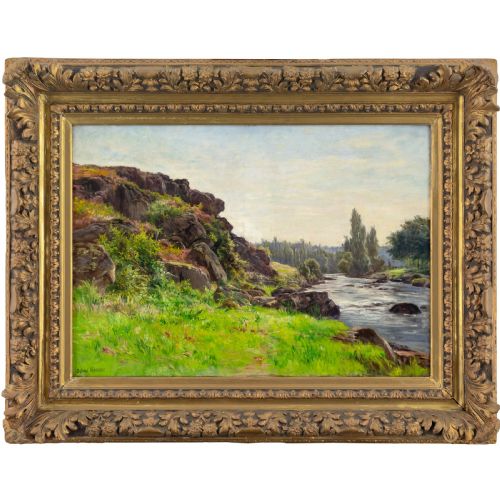
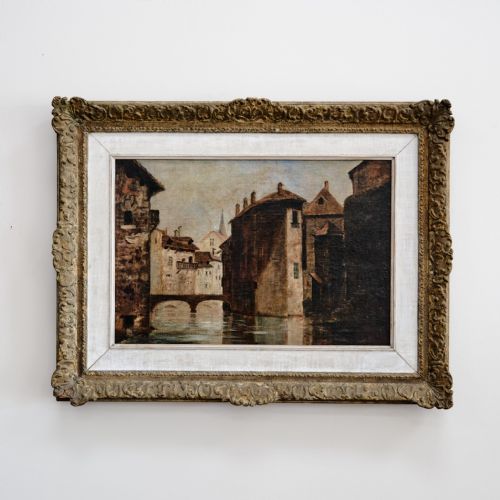
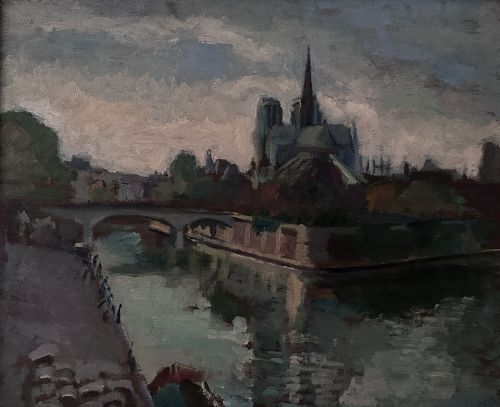
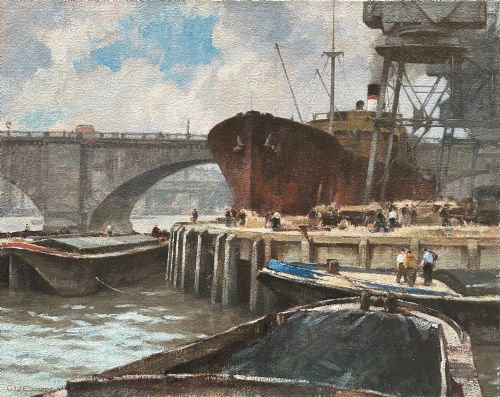
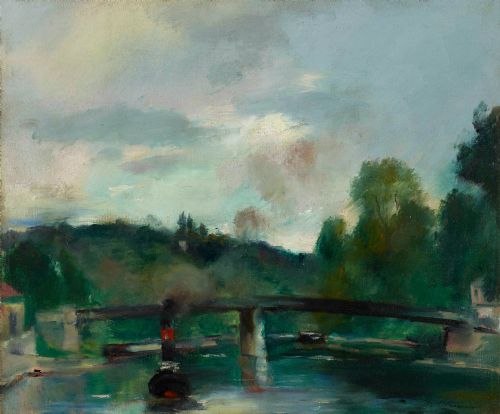
An impressionist river painting records water, banks, and bridges using visible brushstrokes and natural light. These works range from French and British impressionism to post-impressionism and mid-century impressionism.
The pieces on this page appear on canvas, canvas board, or wood board, spanning periods from the nineteenth century through the 1920s, 1930s, 1950s, and 1969.
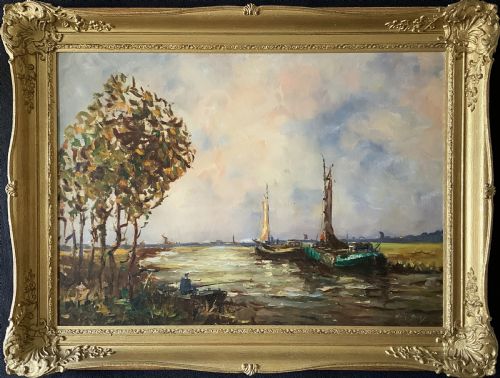
Subjects include British river scenes, Dutch style river landscapes, London river views, and Scottish seascapes with shipping off the river.
Materials and construction
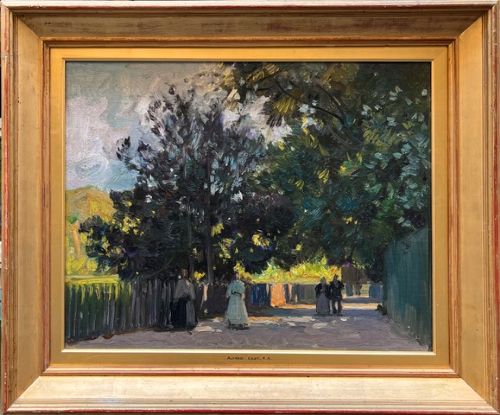
Artists applied oil paint to stretched canvas, canvas board, or wood board, utilising varied mediums to capture outdoor light. Canvases and boards often sit within gilt wood frames enhanced with gesso and gold leaf.
Brushwork remains direct and expressive, recording landscapes quickly to capture changing atmospheric conditions on the water.
Retail Price Guide 2026
Typical UK retail prices for impressionist river painting, calculated from the Sellingantiques database of over a million retail prices indexed since 2003. This retail price guide relies exclusively on Sellingantiques data; no external sources or auction records are used, so the figures do not describe the wider market.
Materials across the listings include oil paint, canvas, wood, gesso, gold leaf, and gilt wood frames.
Distinctions in quality
Quality rests in the handling of light and pigment across the water, separating dynamic compositions from static recordings. The strength of the brushwork and the harmony of the palette determine the visual success of each landscape.
Framing also influences the piece, with original gilt wood and gesso frames adding historical context that complements the painted surface.
Gabriel Mathieu·Phyllis Morgans·F.W.Jackson·Charles Edmund Rene His·G E Roberts·F W Burns
The Impressionist River Painting Glossary
- Canvas board
- A rigid panel made from mounting canvas onto a stiff backing board for painting. It provides a stable surface often utilised in twentieth-century outdoor sketching.
- Gesso
- A plaster-like preparation applied to wood frames before gilding. It creates a smooth base for gold leaf application.
- Post-Impressionism
- An art movement extending impressionist techniques towards more expressive forms and personal interpretations. Artists pushed colour and brushwork beyond strict optical realism.
- Riverscape
- A painting or other artwork depicting a river landscape. These scenes focus on watercourses, bridges, and surrounding banks.
Frequently Asked Questions
What periods do these river paintings cover?
The works span the nineteenth century through the early and mid-twentieth century, including pieces from the 1890s, 1900, 1920, 1930, 1950, and 1969.
This broad timeline shows how impressionist styles evolved from earlier French and British traditions into mid-century interpretations.
Are these paintings on canvas or board?
Artists used multiple supports, applying oil paint directly to canvas, canvas board, or wood board.
Support choices often reflect the date and setting, with board frequently used for portable plein-air painting.
How do I care for an oil painting?
Keep oil paintings out of direct sunlight and away from extreme temperature fluctuations that could damage the canvas or wood.
Dust the surface gently with a soft, dry brush and avoid using liquid cleaners on the paint or frame.
What framing comes with these paintings?
Many works are housed in period gilt wood frames, sometimes featuring gesso and gold leaf details.
These frames complete the presentation and help date the overall piece to its era of origin.