
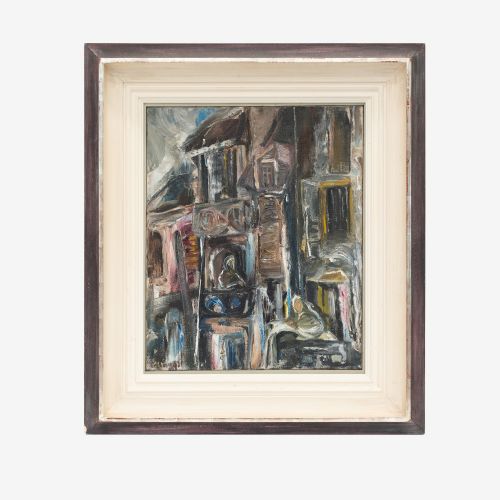


Expressionist Landscape Art
Expressionist landscape art captures emotional resonance through bold brushwork and vibrant colour, offering an immersive glimpse into the subjective vision of the twentieth century.
Expressionist Landscape Art
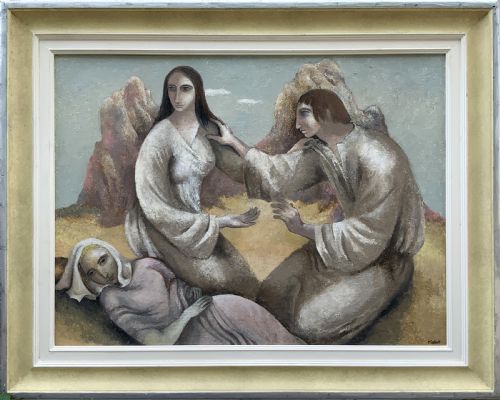
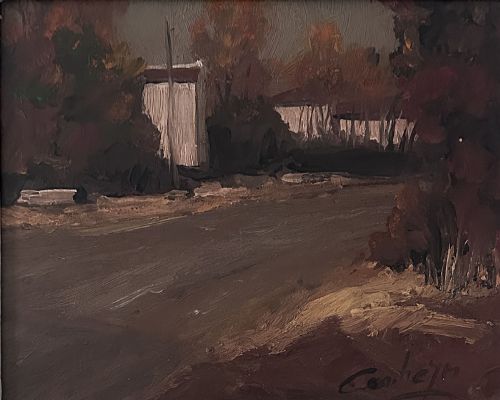
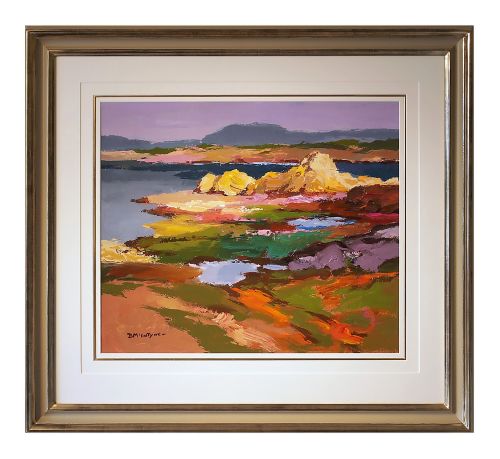
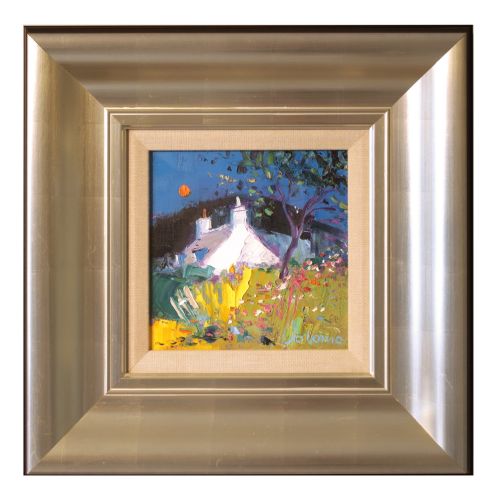
Expressionist landscape art brings together twentieth-century visions of nature, cities and rural scenes through the lens of emotional intensity. Pieces on this page predominantly date from the mid-twentieth century, spanning decades from the 1910s to beyond 1960.
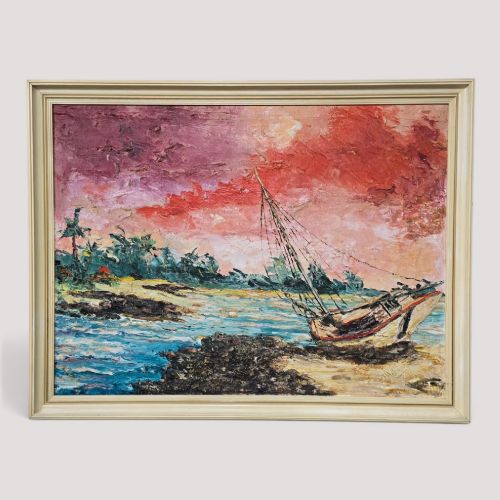
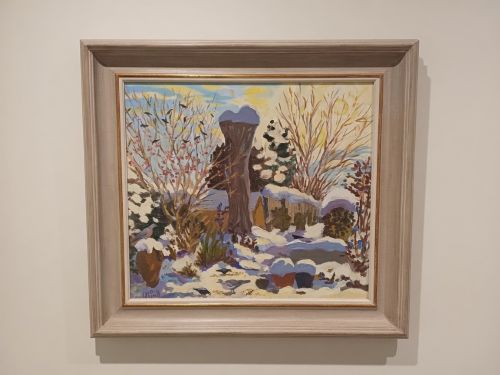
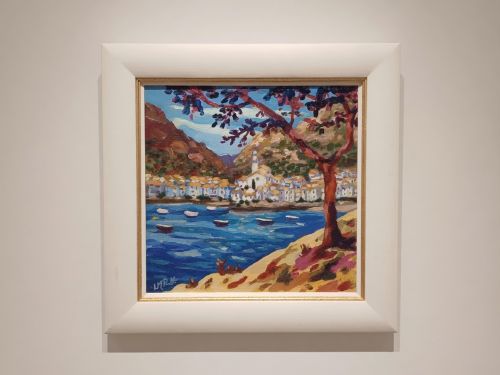
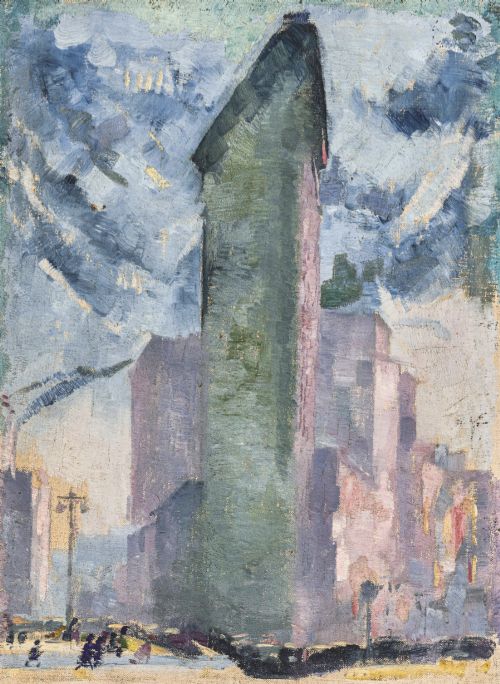
The works span diverse geographic origins, including British, French, German, Danish and Ukrainian scenes, taking the form of oil paintings, canvas works, board panels and paper sketches. Common subjects range from quiet village views and wintry woodlands to bustling cityscapes and coastal harbours.
Buyers encounter everything from intimate sketches by Alfred Wolmark and Sonia Lawson to large canvases by Gabriel Dauchot, Donald McIntyre and Markey Robinson. These works reflect stylistic movements such as Fauvism, Post-Impressionism, Modern British and Mid-Century Modernism.
Evaluating the works
Quality rests upon the confidence of the hand and the boldness of the compositional vision, distinguishing dynamic, purposeful brushwork from hesitant or formulaic application. The best examples command space through a distinct handling of light, colour and texture that unifies the entire surface.
Provenance and documentation elevate certain pieces, particularly when a work is tied to an established artist's oeuvre or exhibits a documented exhibition history. The integration of medium and support also plays a role, where heavy impasto interacts securely with a stable canvas or board.
Expressionist Landscape Art Retail Price Guide 2026
Typical asking prices for expressionist landscape art among the pieces listed under this phrase on Sellingantiques today, from the lower quarter to the upper quarter. They describe what is for sale here now, not the wider market.
The selection includes international perspectives with British, French, German, Danish and Ukrainian artists represented across diverse landscape subjects.
Alfred Wolmark·Christine Nesbit·Donald McIntyre·John Lowrie Morrison·Lilian Colbourn·Joan Gillchrest·Hazel M Barnett·Gabriel Dauchot·Mercedes Legrand·Hein Hoppmann·Sir William George Gillies·Emanuele Cappello·Kenneth B Malpass·Sonia Lawson·Hans Kappel Øvre·Lillian M Harrison·Markey Robinson·Pierre Peltier
The Expressionist Landscape Art Glossary
- Impasto
- Paint applied thickly to a canvas or board, standing out in relief from the surface so that the texture of the brush or palette knife remains visible. This technique adds physical depth and a sculptural quality to two-dimensional scenes.
- Fauvism
- An early twentieth-century style characterised by strong, non-naturalistic use of colour and simplified forms. Practitioners prioritized painterly qualities and emotional reaction over realistic representation.
- Post-Impressionism
- A predominantly French art movement that extended Impressionism while rejecting its limitations, focusing instead on symbolic content, formal order and heavier structure. Artists emphasised vivid colours and distinct brushstrokes.
- Mixed media
- An artwork utilising more than one medium or material combined on a single support. This approach allows artists to experiment with varied textures and surface finishes within one composition.
- Modern British
- A broad classification for art produced in Britain during the twentieth century that engaged with European modernist developments. It encompasses diverse approaches to landscape, portraiture and abstraction.
Expressionist Landscape Art: Frequently Asked Questions
What defines expressionist landscape art?
These works prioritize subjective emotional experience over literal depiction, using distortion, dynamic brushwork and intense colour palettes to convey the mood of a scene. They capture the essence of a landscape through the artist's personal reaction to nature or urban environments.
Subjects range from serene rural villages and stormy seas to bustling Parisian boulevards, all filtered through modernist sensibilities typical of the twentieth century.
How should I display a vintage oil painting?
Display these works away from direct sunlight and excessive humidity to protect the integrity of the canvas and the oil pigments. Proper wall placement ensures the heavy impasto and textured surfaces catch ambient light effectively.
Consider the existing frame, as many mid-century pieces retain their original wooden housings, which complement the tonal weight of the composition.
How can I tell the period of a painting?
Dating relies on stylistic markers, materials such as canvas or board types, and documentation associated with the artist's active years. Mid-century works often exhibit distinct modernist abstractions or fauve colour choices characteristic of the decades following the second world war.
Signatures, exhibition labels on the reverse, and artist biographies help narrow down the exact window of creation.
What is impasto technique?
Impasto involves laying oil paint onto the canvas in thick, heavy applications that retain the physical marks of the brush or palette knife. This method creates a tangible three-dimensional texture on the surface of the painting.
Artists utilised this technique to enhance the emotional weight and raw energy of landscapes, cityscapes and figurative scenes.