

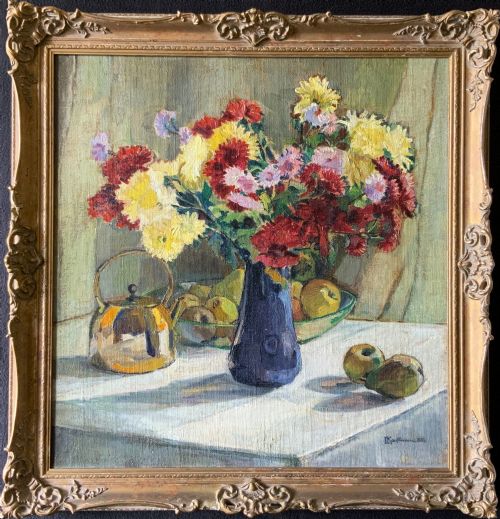


1930s Oil Painting
A 1930s oil painting brings the confident palette and varied modernist movements of the interwar years straight into a room.
1930s Oil Painting
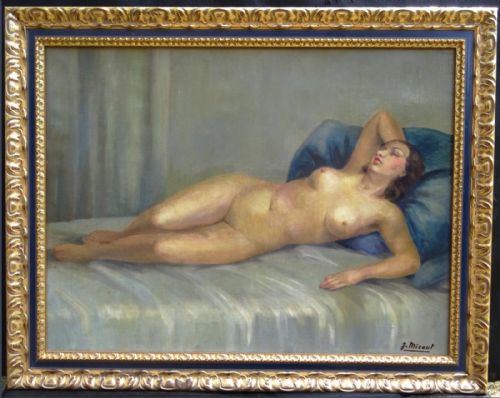
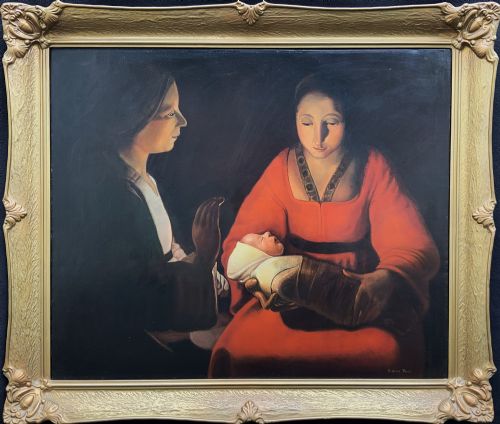
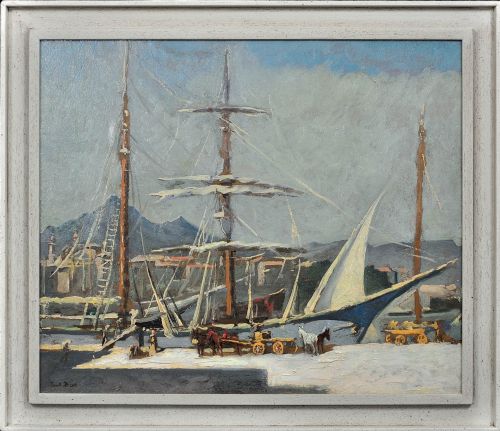
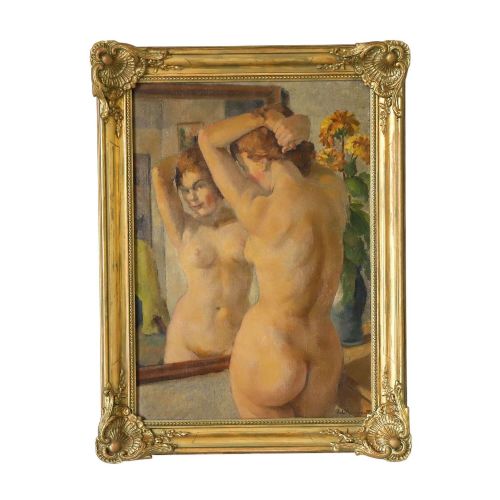
When buyers search for a 1930s oil painting, they encounter a broad range of European and British works spanning portraiture, maritime scenes, landscapes, and still lifes. These canvases and boards capture distinct movements such as Post-Impressionism, Art Deco, and 20th Century Realism.
The works on this page lean heavily into continental and British modernist idioms, from French harbour views to quiet domestic interiors. Buyers frequently find pieces reflecting the specific light of the Mediterranean or the pastoral scenes of the English countryside.
Subjects range from intimate nudes and detailed portraits to bustling ports and tranquil gardens. Each piece bears the physical marks of its period, executed on traditional supports like stretched canvas or wooden boards.
What Varies in Quality
The strength of a 1930s oil painting relies on the surety of the artist's brush and the compositional balance across the canvas. Works that demonstrate a clear command of light and tonal harmony stand apart from more rigid or formulaic student pieces.
Preservation of the paint layer also dictates the calibre of a piece, with stable surfaces free from excessive craquelure or clumsy restoration commanding greater attention. The vitality of the pigment and the original relationship between the subject and its frame complete the assessment.
1930s Oil Painting Retail Price Guide 2026
Typical asking prices for 1930s oil painting among the pieces listed under this phrase on Sellingantiques today, from the lower quarter to the upper quarter. They describe what is for sale here now, not the wider market.
Several canvases capture domestic ducks, geese, and ponies keeping calm amidst the artistic experiments of the interwar years.
Georges de La Tour·Paul Bret·Philippe de Rougemont·Edouard Julien·Margaret Maitland Howard·Elisabeth Bardon·Charles Walter Simpson·Henri Vincent-Anglade·Gustave Vidal·Gaetan Dumas·William JB Jenkins·GEORGES GOURSAT·J. Phipps·Philip Naviasky·Frank Percy Wild·Claude Jousset·Sir Matthew Smith·Yo Mayer·Harold Edward Conway·Burr Singer
The 1930s Oil Painting Glossary
- Post-Impressionism
- An artistic movement extending the rejection of rigid academic standards while focusing on vivid colours and distinct brushstrokes. It forms the backbone of many French landscapes from this decade.
- Impasto
- A technique where oil paint is laid thickly on the canvas, leaving visible brush or palette knife marks. This method adds tangible depth and texture to marine and landscape scenes.
- Oil on board
- A method where rigid wooden or composite board serves as the painting support rather than woven fabric. It offers a firm surface favoured by plein air painters working outdoors.
- Art Deco
- A design style of the interwar period that influences the clean lines and stylised figures found in contemporary portraiture and still life compositions.
- Plein air
- The practice of painting outdoors to capture direct observations of natural light and atmosphere. It underpins many French and British landscape studies from the period.
1930s Oil Painting: Frequently Asked Questions
How do I care for a vintage oil painting?
Keep the canvas out of direct sunlight and away from damp environments to prevent the oil paint from fading or cracking.
Dust the surface gently with a soft, dry brush and avoid using water or chemical cleaners on the paint layer.
Can I reframe a 1930s canvas safely?
Framing choices should respect the age and style of the artwork, using mouldings that complement the period without pinching the canvas edges.
Consult a professional framer if the original wooden stretcher or backing board requires structural support.
What subjects were popular in interwar art?
Artists frequently turned to domestic interiors, sunlit coastal harbours, and quiet rural landscapes as a response to the changing modern world.
Figurative studies, nudes, and floral still lifes also dominated studio output across Britain and continental Europe.
How do I identify a canvas from this era?
Examine the stretcher bars, nails, and canvas preparation on the reverse for materials and ageing consistent with the early twentieth century.
Signatures, dates written on the wooden board, and exhibition labels often provide direct clues to the year of creation.