




French Countryside Oil Painting
A french countryside oil painting brings rural France into a room through canvas, oil paint, and wood frames.
French Countryside Oil Painting
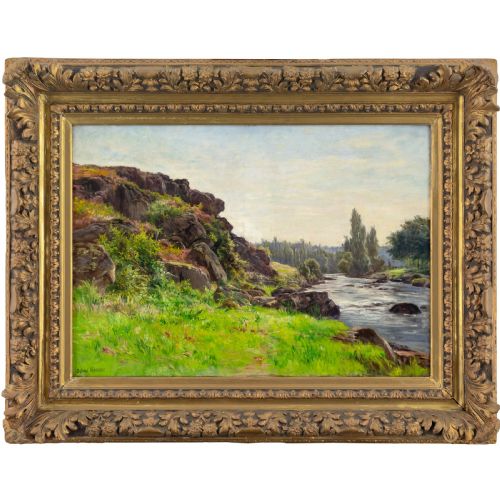
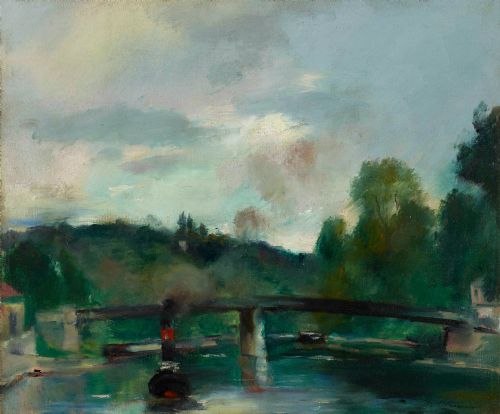
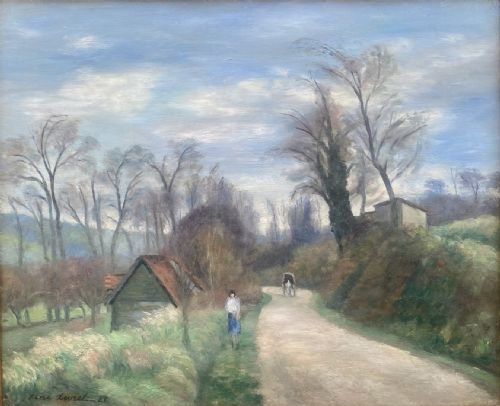
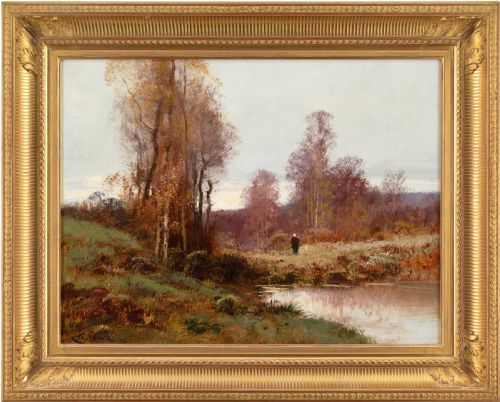
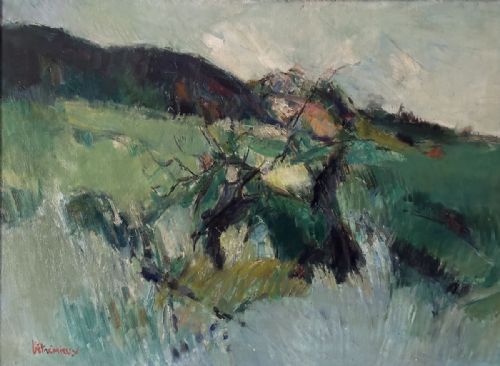
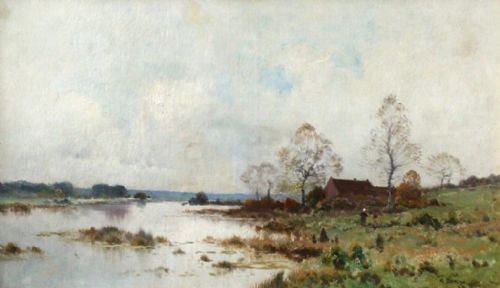
A french countryside oil painting captures rural scenes, river landscapes, orchards, and olive trees across the nineteenth and twentieth centuries. These artworks emerge from distinct movements including Impressionism, Post-Impressionism, and Fauvism, reflecting the varied topography of Normandy, Provence, Corsica, and the Mediterranean. Buyers encounter works spanning from the 1890s through the 1960s, executed by named artists and regional French schools.
The most common formats on this page are oil on canvas and oil on panel, often set within gesso and gilt wood frames. Subjects range from figures on winding paths and river banks to farmhouses, cattle, and coastal paths. The palette shifts from muted nineteenth-century pastoral tones to vibrant mid-century colourist expressions.
Materials and technique
Artists built these compositions using oil paint applied to stretched canvas, wood panels, or oil boards. The physical support typically consists of wood framing elements, sometimes enhanced with gesso and gilt finishes to enclose the pictorial surface.
Brushwork varies from the blended atmosphere of nineteenth-century academic and impressionist canvases to the bolder, expressive marks characteristic of post-impressionist and fauve landscape painting. Pigments were layered to capture changing light across orchards, rivers, and hillsides.
French Countryside Oil Painting Retail Price Guide 2026
Typical asking prices for french countryside oil painting among the pieces listed under this phrase on Sellingantiques today, from the lower quarter to the upper quarter. They describe what is for sale here now, not the wider market.
The documented regional views cover Normandy, Provence, Corsica, and the Mediterranean.
Distinctions in quality
Quality rests upon the strength of the composition, the handling of light and pigment, and the fidelity of the artist's touch. Stronger examples display confident brushwork and a cohesive sense of place, whereas lesser works rely on formulaic repetition of pastoral tropes.
The integrity of the original canvas, panel, and frame contributes significantly to an artwork's standing. Surviving frames with period gesso and gilding complete the physical object, while untouched surfaces preserve the artist's original colour relationships.
Gabriel Mathieu·Henri Ottmann·Rene Levrel·Charles Clair·André Prévot-Valéri·Mario Pinetti·Pierre Emmanuel Eugene Damoye·Jeffrey Pratt·Henri Therme·Martin Lamotte·Charles Edmund Rene His
The French Countryside Oil Painting Glossary
- Oil on canvas
- Pigment suspended in a drying oil applied to a woven fabric support. This remains the primary medium found across these landscape paintings.
- Post-Impressionism
- An art movement extending beyond impressionist methods to emphasise symbolic content and expressive use of form and colour. Works from this style often feature bolder outlines and intensified hues.
- Gesso
- A paint mixture consisting of a binder mixed with chalk, gypsum, or pigment, used to prepare wood or canvas surfaces. It frequently appears beneath gilt finishes on period frames.
- Fauvism
- A style characterised by strong colours and painterly qualities rather than realistic or representational values. Such canvases display vibrant, non-naturalistic palettes.
- Oil on panel
- Pigment applied directly to a rigid wooden board rather than fabric. These pieces offer a stable support often utilised for smaller format landscapes.
French Countryside Oil Painting: Frequently Asked Questions
How do I date a french countryside oil painting?
Dating relies on stylistic markers, framing techniques, and signatures recorded on the canvas or panel. Nineteenth-century works typically employ more subdued naturalistic palettes, while twentieth-century pieces adopt impressionist or fauve colour harmonies.
Physical inspection of the canvas weave, stretcher bars, and backing materials provides further chronological context. Signatures can often be cross-referenced with artist registries from specific French regions.
What is the difference between canvas and panel works?
Canvas supports allow for larger compositions and a slight give beneath the brush, which influenced the looser strokes of impressionist painters. Wooden panels provide a rigid, smooth foundation favoured for smaller plein air studies.
Both supports require different conservation considerations regarding humidity and temperature fluctuations. Panels are less prone to sagging over time but can be susceptible to splitting if unseasoned.
How should I hang and light these paintings?
These artworks benefit from stable interior wall spaces away from direct sunlight, heating vents, and damp conditions. Standard picture wire secured to sturdy stretcher bars ensures safe suspension.
Low-heat LED picture lights or indirect ambient room illumination protects the oil pigments from fading. Maintaining consistent indoor climate conditions preserves both the canvas and any original gesso frames.
Are these frames original to the paintings?
Frames often date from the same period as the canvas, though many antiques have been reframed over decades of ownership. Gilt and gesso mouldings should be examined for signs of age that match the wear on the painting itself.
A period frame enhances the historical context of the artwork, while replacement frames are chosen to complement the visual weight of the landscape.