6,844  PAGES BROWSED TODAY PAGES TODAY 0  ANTIQUES UPLOADED TODAY NEW ARRIVALS
ID #SA1226410
FOR SALE
£8,000
Email
Save
Alfred Wolmark Sketch of the Flatiron Building
Darnley Fine Art
for sale €9,360     $10,160
£8,000

Darnley Fine Art

Sellingantiques Verified Since Jul 2026
View Dealers Stock Page
Id #SA1226410
PDF SHARE
SAVE

Alfred Wolmark Sketch of the Flatiron Building

1900 - 1920
For Sale by Darnley Fine Art
Description

Oil on canvas board

Image size: 15 1/3 x 12 inches (39 x 30 cm)

Hand-carved contemporary-style frame

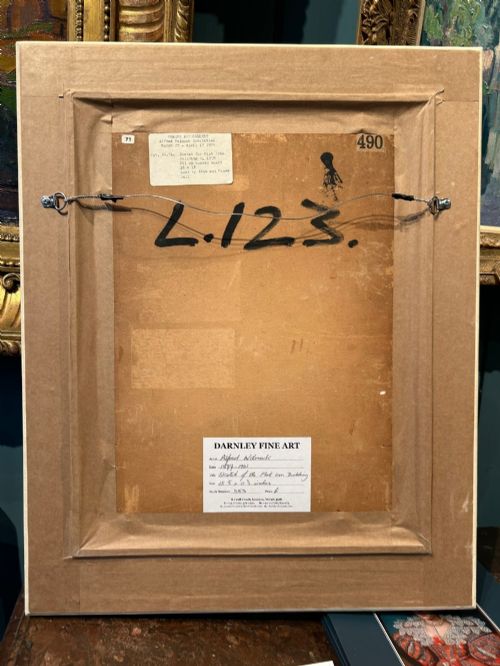
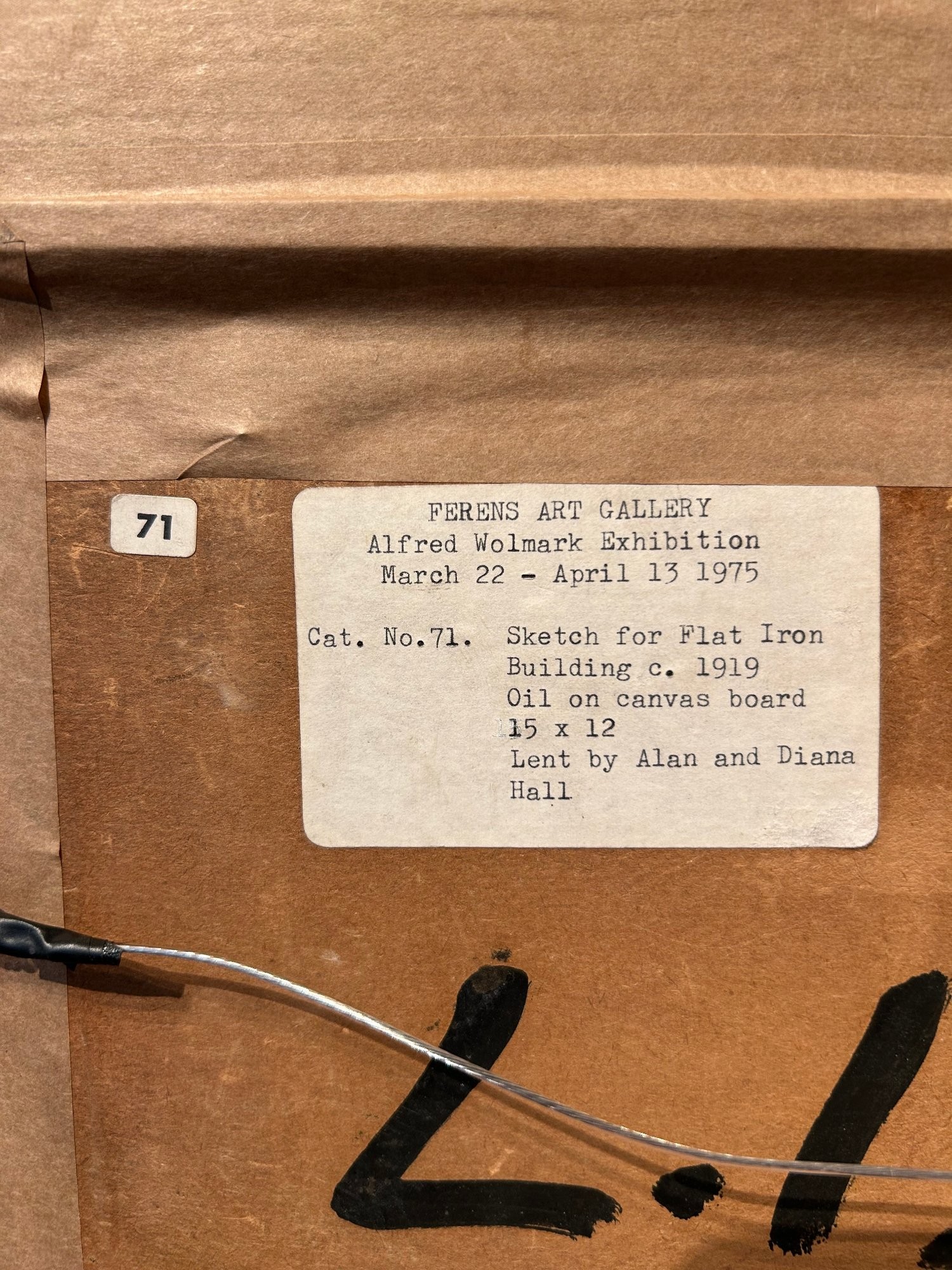
Exhibited

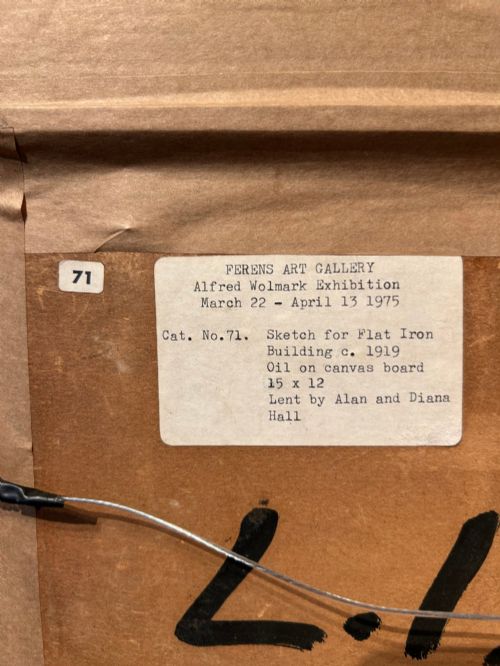
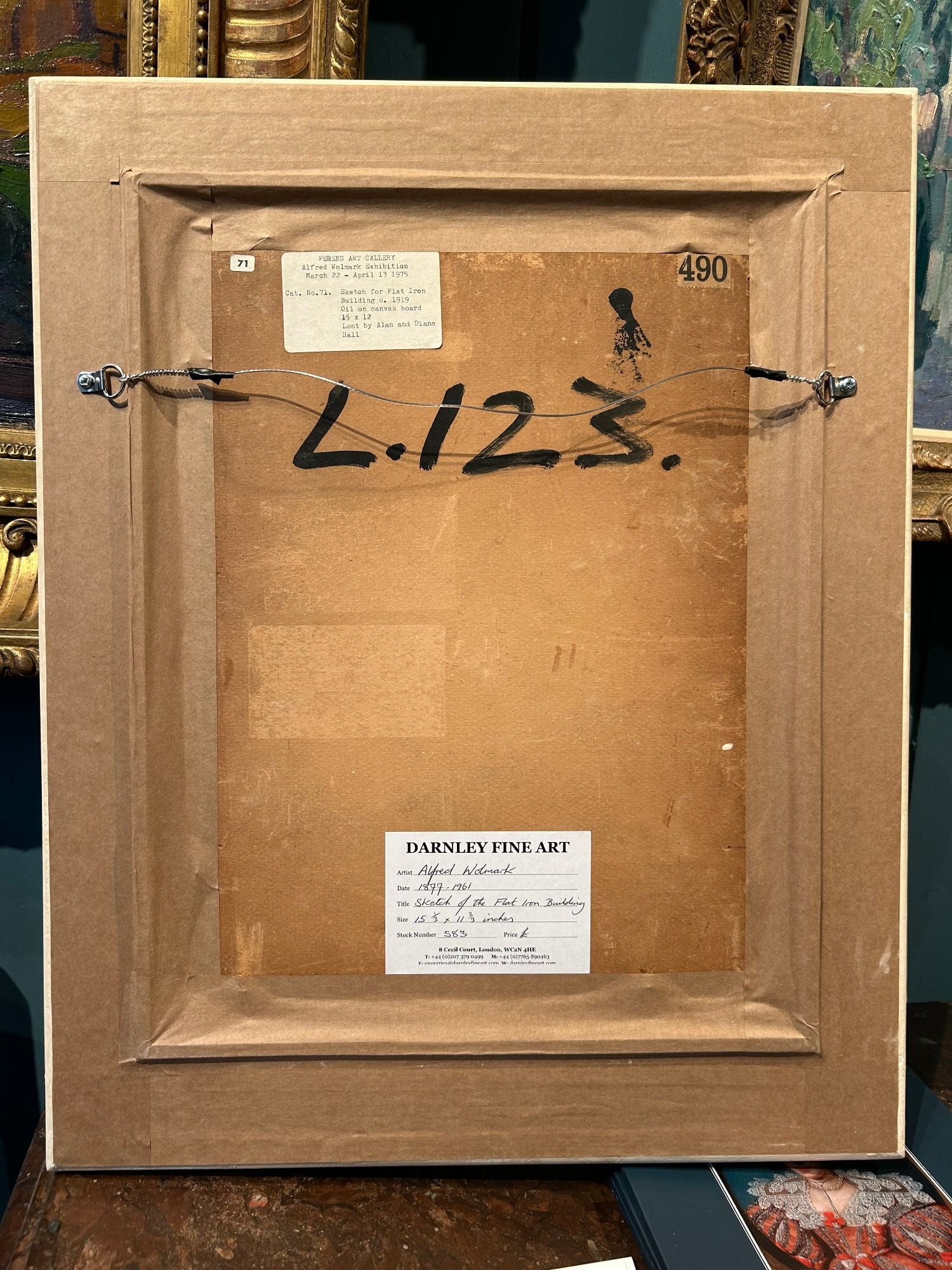
Ferens Art Gallery, Hull (March 1975)

Provenance

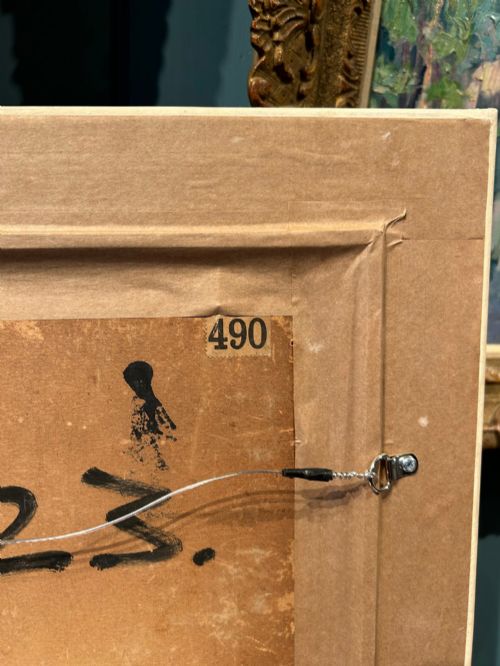
Collection of Diana Hall (daughter of the artist), New South Wales
Private Collection

Publications

Flatiron Building, New York ;c1920, private collection; illus. in Dickson, R. & MacDougall, S. (eds.), Rediscovering Wolmark: A Pioneer of British Modernism, Ben Uri Gallery, The London Jewish Museum of Art, London, 2004, p.46

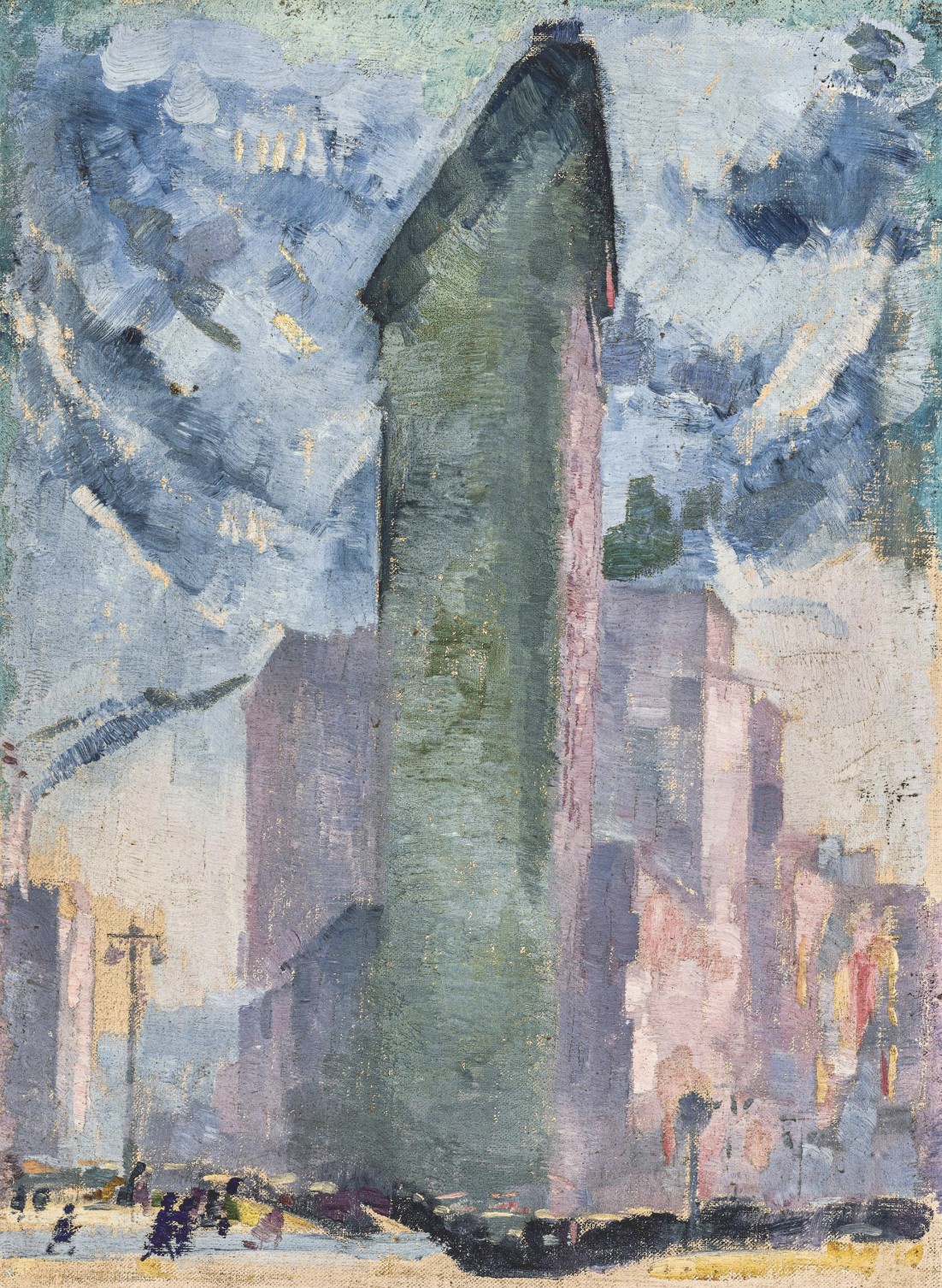
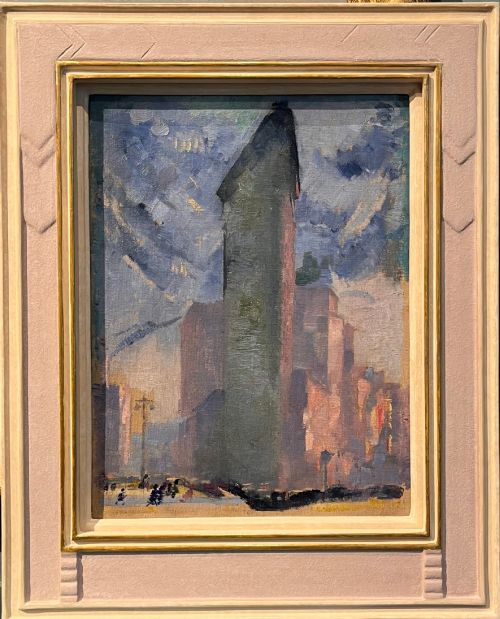
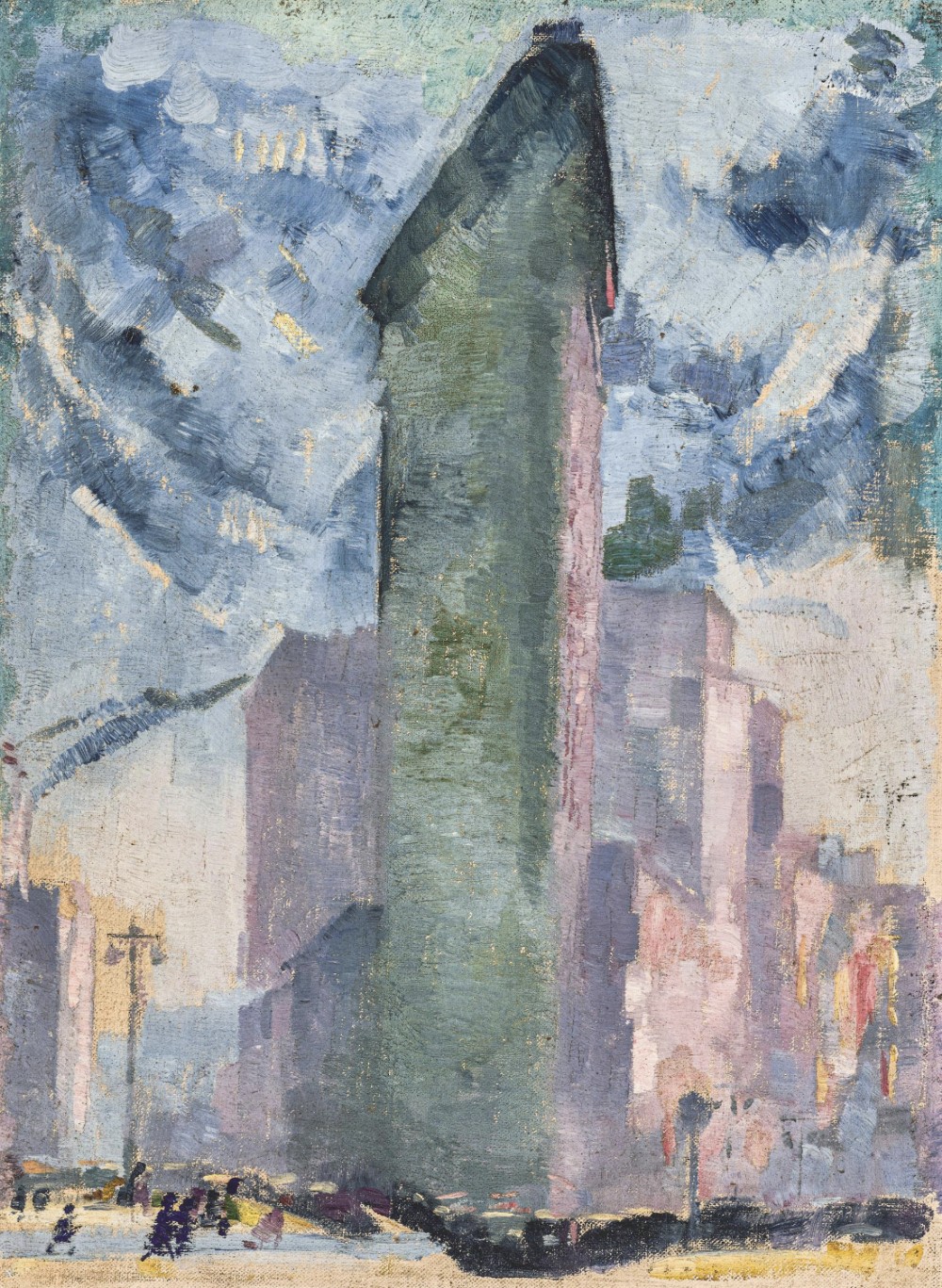
Wolmark completed this sketch when he visited New York in 1919. It depicts the Flatiron Building situated on Broadway, which was the world’s tallest building from its construction in 1902 until 1908. He painted the Flatiron Building multiple times during his stay in America, with one such painting hanging in the New York office of the UK Mission to the United Nations. Therefore, this sketch would have been a crucial preliminary step in the creation of Wolmark’s finished pieces.
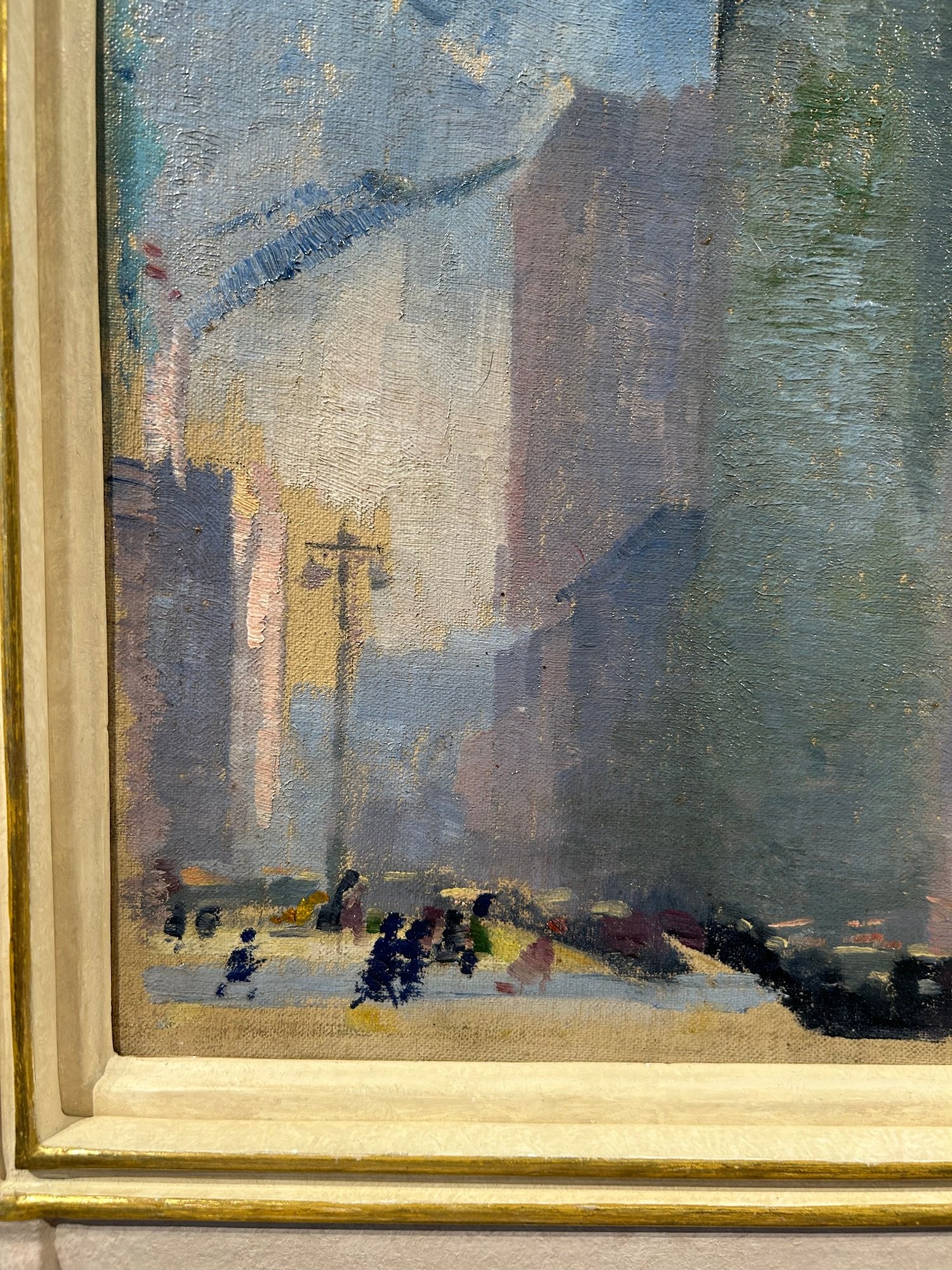
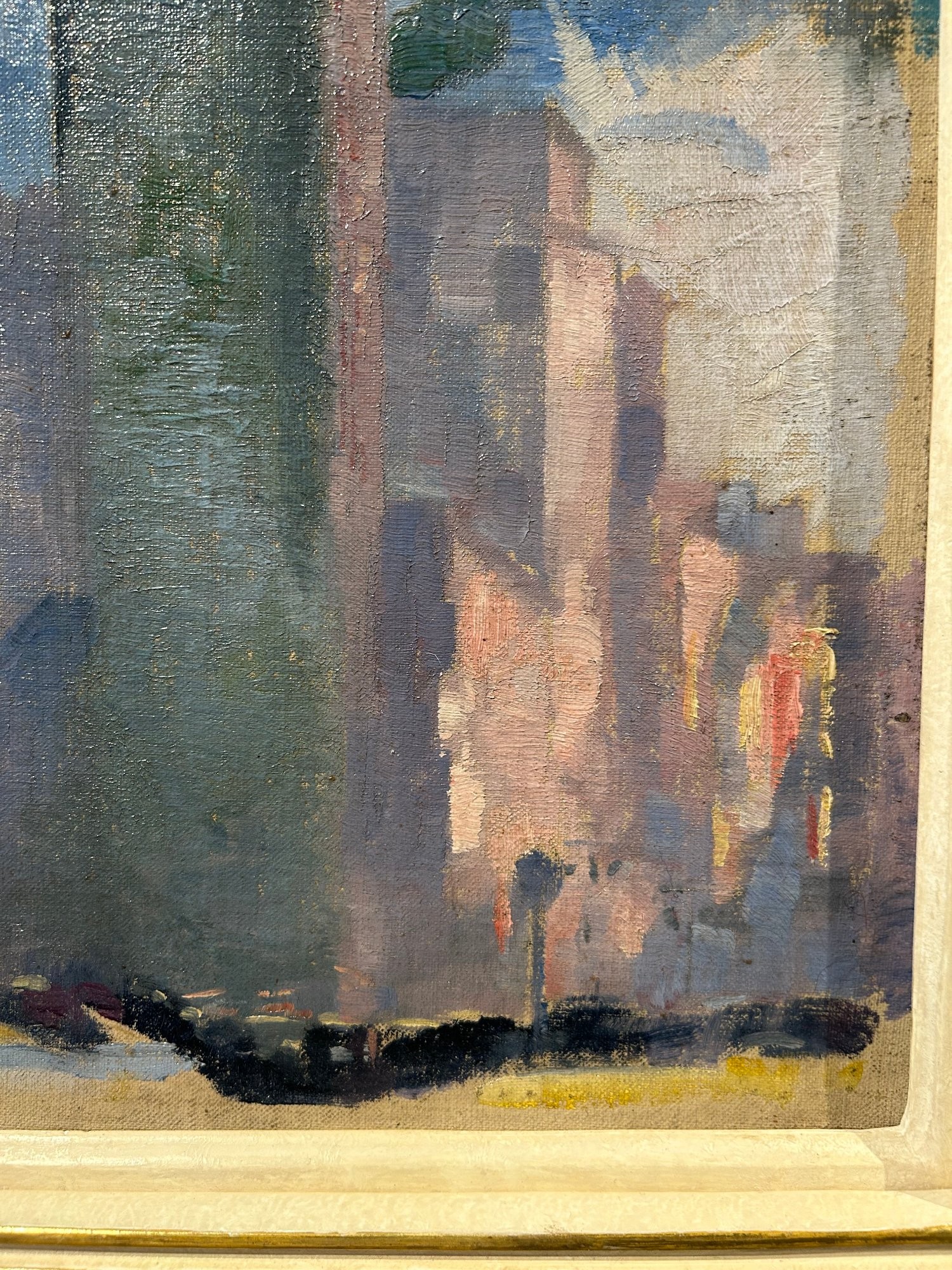
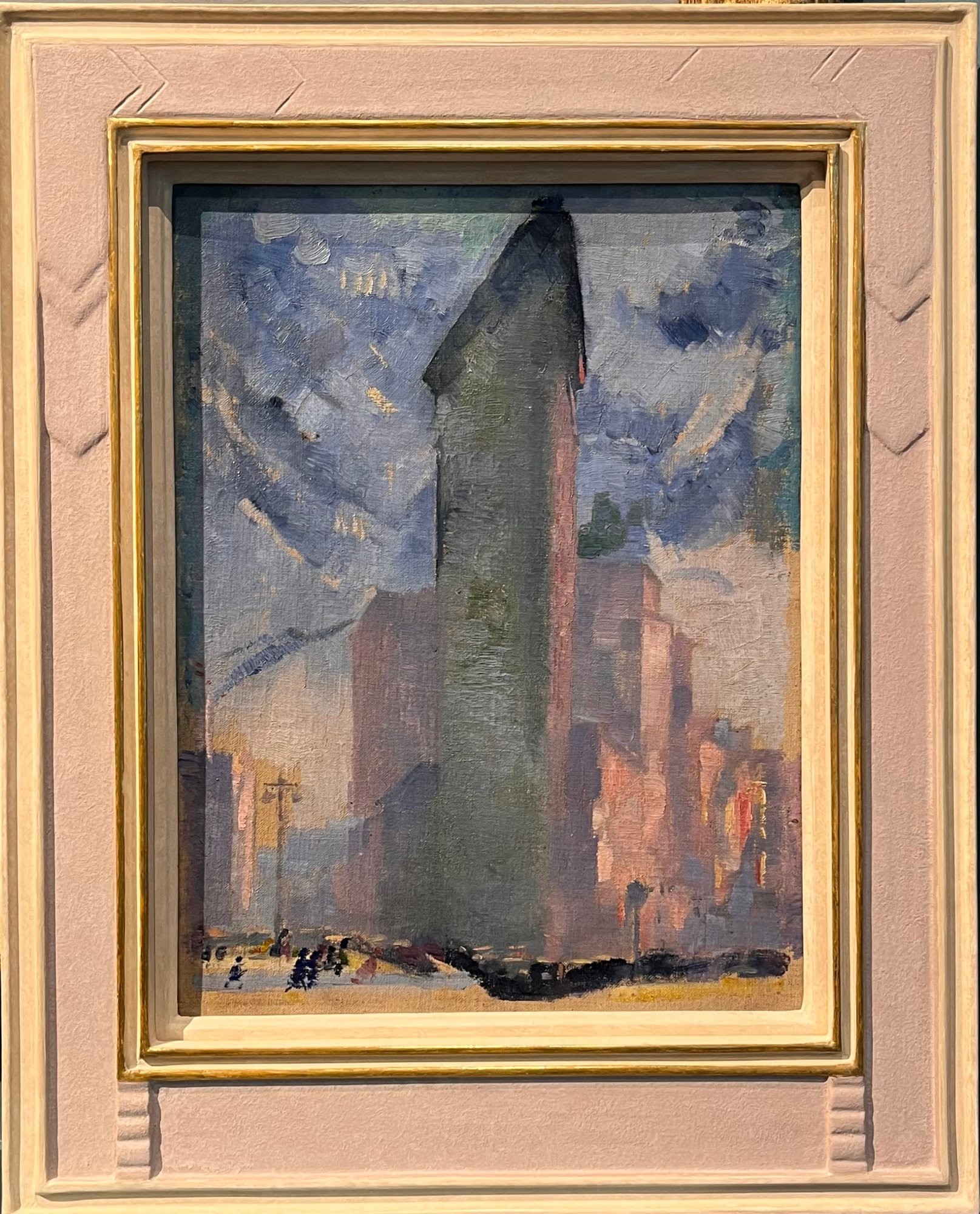
The sketch demonstrates what Wolmark was best known for - his pioneering use of colour and brushstroke. The sky is denoted by a variety of blue shades and short but broad brushstrokes, creating the impression of a clouded sky. The buildings in the background are painted in a mauve palette, giving the impression of a stormy sky reflecting off of glass and red brick. In the centre of the painting is the titular Flatiron Building, depicted as a towering monolith in a green palette that juxtaposes with the blue and purple it is set against. The colour combinations - green, blue, mauve - seem, in theory, to be bizarre choices, but it is impossible to maintain this belief when one sees the sketch for themself. Wolmark’s use of colour is masterful, and it becomes clear why he was afforded the moniker of ‘The Colour King’.
There is an air of spontaneity to the work, which is only furthered by the blurry figures rushing about in the bottom of the painting. Wolmark has captured modernity in a single work - a looming building that symbolises industrial and modern architecture, and the busy lives of those commuting to and from work just outside its doors.

Physical Dimensions
Height
39cm (15.35")
Width
30cm (11.81")
Declaration

Darnley Fine Art has dated this Flatiron Building Oil Sketch to the 1910s.

Reference Numbers
Sellingantiques Reference
SA1226410
Description
Oil on canvas board

Image size: 15 1/3 x 12 inches (39 x 30 cm)

Hand-carved contemporary-style frame

Exhibited

Ferens Art Gallery, Hull (March 1975)

Provenance

Collection of Diana Hall (daughter of the artist), New South Wales

fig 1. A Post-Impressionist oil sketch depicting the triangular structure of the Flatiron Building against a swirling blue and grey sky.
fig 1. Alfred Wolmark Sketch of the Flatiron Building

Private Collection

Publications

Flatiron Building, New York ;c1920, private collection; illus. in Dickson, R. & MacDougall, S. (eds.

), Rediscovering Wolmark: A Pioneer of British Modernism, Ben Uri Gallery, The London Jewish Museum of Art, London, 2004, p.
Darnley Fine Art

46

fig 2. A Post-Impressionist oil sketch depicting the triangular structure of the Flatiron Building against a swirling blue and grey sky.
fig 2. Alfred Wolmark Sketch of the Flatiron Building

Wolmark completed this sketch when he visited New York in 1919. It depicts the Flatiron Building situated on Broadway, which was the world’s tallest building from its construction in 1902 until 1908. He painted the Flatiron Building multiple times during his stay in America, with one such painting hanging in the New York office of the UK Mission to the United Nations. Therefore, this sketch would have been a crucial preliminary step in the creation of Wolmark’s finished pieces.

fig 3. A Post-Impressionist oil sketch depicting the triangular structure of the Flatiron Building against a swirling blue and grey sky.
fig 3. Alfred Wolmark Sketch of the Flatiron Building

The sketch demonstrates what Wolmark was best known for - his pioneering use of colour and brushstroke. The sky is denoted by a variety of blue shades and short but broad brushstrokes, creating the impression of a clouded sky. The buildings in the background are painted in a mauve palette, giving the impression of a stormy sky reflecting off of glass and red brick. In the centre of the painting is the titular Flatiron Building, depicted as a towering monolith in a green palette that juxtaposes with the blue and purple it is set against. The colour combinations - green, blue, mauve - seem, in theory, to be bizarre choices, but it is impossible to maintain this belief when one sees the sketch for themself. Wolmark’s use of colour is masterful, and it becomes clear why he was afforded the moniker of ‘The Colour King’.

fig 4. A Post-Impressionist oil sketch depicting the triangular structure of the Flatiron Building against a swirling blue and grey sky.
fig 4. Alfred Wolmark Sketch of the Flatiron Building

There is an air of spontaneity to the work, which is only furthered by the blurry figures rushing about in the bottom of the painting. Wolmark has captured modernity in a single work - a looming building that symbolises industrial and modern architecture, and the busy lives of those commuting to and from work just outside its doors.

Height
39cm (15.35")
Width
30cm (11.81")
Date of Manufacture

Darnley Fine Art has dated this Flatiron Building Oil Sketch to the 1910s.

Reference Numbers
Sellingantiques Ref
SA1226410
Darnley Fine Art
Sellingantiques verified Since Jul 2026
Dealer Profile

You can view the stock and full dealer information on the Darnley Fine Art Profile Page
PDF SHARE
SAVE
A Post-Impressionist oil sketch depicting the triangular structure of the Flatiron Building against a swirling blue and grey sky.
1 / 7
Archive I A Post-Impressionist oil sketch depicting the triangular structure of the Flatiron Building against a swirling blue and grey sky.

Alfred Wolmark Sketch of the Flatiron Building
Archive II A Post-Impressionist oil sketch depicting the triangular structure of the Flatiron Building against a swirling blue and grey sky. View II
Archive III A Post-Impressionist oil sketch depicting the triangular structure of the Flatiron Building against a swirling blue and grey sky. View III
Archive IV A Post-Impressionist oil sketch depicting the triangular structure of the Flatiron Building against a swirling blue and grey sky. View IV
Archive V A Post-Impressionist oil sketch depicting the triangular structure of the Flatiron Building against a swirling blue and grey sky. View V
Archive VI A Post-Impressionist oil sketch depicting the triangular structure of the Flatiron Building against a swirling blue and grey sky. View VI
Archive VII A Post-Impressionist oil sketch depicting the triangular structure of the Flatiron Building against a swirling blue and grey sky. View VII
Enlarged Archival View
Telephone 0207 379 0499
Location
2-4 Cecil Court
London
WC2N 4HE
United Kingdom

Opening Times
Monday to Saturday: 10:30 - 5:30
(excluding Bank Holidays)
Dealer Profile Page sellingantiques.co.uk/dfa
Verified Since Jul 2026
Items For Sale 76
Darnley Fine Art
Verified Since Jul 2026
View Dealer Info
Location: 2-4 Cecil Court, London, WC2N 4HE, United Kingdom, , Opening Times, Monday to Saturday: 10:30 - 5:30, (excluding Bank Holidays)
Verified
Jul 2026
For Sale
76
A Post-Impressionist oil sketch depicting the triangular structure of the Flatiron Building against a swirling blue and grey sky.
Alfred Wolmark Sketch of the Flatiron Building
Ref: SA1226410
A Post-Impressionist oil sketch depicting the triangular structure of the Flatiron Building against a swirling blue and grey sky.
Detail View 1
Detail View 2
Detail View 3
Detail View 4
Detail View 5
Detail View 6
Archival Detail
Every single antique dealer on our platform is individually approved by our internal team. We verify their professional trade history, ethical standards, and photographic quality to ensure a secure, high-standard buying environment. Upon joining, every dealer agrees to a strict 9-point code of conduct. While issues can occasionally arise, our dealers typically resolve them swiftly and directly with the buyer. In fact, since our founding in 2002, Sellingantiques has only had to step in to help resolve an issue on roughly five occasions—a true testament to the quality of our dealers and their dedication to your happiness.
Our dealers are highly experienced in packing and shipping fragile, high-value antiques. Because you are in direct contact with the dealer, you will be able to easily go through all available shipping and insurance options together to ensure your item arrives safely.
Antiques are the ultimate green purchase. By choosing historical pieces over newly manufactured goods, you completely eliminate the carbon footprint of modern mass production while preserving exceptional, timeless craftsmanship.

Post-Impressionist architectural paintings emerged in the late nineteenth and early twentieth centuries, shifting away from strict realism toward geometric form, expressive brushwork, and atmospheric colour choices to evoke urban environments.

Artists frequently utilised oil paint applied directly onto stretched canvas, artist board, or panel, often building up paint texture with visible impasto strokes and layered glazes.

Authentic works from this period typically exhibit natural age craquelure, period-appropriate canvas or board substrates, evidence of hand-mixed pigments, and provenance or signatures consistent with the artists working period.

Pair the painting with minimalist wooden frames or simple metal edging to complement modern lines, and position it against neutral or dark accent walls to emphasise its tonal values.

Keep the artwork away from direct sunlight and heat sources, maintain stable relative humidity levels, and clean the surface exclusively using professional art restoration techniques.
items
Add keywords to the filter
Price
£100
£250000
Era
Movements
Material
Origin
Stock Location
Freshness
Online Payments
Categories