




Green Cityscape Painting
These green cityscape painting examples capture urban architecture and rivers through impressionist and expressionist brushwork.
Green Cityscape Painting
A green cityscape painting captures urban environments, rivers, canals, and architectural rooftops using oil paint or watercolour across various decades. Buyers examining this selection encounter works spanning from the late Victorian era through mid-century modern movements.
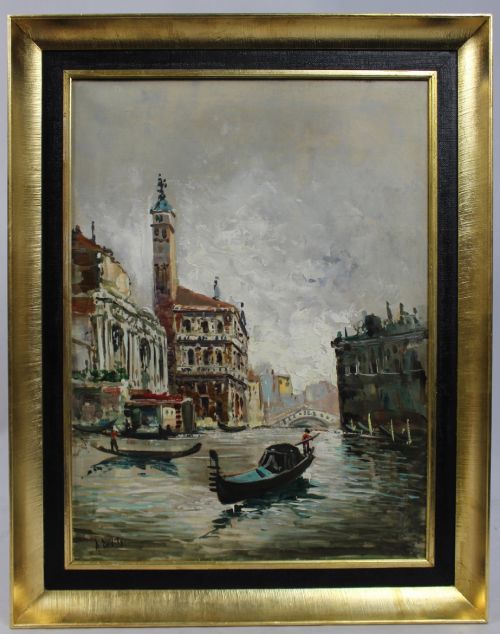
The objects take the form of wall art and framed oil paintings depicting recognizable European urban views. Common subjects include Venetian canals, Parisian river scenes, and architectural landmarks rendered by international artists.
Pieces frequently date from the early decades of the twentieth century up to the nineteen-fifties. The selection demonstrates diverse interpretations of urban spaces through Impressionism and Post-Impressionism.
Materials and construction
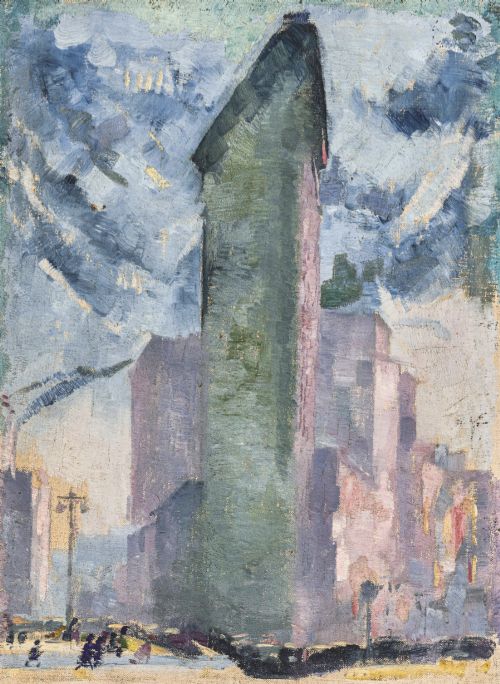
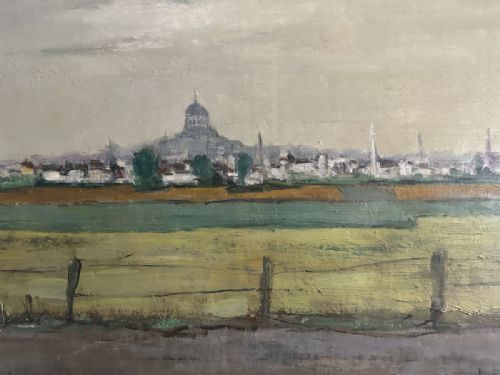
Artists applied oil paint and watercolour onto canvas, wood boards, or paper supports. The resulting surfaces display the distinct texture of brushstrokes characteristic of impressionist and expressionist techniques.
Many works retain their original wood or gilded wood frames. These frames complement the painted compositions while providing structural support for canvas and board supports.
Listed works span six distinct decades from nineteen-ten to nineteen-sixty across several European artistic movements.
Assessing quality in the works
Quality rests upon the handling of light and atmospheric perspective within the urban composition. Stronger examples demonstrate confident mark-making and deliberate colour relationships that define the architectural forms and waterways.
The integrity of the physical support and the preservation of the paint surface contribute to the standing of an artwork. Original framing that suits the period of the painting enhances the overall presentation.
Antonio DeVity·Alfred Wolmark·Helen Donald-Smith
The Green Cityscape Painting Glossary
- Oil on canvas
- Pigment mixed with drying oil applied to a woven fabric stretched across a wooden frame. This surface allows for rich layering and textured brushwork.
- Post-Impressionism
- An art movement extending impressionism while rejecting its limitations, favouring more symbolic content and heavier weight given to geometric forms.
- Gilded wood
- Wood treated with a thin layer of gold leaf or metallic gilt. It frequently forms the decorative border of period frames.
Green Cityscape Painting: Frequently Asked Questions
What periods do these paintings come from?
The available artworks date from the late Victorian period through the mid-nineteenth and twentieth centuries, specifically spanning decades from nineteen-ten to nineteen-sixty.
These dates reflect movements such as French Post-Impressionism and Mid-Century Impressionism.
What subjects appear in these artworks?
The pieces depict urban environments, including Parisian river scenes, Venetian canals, and architectural rooftops.
Artists focused on cityscapes, waterways, and notable buildings rendered through impressionist and expressionist lenses.
What materials were used to create them?
Makers utilised oil paint and watercolour applied to canvas, wood boards, or paper supports. Many pieces are housed within wood or gilded wood frames.
The combination of oil on canvas and supportive wooden framing defines the physical structure of most listings.
How do impressionist and post-impressionist styles differ here?
Impressionist works focus on capturing transient effects of light and atmosphere across urban scenes. Post-impressionist examples lean toward expressive brushwork and emphasis on structural form.
Both approaches interpret cityscapes and natural waterways through distinct European artistic traditions.