


Vintage Riverbank Artwork
Vintage riverbank artwork captures water and pastoral scenes through paintings on canvas and paper spanning the nineteenth and twentieth centuries.
Vintage Riverbank Artwork
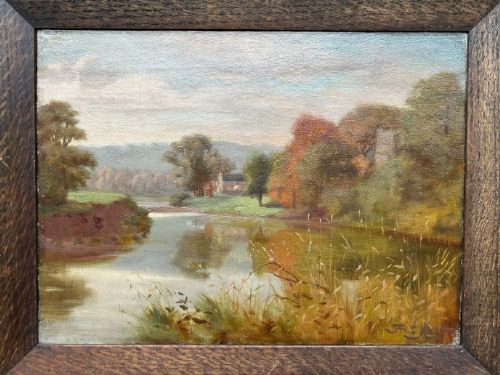
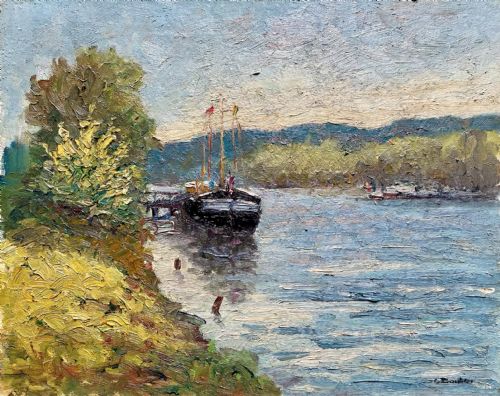
Vintage riverbank artwork comprises paintings and watercolours depicting rivers, streams, and lakesides created from the nineteenth century through the mid twentieth century. These pieces record pastoral views, figures fishing, and cattle grazing along waterways.
The selection here centres on oil paintings and watercolours executed across multiple decades. Works range from late nineteenth century canvases to mid twentieth century impressions of river scenes.
Most examples originate from British and European hands, including named artists and regional schools. Subjects frequently incorporate pastoral elements such as boats, fishermen, and autumnal trees.
Materials and methods
Artists painted primarily with oil or watercolour on canvas, paper, and wood supports. Oil paint provides depth and texture, particularly on canvas grounds, while watercolours offer transparent washes on paper.
Framed works utilise wood mouldings and glass to protect paper surfaces. Canvases are stretched across wooden frames, occasionally retaining artist signatures and period inscriptions.
Ducks and ducklings occasionally share the riverbank with fishermen and livestock.
Assessing quality and execution
Quality rests in the handling of light and water surface reflections by the painter. Stronger compositions demonstrate confident brushwork and balanced tonal arrangements across the landscape.
Condition of the canvas or paper surface affects the integrity of the piece. Intact paint layers without heavy craquelure or restoration distinguish superior examples from heavily repaired works.
Frederick Marriott·Archibald Kay·Walter Follen Bishop·Phyllis Morgans·Harry Davis·Henry John Sylvester Stannard·Robert John Hammond·Augustus William Ennes·Sonia Mervyn·Thomas E Francis·George Neil·David Adolph Constant Artz
The Vintage Riverbank Artwork Glossary
- Impressionism
- A style of painting emphasising loose brushstrokes and depiction of light. This approach appears frequently in mid twentieth century river scenes.
- Watercolour
- A painting method using water soluble pigments on paper. Works in this medium rely on the white of the paper for luminosity.
- Canvas
- A heavy woven fabric used as a surface for oil painting. It requires stretching over a wooden frame before use.
- Pastel
- A dry medium of powdered pigment used for drawing. These works require glass protection to prevent smudging.
Vintage Riverbank Artwork: Frequently Asked Questions
What periods do these river paintings cover?
The works span from the late nineteenth century through the mid twentieth century. They include Victorian pieces alongside later modernist interpretations.
Changes in palette and brushwork reflect the progression of artistic styles across these decades.
Are most of these works signed by artists?
Several pieces bear signatures or attributions to named painters, while others remain unsigned. Signatures help establish the provenance of nineteenth and twentieth century works.
Unsigned examples are judged purely on technical execution and period characteristics.
What mediums were used for these artworks?
Painters employed oil paints on canvas and wood panels, alongside watercolours and pastels on paper. Each medium creates distinct surface textures.
Oils offer rich impasto while watercolours provide translucent atmospheric effects.
How should I display vintage paintings?
Paintings on canvas and framed watercolours require placement away from direct sunlight and excessive moisture. Proper wall hanging protects the original support materials.
Glass fronted watercolours need particular attention to humidity levels.