

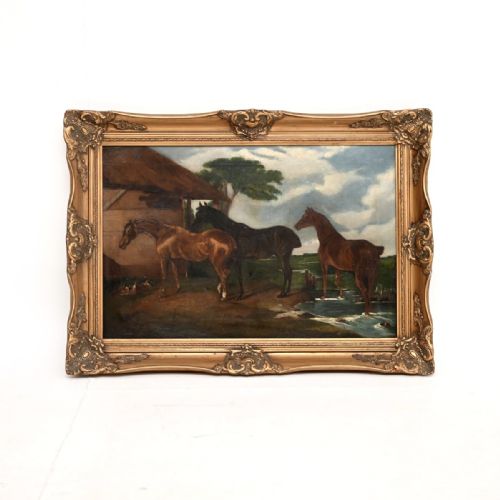


18th Century Landscape Artwork
When searching for 18th century landscape artwork, collectors encounter pastoral scenes, classical ruins, and topographical views rendered in oil, watercolour, and ink.
18th Century Landscape Artwork
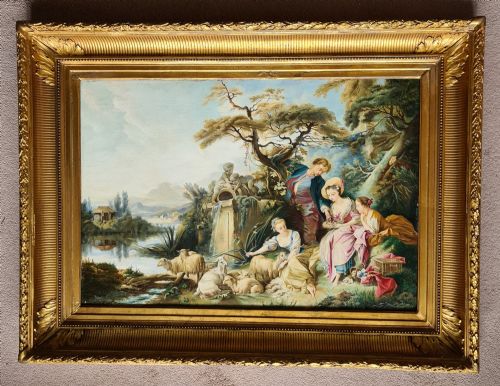
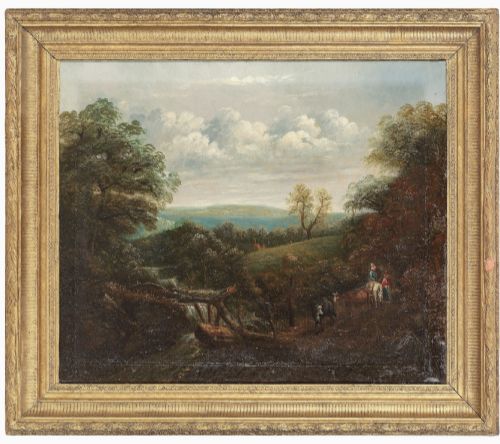
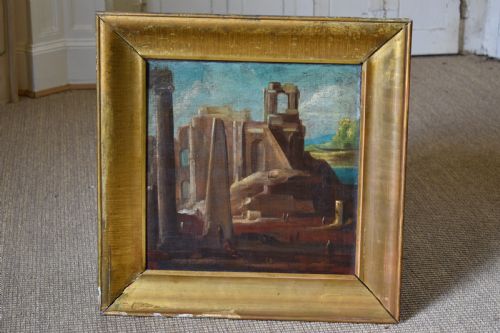
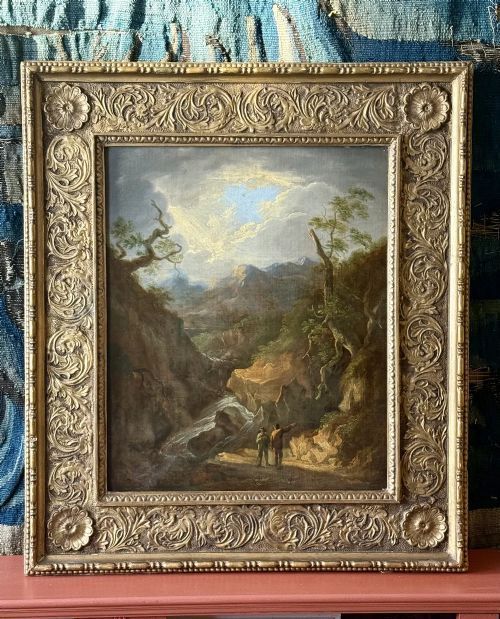
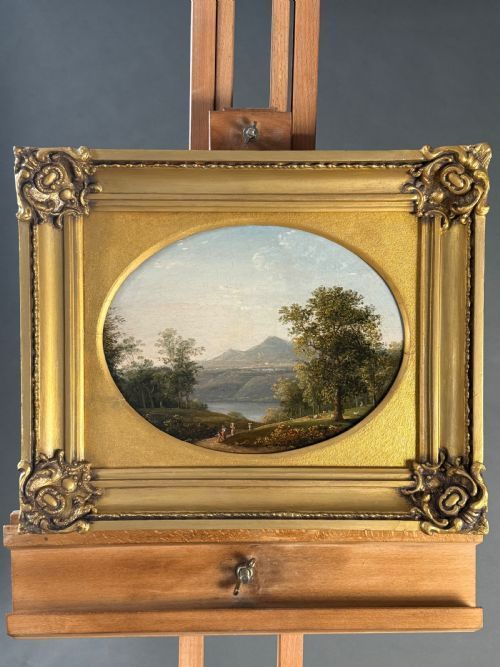
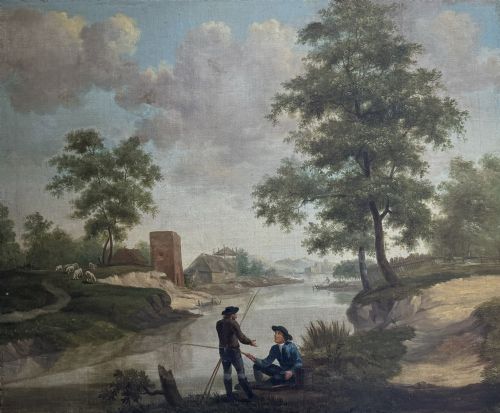
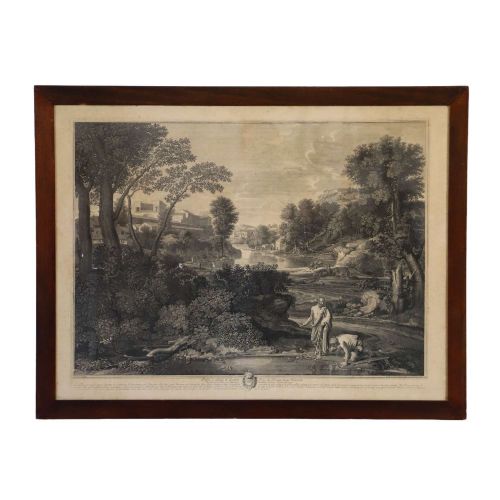
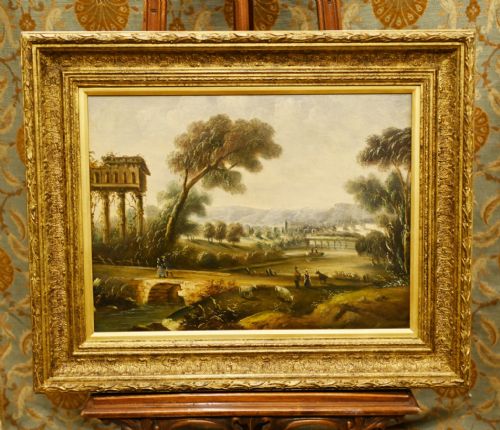
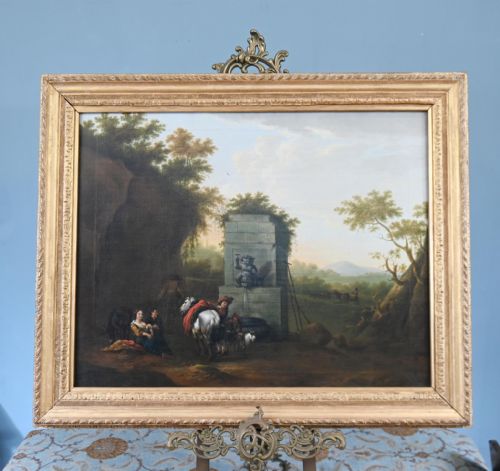
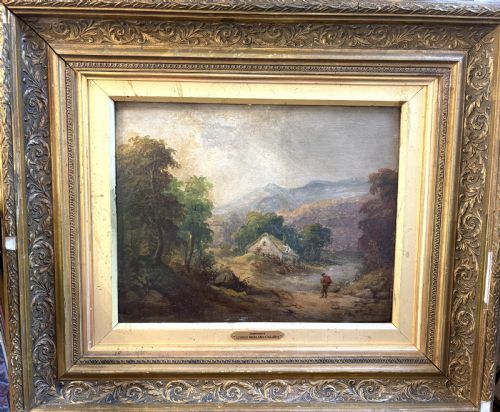
When searching for 18th century landscape artwork, buyers find framed paintings, drawings, and prints depicting pastoral countryside scenes, coastal vistas, and classical architectural ruins. These works often incorporate human figures, cattle, or horses to animate the natural scenery.
The selection spans oils on canvas and wood panel alongside delicate works on paper, including pen and ink drawings, watercolours, and early engravings. British, French, and Italian schools dominate the offerings, reflecting both domestic rural views and continental Grand Tour subjects.
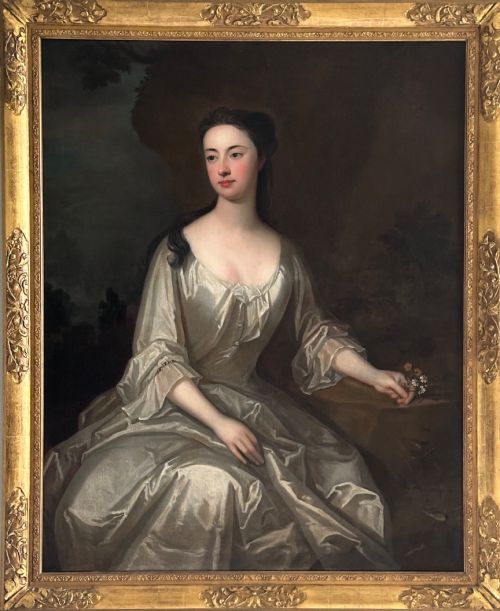
Works frequently align with stylistic traditions such as the Norwich School, French Rococo, or Neoclassical interpretations of Claude Lorrain. Buyers also encounter portraiture and genre scenes where the landscape background plays a dominant compositional role.
Materials and Techniques
Makers utilised oil paint applied to woven canvas or prepared wooden panels, occasionally working on paper, gouache, or copper supports. Frames typically consist of carved giltwood or gold leaf mouldings contemporaneous with the artwork.
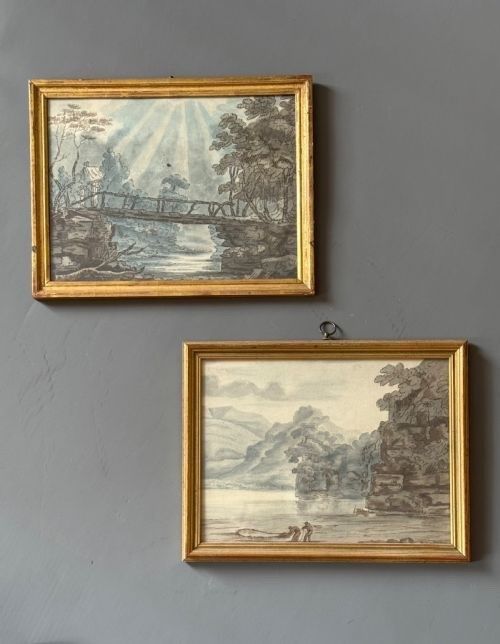
Works on paper employ pen and ink, sepia wash, and watercolour techniques, sometimes finished as hand-coloured aquatint engravings. Textile art examples utilise needlework threads to construct pictorial landscapes on fabric grounds.
18th Century Landscape Artwork Retail Price Guide 2026
Typical asking prices for 18th century landscape artwork among the pieces listed under this phrase on Sellingantiques today, from the lower quarter to the upper quarter. They describe what is for sale here now, not the wider market.
Animals populate these rural scenes frequently, with horses watering, stray dogs joining walks, and exotic birds peering from eighteenth-century branches.
Assessing Quality and Execution
Superior examples demonstrate confident brushwork, balanced compositional depth, and sophisticated handling of light and atmospheric perspective. Weaker pieces often rely on stiff, formulaic foliage and static figure placement without spatial coherence.
The survival of original giltwood frames and documented attribution to known artists or regional schools elevate a piece's standing. Condition issues such as extensive canvas relining or pigment darkening diminish the visual integrity of the original surface.
Benjamin Barker of Bath·Jacob Philipp Hackert·George Morland·John Hamilton Mortimer·Joseph Farrington·Francesco Zuccarelli
The 18th Century Landscape Artwork Glossary
- Grand Tour
- A traditional educational trip through Europe undertaken by upper-class young men, resulting in the acquisition of Italian and classical landscape art.
- Italianate
- A stylistic approach depicting southern European scenery, typically featuring rolling hills, rustic buildings, and ancient classical ruins.
- Aquatint
- A printmaking technique that produces tonal areas resembling watercolour washes through the use of acid-etched resin on copper plates.
- Topographical
- Artworks that accurately record specific real-world locations, towns, or country estates rather than idealized imaginative compositions.
- Giltwood
- Timber carved and surfaced with a thin layer of gold leaf, frequently forming the decorative frames of period paintings.
18th Century Landscape Artwork: Frequently Asked Questions
How do I hang antique landscape art safely?
Secure hanging requires professional fixings suited to the weight of heavy giltwood frames and canvas panels. Position works away from direct sunlight and household heat sources to protect fragile pigments and paper supports.
Maintain stable room humidity to prevent warping in wooden panels and canvas tension loss. Ensure wall fixings anchor directly into structural supports rather than unsupported plaster.
What defines a Grand Tour landscape?
Grand Tour landscapes capture Italian vistas, classical ruins, and Mediterranean scenery collected by travellers touring Europe. These works served as tangible proof of cultural education and refined taste.
Artists catered directly to this clientele by painting recognizable Roman ruins, Campagna countryside, and coastal ports. They frequently worked in oil or gouache on easily transportable canvases.
How are British and Italian schools distinguished?
British landscape art typically focuses on domestic rural paths, local topography, and changeable weather conditions. Painters like those in the Norwich School captured native foliage and agrarian daily life.
Italianate and Italian school works emphasise golden light, classical architecture, and idealized pastoral harmony. These compositions draw heavily upon Mediterranean topography and classical mythology.
What is a pen and ink landscape drawing?
Pen and ink drawings utilise dark fluid mediums applied with feathered or metal nibs onto prepared paper or panel surfaces. Artists used these monochrome mediums to establish quick field sketches or highly finished topographical studies.
Wash techniques, including sepia or watercolour tints, were frequently layered over the ink lines to create depth. These works highlight the draughtsman's linear precision before colour application.