



Classical Landscape Oil Painting
When you search for a classical landscape oil painting, you are looking at centuries of idealized pastoral views, ruins, and mythological scenes rendered in oil on canvas.
Classical Landscape Oil Painting
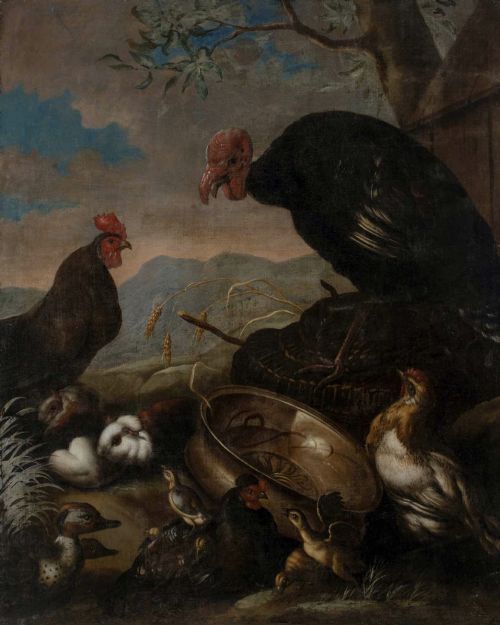
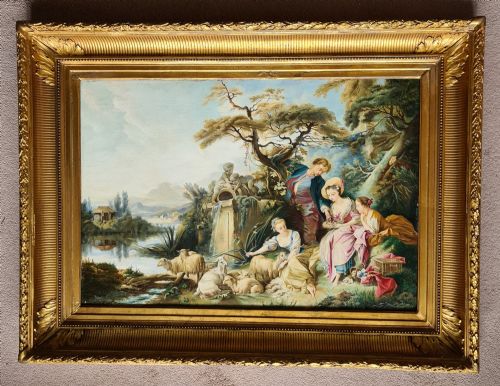
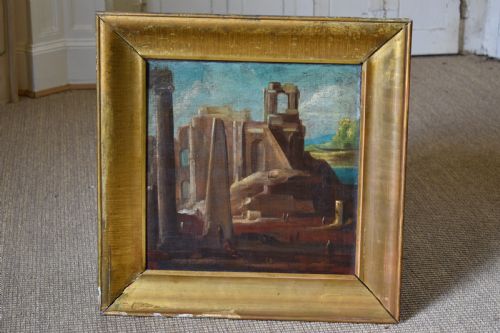
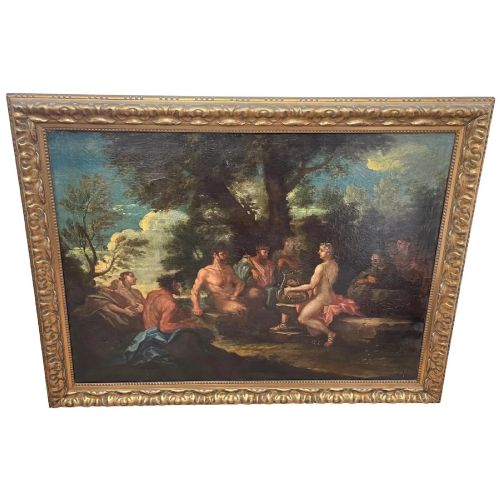
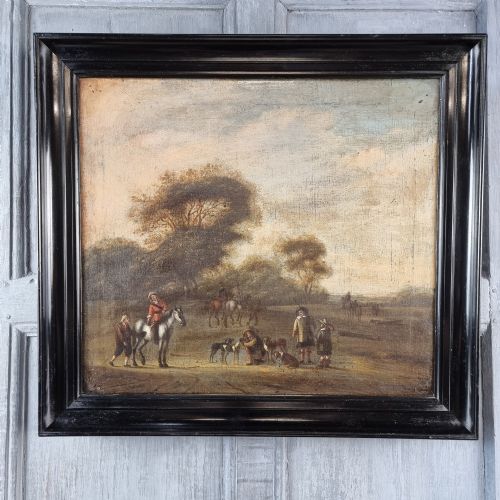
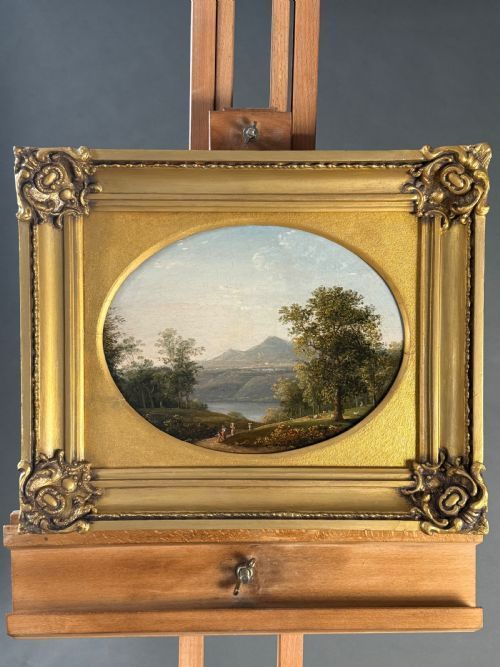
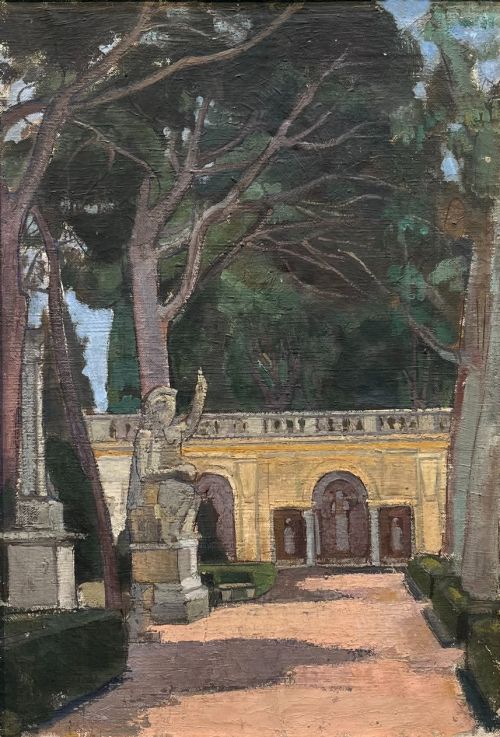
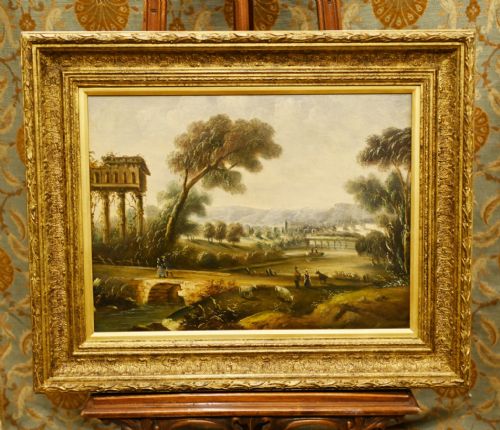
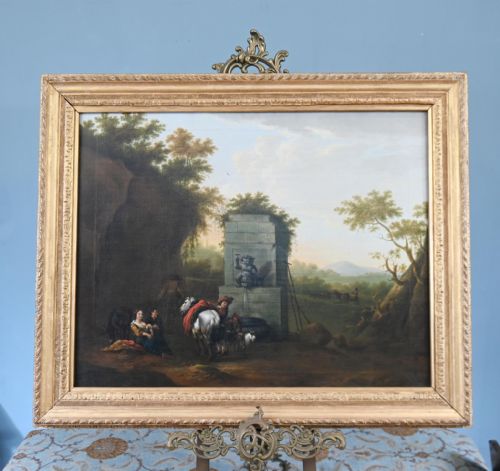
A classical landscape oil painting captures idealised views of nature, often populated by figures, mythological subjects, or architectural ruins such as columns and castles. These works draw upon traditions from the seventeenth, eighteenth, and nineteenth centuries, including Italianate, Dutch Golden Age, and French Rococo styles.
Buyers frequently encounter works originating from British, French, Dutch, and Italian schools, spanning periods from the late seventeenth century through to the Georgian and Victorian eras. Subjects range from grand tour pastoral art and seaport views to river landscapes and wooded scenes with figures.
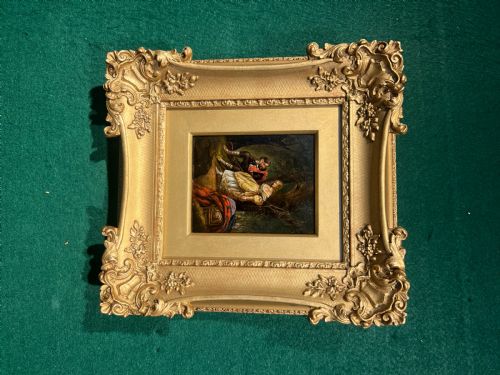
The format varies from intimate panels to large canvases, frequently housed in period frames made of giltwood, gesso, and gold leaf. Many pieces reflect the influence of prominent historical masters or derive from regional schools associated with Rome, Venice, and Scotland.
How They Were Made
These works are executed in oil paint applied to supports of canvas or wood panel, utilising traditional layering techniques to build depth in skies, foliage, and architectural elements.
Frames play an integral structural and aesthetic role, frequently constructed from wood with gesso mouldings finished in gold leaf or giltwood to complement the tonal balance of the painting.
Classical Landscape Oil Painting Retail Price Guide 2026
Typical asking prices for classical landscape oil painting among the pieces listed under this phrase on Sellingantiques today, from the lower quarter to the upper quarter. They describe what is for sale here now, not the wider market.
Materials recorded across the inventory include oil on canvas, wood panels, gesso, and gold leaf.
What Varies in Quality
Quality rests upon the handling of light, atmospheric perspective, and the fluidity of brushwork within foliage and figures, distinguishing accomplished master works from competent copies.
The preservation of the original paint surface and the structural integrity of the canvas or wood support heavily influence the overall standard of an artwork.
The craftsmanship of the accompanying frame, particularly period giltwood and gesso mouldings, contributes significantly to the historical and visual coherence of the piece.
Angelo Maria Crivelli·Francois Boucher·Jacob Philipp Hackert·Jan Miel·John Ferneley Senior·Margaret Maitland Howard·Carl Johan Fahlcrantz·Cornelis Van Poelenburgh·Thomas Edward Roberts·John Hamilton Mortimer·Jean-Baptiste Joseph Pater·Giovanni Paolo Panini·Claude Lorrain·Frederick Waters Watts·Carl Adolf Mende·Eugene Verboeckhoven·Pieter Bout·Adriaen Frans Boudewyns·Pierre Emmanuel Dielmans·Francesco Zuccarelli·Jan Evert Morel
The Classical Landscape Oil Painting Glossary
- Oil on Canvas
- Pigment suspended in a drying oil medium applied to a woven fabric stretched across a wooden frame. This primary support material allowed artists to achieve subtle tonal gradations and rich textures.
- Giltwood
- Wood carved and coated with gold leaf or metallic powder. It provides the decorative, reflective border typical of historical picture frames.
- Grand Tour
- A cultural journey through Europe undertaken by upper-class young men during the eighteenth and nineteenth centuries. Paintings from this context often depict Italian ruins and classical scenery.
- Gesso
- A paint mixture consisting of a neutral binder mixed with chalk, gypsum, or pigment. It served as a smooth preparatory ground for wood panels and canvas, or formed moulded details on frames.
Classical Landscape Oil Painting: Frequently Asked Questions
What is a classical landscape painting?
A classical landscape painting depicts an idealized view of nature, typically featuring harmonious compositions of trees, rivers, mountains, and classical architectural ruins.
These works often include figures drawn from mythology, literature, or pastoral life, reflecting artistic ideals prominent from the seventeenth century onwards.
How do I identify the period of an oil painting?
Period identification relies on examining the style of the brushwork, the preparation of the canvas or wood panel, and the framing materials used.
Historical clues within the clothing of figures, architectural details, and signatures or inscriptions also help narrow down the date of execution.
Where were these landscape paintings made?
These artworks were produced across various European artistic centres, with significant contributions from British, French, Dutch, and Italian schools.
Many pieces reflect travels through Italy during the grand tour, capturing Mediterranean light and classical topography.
How should I care for an antique oil painting?
Antique oil paintings require stable environmental conditions away from direct sunlight, extreme temperature fluctuations, and high humidity.
Dusting should be performed gently with a soft, dry brush, avoiding any moisture or chemical cleaning agents on the paint surface.