




17th Century Landscape Painting
A 17th century landscape painting brings the quiet drama of the Dutch Golden Age and Flemish Baroque directly onto your wall.
17th Century Landscape Painting
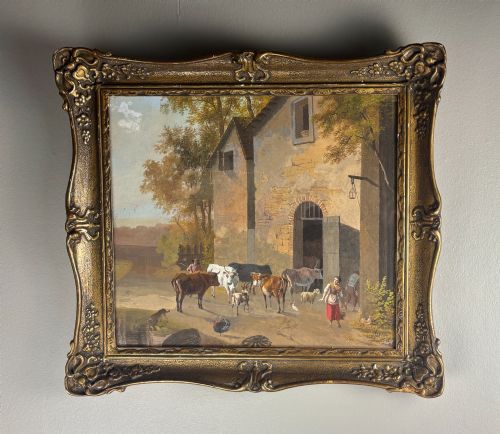
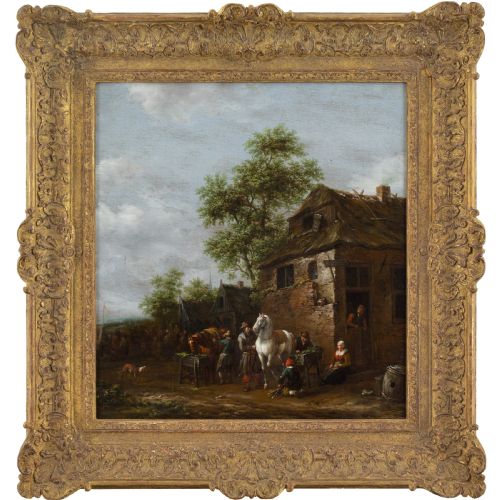
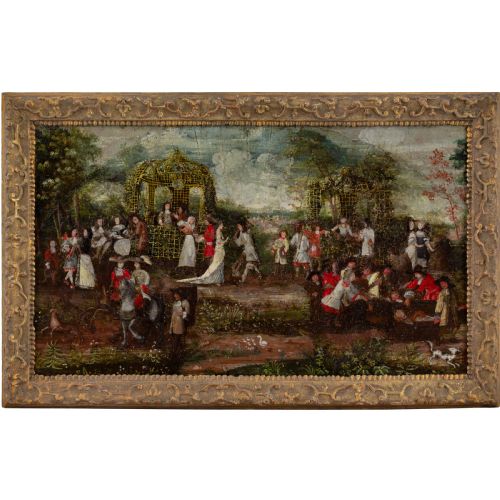
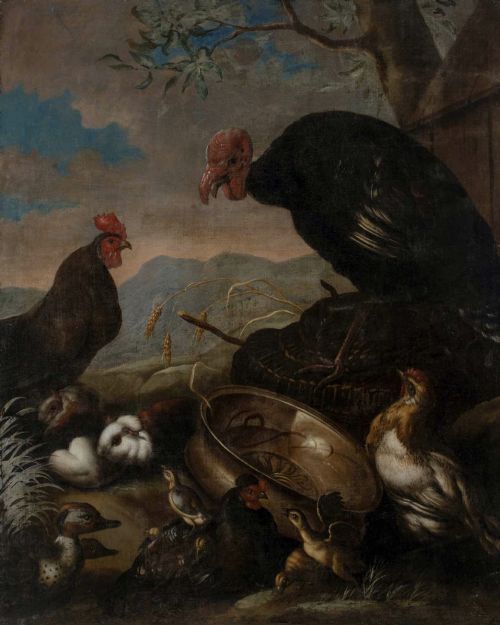
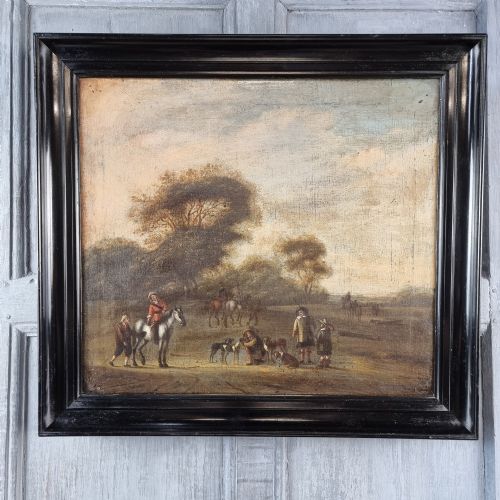
Buyers most frequently encounter maritime scenes with boats, mountainous river views, and rustic village gatherings framed in period giltwood. These works reflect the profound European shift towards observing the natural world with atmospheric precision.
Schools range from the bustling ports of the circle of Claude Lorrain to the serene woodlands associated with the Dutch Golden Age style. Each piece holds historical weight, anchored by the technical vocabulary of seventeenth-century European painting.
Materials and Technique
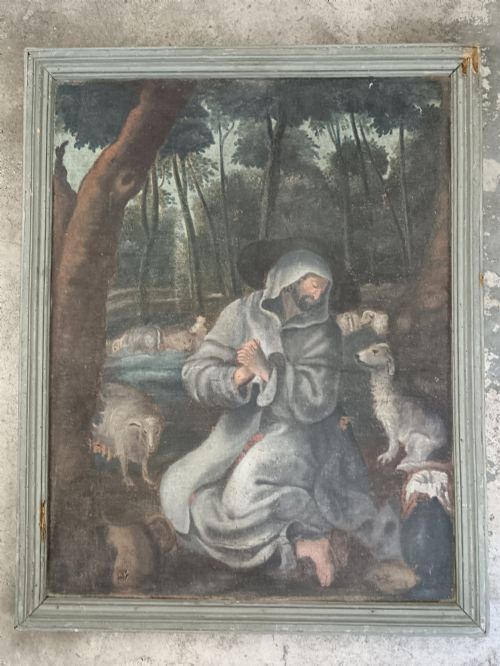
Painters of this era worked primarily with oil paint on canvas or prepared wood panels, building deep tones through layered glazes. Canvas provided a flexible ground for large maritime and mountainous compositions, whilst oak panels supported smaller, detailed winter scenes and panel paintings.
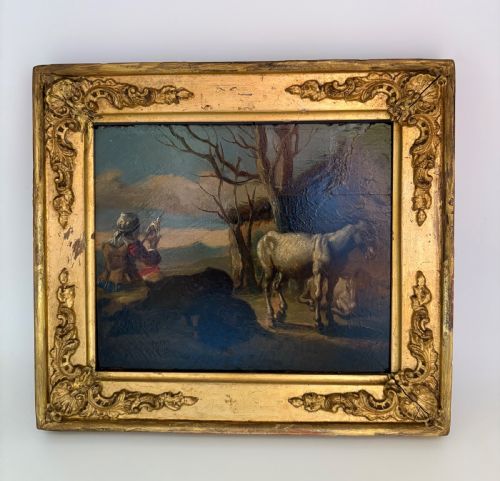
Frames play an integral role in the physical survival of these works, frequently constructed from carved giltwood or enriched with gold leaf. These heavy frames protect the outer edges of the canvas and complement the dark, dramatic palettes of the Baroque era.
Materials recorded across the archive include oil paint, canvas, oak panels, and traditional gold leaf applied to carved wooden frames.
Quality Variations in Seventeenth-Century Art
Quality rests in the subtlety of atmospheric perspective and the confident handling of light across water, foliage, and architectural ruins. Masterworks demonstrate a sophisticated command of depth, whereas lesser studio pieces or later followers can present flatter spatial arrangements.
The integrity of the underlying canvas or oak panel and the preservation of original paint layers dictate the visual strength of the piece. Pentimenti, where the artist altered compositions during the painting process, often signal an authentic, working studio creation rather than a mechanical copy.
John Hayls·Angelo Maria Crivelli·Bonaventura Peeters·Cornelis Van Poelenburgh·Philipp Peter Roos·David Teniers II·Claude Lorrain·Marmaduke Cradock·Jacob Bogdani·Pieter Bout·Adriaen Frans Boudewyns·Jacob Knyff·Salvator Rosa·Jan Van Goyen·Pieter Nolpe
The 17th Century Landscape Painting Glossary
- Baroque
- A European style of art spanning the seventeenth and early eighteenth centuries, characterised by exaggerated motion, deep shadow, and grand drama. It replaced the balanced harmony of the Renaissance with intense emotional resonance.
- Dutch Golden Age
- A period in Dutch history spanning the seventeenth century wherein trade, science, and art flourished immensely. Painters during this time popularised realistic depictions of everyday landscapes, seascapes, and domestic life.
- Giltwood
- Wood that has been covered with a thin layer of gold leaf or gold paint for decorative effect. Elaborate giltwood frames were standard for framing significant paintings of the period.
- Oil on Canvas
- A traditional painting medium where pigments are suspended in drying oils and applied to stretched woven fabric. This combination allowed artists to achieve rich textures and subtle tonal gradations.
- Pentimento
- An alteration in a painting evidenced by visible traces of previous brushstrokes, showing where the artist changed their mind. This phenomenon often confirms the spontaneous creation of an original hand.
17th Century Landscape Painting: Frequently Asked Questions
How do I identify a genuine seventeenth-century canvas?
Examine the weave of the fabric and the type of stretcher frame behind the artwork, as older canvases display irregular threads and hand-planed wood. Pigment analysis and examination under ultraviolet light often reveal the age of the underlying oil layers.
Look closely at the craquelure across the paint surface, which forms naturally as oil paint hardens over centuries. Genuine age shows a fine, irregular network of cracks distinct from artificial ageing techniques.
What is the difference between Flemish and Dutch styles?
Flemish seventeenth-century painting often leans towards Catholic grandeur, featuring dramatic narrative elements, lush vegetation, and sweeping mythological or religious backdrops. Artists like David Teniers II captured vibrant village life with rich, heavy textures.
Dutch landscapes tend to focus on secular observation, maritime dominance, and realistic atmospheric effects under expansive skies. Painters celebrated local geography, rural commerce, and the quiet dignity of everyday topography.
Where should I hang an antique oil painting?
Position the painting away from direct sunlight and strong heat sources to protect the delicate oil pigments and wooden panels from drying out. Stable indoor temperatures prevent the canvas from expanding and contracting.
Ensure the wall can support the substantial weight of both the canvas and its original giltwood frame. Soft, directional picture lighting enhances the dark, layered glazes characteristic of this period.
What does attribution mean in old master paintings?
Attribution indicates that experts have linked a piece to a specific artist or their immediate workshop based on style, brushwork, and historical records. Terms like follower or circle denote artists working closely in the manner of the named master.
Unsigned paintings from this era frequently carry attributions derived from comparative analysis with documented works. This methodology helps historians categorise anonymous studio output accurately.