

Antique Equestrian Landscape Art
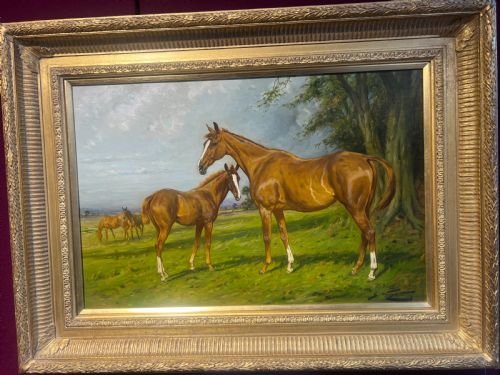
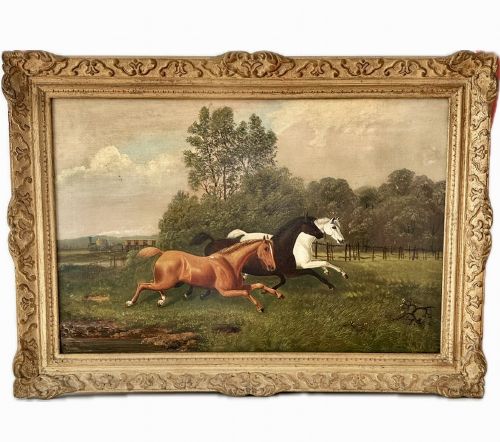
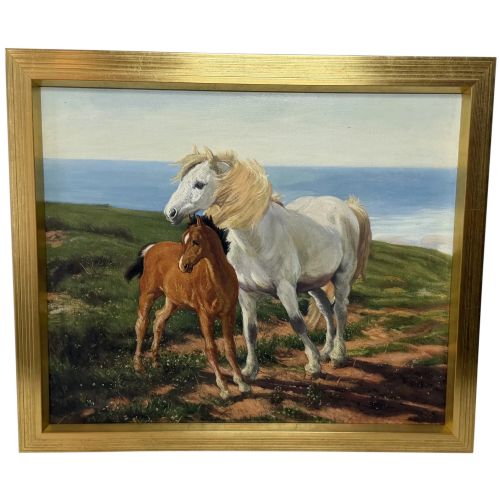
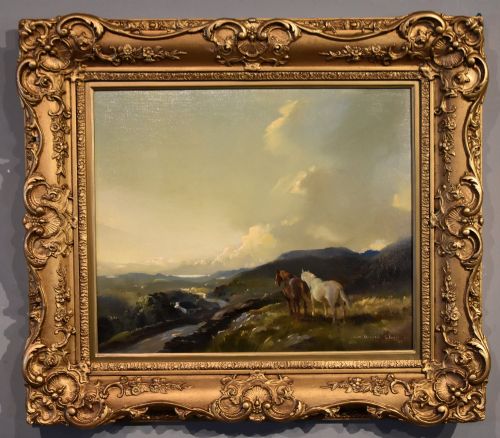
Antique equestrian landscape art brings together horses and countryside in oil, pastel, and watercolour, capturing the movement of animals against rivers, fields, and estates.
Antique Equestrian Landscape Art
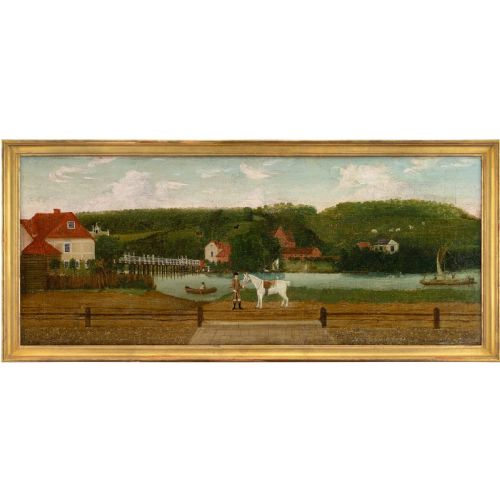
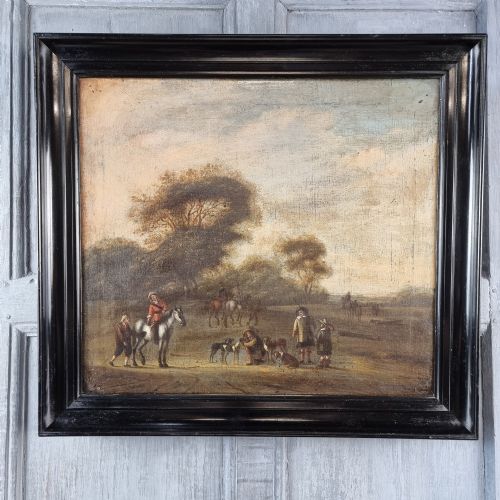
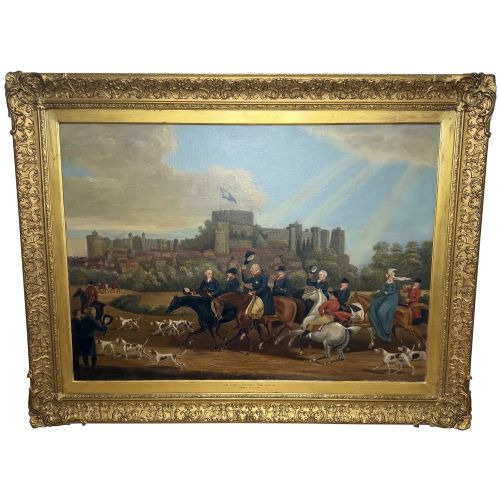
When you search for antique equestrian landscape art, you encounter works placing horses centrally within rural, sporting, or coaching settings. These pieces range from seventeenth-century Dutch landscapes to late nineteenth-century British hunting scenes and rural watercolours.
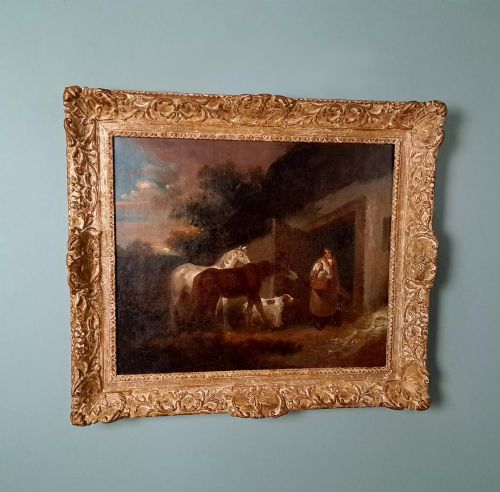
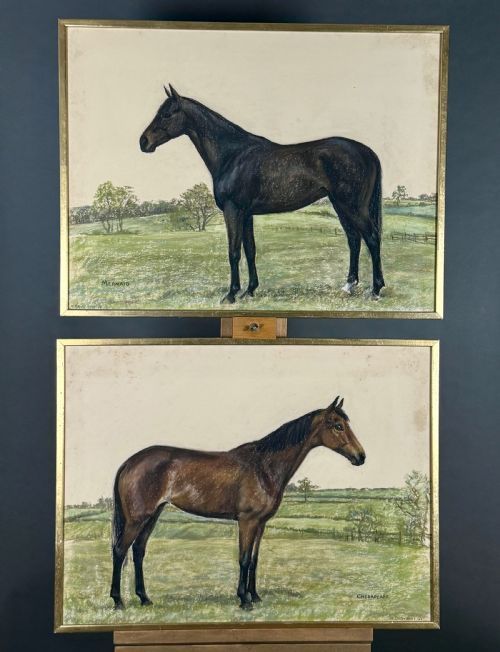
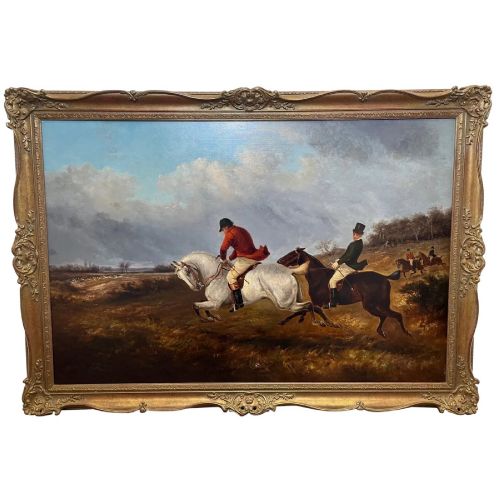
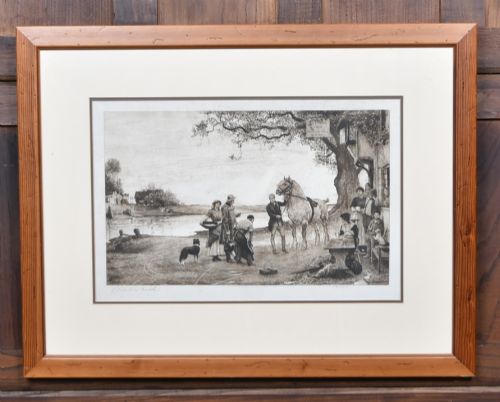
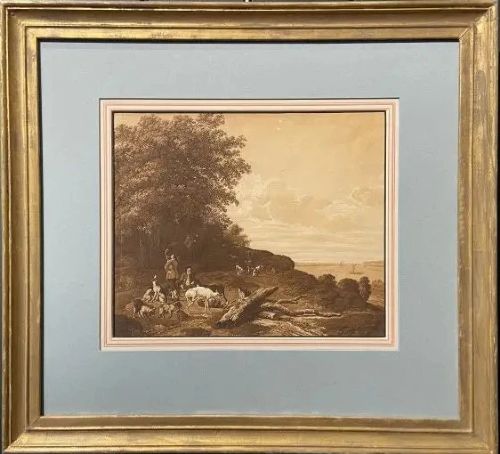
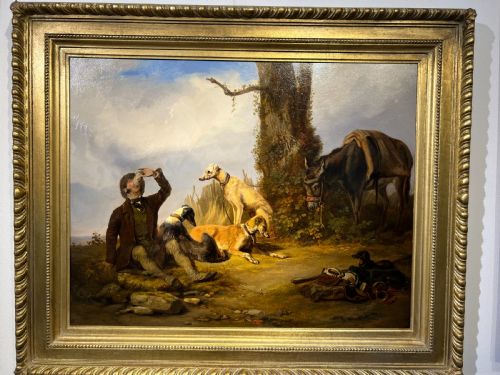
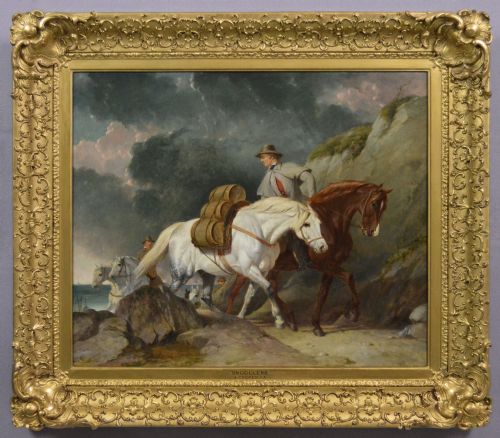
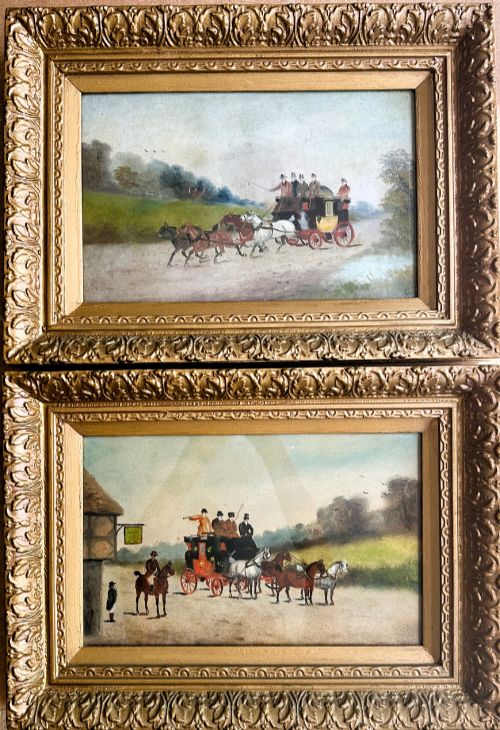
The most common examples on this page are nineteenth-century oil paintings on canvas depicting horses by rivers, outside blacksmiths, or during fox hunts. Alongside these oils, you find pastels, etchings, and silk needlework spanning the Georgian, Victorian, and Edwardian eras.
The subjects extend beyond simple portraits of animals to encompass working horses on coastal paths, coaching inns, and expansive country estates. They reflect social history, agricultural life, and sporting traditions across Britain, France, and the Netherlands.
Materials and Techniques
The works rely primarily on oil paint applied to stretched canvas or wooden panels, supported by traditional ground layers and varnishes. Artists also utilised paper for delicate pastels and watercolours, while frame makers enclosed these compositions in ornate giltwood and swept gilt frames.
Draftsmanship underpins the depictions, visible through underlying sketches in etchings by artists like Robert W. Macbeth and Herbert Dicksee. Painters built up depth by layering rich oil pigments to capture the musculature of horses and the changing light of rural skies.
Listings feature oil on canvas, paper, wood, and silk needlework across periods from the seventeenth century through the twentieth.
Distinguishing Quality
Quality rests upon the artist's ability to render the anatomy and movement of horses convincingly within a coherent perspective of the surrounding landscape. Master hands achieve precise handling of light, particularly in the rendering of coats, skies, and atmospheric weather effects like passing showers.
The integrity of the original support and the condition of the paint surface dictate the standing of a piece. Finer examples retain their original giltwood frames and bear signatures or clear attributions to established sporting and landscape painters.
William Joseph Shayer Senior·Thomas Smythe·Johannes Lingelbach·Sir Edwin Henry Landseer·George Wright·Abraham Cooper·Edward Priestley·Vernon DeBeauvoir Ward·C R Breytle·Philip Rideout·Herman S Melville·George Morland·John Ferneley Senior·Herbert Dicksee·Charles Walter Simpson·Raimond Louis Lecourt·C W Tuck·John Sanderson Wells·John Frederick Herring Jnr·Philip Henry Rideout·John Frederick Herring·Arthur Longley Vernon·Helena Maguire·Fannie Moody·Pieter Bout
The Antique Equestrian Landscape Art Glossary
- Etchings
- Printmaking technique where lines are incised into a metal plate with acid before being inked and pressed onto paper. This process allows for fine, expressive detail in rural and animal subjects.
- Giltwood
- Timber carved and coated with a thin layer of gold leaf or gold paint. It frequently surrounds nineteenth-century oil paintings to enhance their visual weight.
- Pastel
- A dry medium consisting of powdered pigment and a binder, shaped into sticks. Artists use it on paper to achieve soft textures and blended tones in animal studies.
- Provenance
- The documented history of ownership of an artwork. It establishes authenticity and traces the journey of a painting from its creation.
- School
- A group of artists working in a similar style or region during a specific period. Listings often attribute anonymous works to an English or Dutch school based on technique.
Antique Equestrian Landscape Art: Frequently Asked Questions
What defines antique equestrian landscape art?
These works feature horses as the primary focus integrated into rural views, coaching scenes, or hunting expeditions. They combine animal portraiture with topographical or imaginative countryside backgrounds.
The genre spans several centuries, capturing changing rural economies, transport methods, and aristocratic sports through the eyes of period painters and printmakers.
Where were these paintings displayed originally?
Wealthy landowners and patrons hung large sporting and landscape oils in country house dining rooms, libraries, and halls to celebrate their estates and hunting achievements. Smaller watercolours and pastels found places in private parlours and drawing rooms.
Today, they suit similar domestic interiors, adding depth and narrative to studies, living rooms, and traditional hallways.
How should I care for an antique canvas?
Keep oil paintings away from direct sunlight and significant fluctuations in temperature and humidity to prevent the canvas from slackening and the paint from cracking. Dust the surface gently with a soft, dry brush without applying pressure.
Avoid using water or chemical cleaners on the paint layer. Consult a professional conservator if the varnish darkens or the canvas requires cleaning.