








Classical Italianate Landscape Art
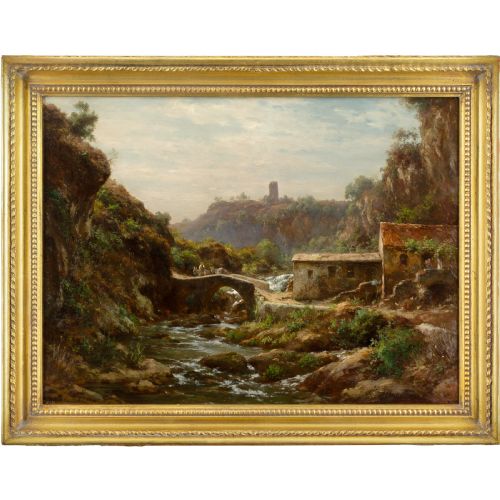
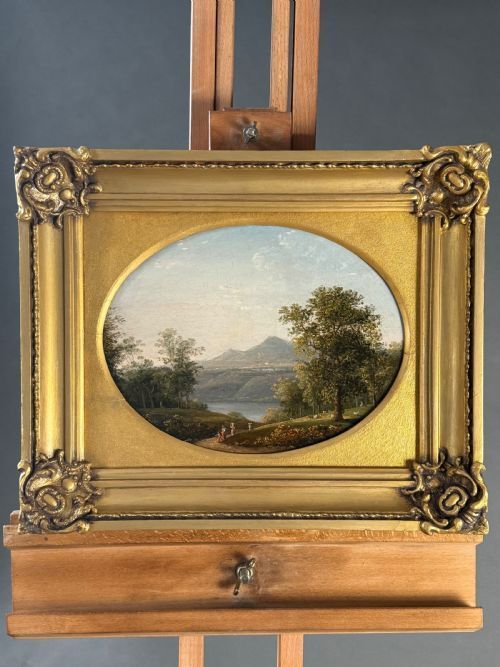
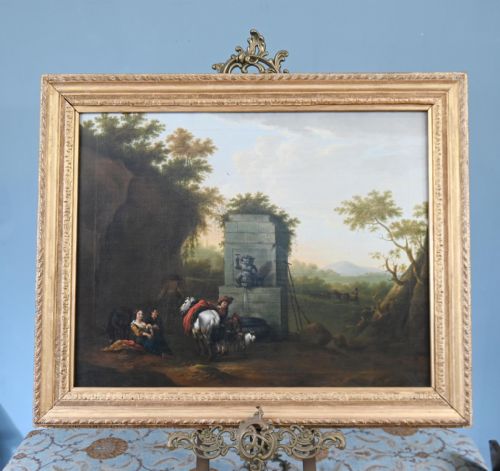
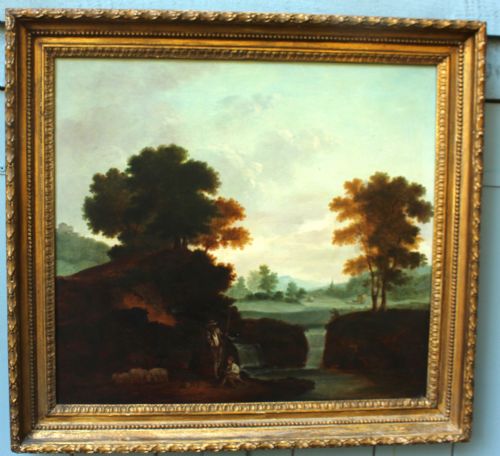
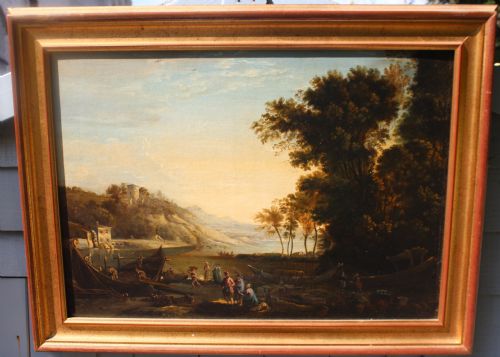
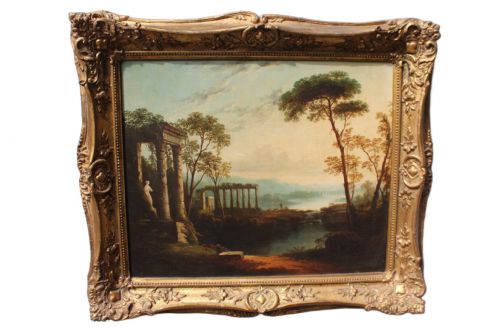
Classical italianate landscape art transports the viewer to sunlit Mediterranean scenes of distant villas, classical ruins, and tranquil pastoral waters.
Classical Italianate Landscape Art
Classical italianate landscape art captures idealized rural vistas influenced by Mediterranean geography and classical antiquity. Buyers searching this phrase encounter works ranging from fine oil paintings to textured vintage prints.
The selections on this page span several centuries, including seventeenth-century golden age compositions and eighteenth-century grand tour souvenirs. Many pieces adopt the aesthetic traditions of Claude Lorrain or follow the circles of noted historical painters.
Common motifs within these works include bathing nudes, pastoral figures, anglers, and distant villas set beside rivers and waterfalls. The prevailing styles encompass neoclassical approaches alongside classical pastoral expressions.
Materials and methods of production
The works utilise oil paint applied to canvas, capturing luminous atmospheric effects and detailed natural scenery. Artists built up these compositions using traditional brushwork to render depth in foliage, water, and distant architecture.
Frames play a significant role in the presentation of these pieces, frequently constructed from wood and embellished with gold leaf or giltwood. Certain twentieth-century examples employ paper for textured print reproductions of earlier pastoral imagery.
Classical Italianate Landscape Art Retail Price Guide 2026
Typical asking prices for classical italianate landscape art among the pieces listed under this phrase on Sellingantiques today, from the lower quarter to the upper quarter. They describe what is for sale here now, not the wider market.
Anglers feature patiently by rivers while nudes bathe nearby, proving that eighteenth-century pastoral life managed to accommodate several hobbies at once.
Distinctions in quality
Quality rests upon the handling of light and atmospheric perspective, which separates mechanical reproductions from accomplished oil paintings. Superior works achieve a convincing sense of depth in the rendered skies, distant hills, and architectural elements.
The execution of figures within the landscape also dictates the grade of a piece, with masterly brushwork distinguishing circle works and followers from lesser studio output. Frame craftsmanship, particularly the condition and application of giltwood and gold leaf, further differentiates the items.
JACOB PHILIPP HACKERT·Jan Miel·Cornelis Van Poelenburgh·Claude Lorrain·Cignaroli·Richard Wilson·William Crouch·Thomas Jones·Peter de Wint
The Classical Italianate Landscape Art Glossary
- Italianate
- A stylistic approach inspired by the landscape, light, and architecture of Italy. Artists working in this mode often incorporated classical ruins and warm palettes into their compositions.
- Grand Tour
- A traditional trip through Europe undertaken by upper-class young men in the eighteenth and nineteenth centuries. Travellers frequently acquired local paintings and prints to commemorate their journey.
- Giltwood
- Wood that has been treated with a thin layer of gold leaf or metallic powder. This finish is commonly found on antique picture frames designed to complement oil paintings.
- Pastoral
- A genre of art depicting idealized rural life and peaceful countryside scenes. These compositions typically feature shepherds, figures bathing, and gentle agricultural settings.
Classical Italianate Landscape Art: Frequently Asked Questions
What defines a classical italianate landscape?
These compositions combine natural scenery with classical architecture, idealized light, and pastoral figures. They draw heavily on Mediterranean ideals and ancient ruins.
Such works often feature compositional framing devices like dark trees in the foreground leading the eye toward a bright, distant horizon.
How do I care for an oil painting on canvas?
Keep the artwork away from direct sunlight and fluctuating humidity levels to protect the canvas and paint layers. Dust the surface gently with a soft, dry brush.
Avoid using liquid cleaners or damp cloths on the painted surface or the giltwood frame.
What is a grand tour painting?
Grand tour paintings were created as souvenirs for travellers exploring European cultural centres during the eighteenth and nineteenth centuries. They typically depicted iconic foreign landscapes and classical ruins.
Artists working abroad catered specifically to this affluent clientele by producing picturesque views of Italy.
How do I distinguish an original painting from a print?
Examine the surface of the work closely under a strong light to check for visible brushstrokes and the texture of the canvas. Prints generally display a uniform dot pattern or flat ink surface.
Framed prints on paper also react differently to lighting compared to layered oil paint.