



Pastoral River Scene Painting
A pastoral river scene painting brings the calm of British waterways and countryside into a room.
Pastoral River Scene Painting
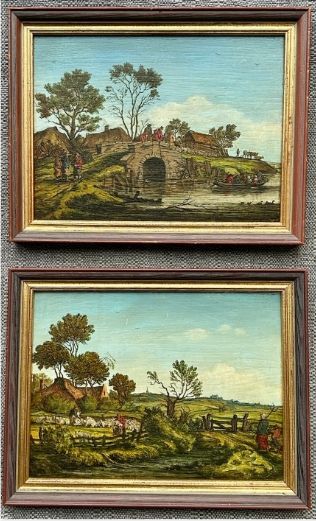
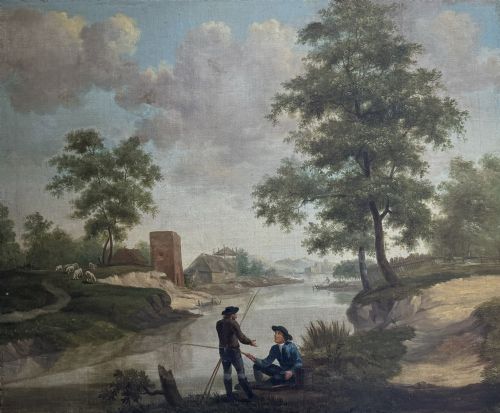
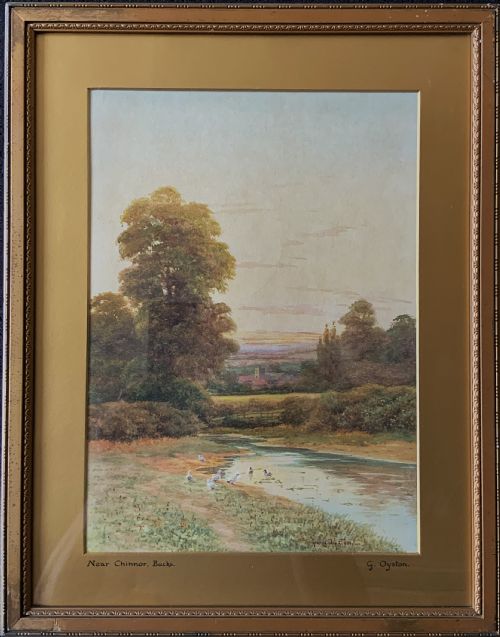
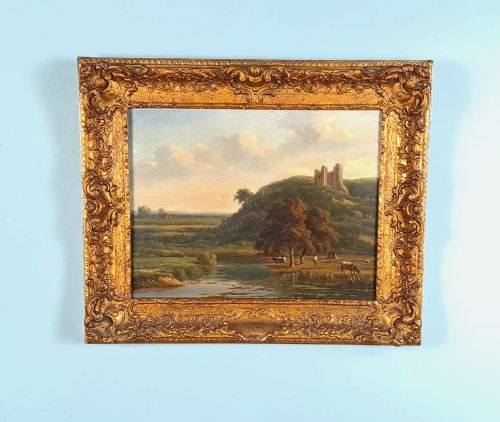
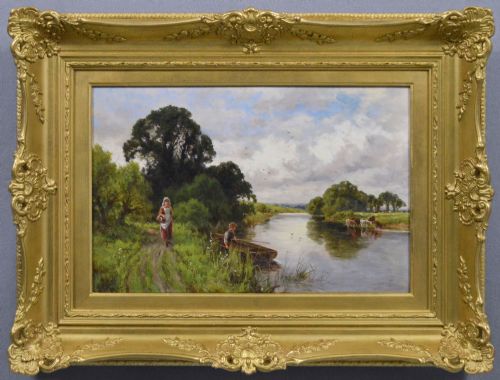
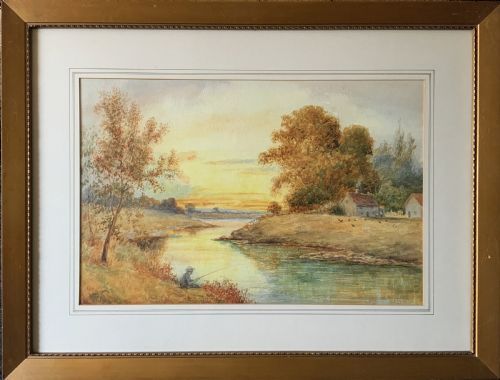
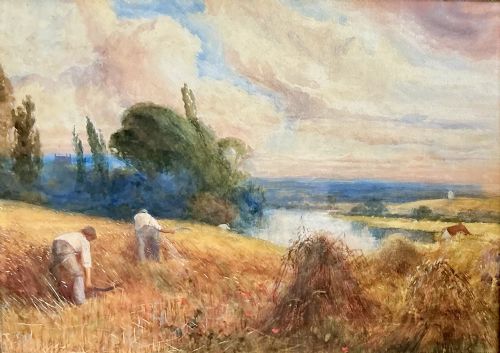
A pastoral river scene painting depicts figures, livestock or boats beside water, framed by trees and open skies. These works capture nineteenth and early twentieth century rural life along rivers such as the Thames, Severn and Tyne.
The selection on this page relies heavily on Victorian and Edwardian interpretations of the countryside, executed in both oil and watercolour. Artists of this era focused on tranquil rural settings, often showing figures fishing, harvesting or tending cattle by the water.
Works range from intimate watercolours on paper to substantial oil paintings on canvas and wood panels. Many bear the signatures of recognised regional artists alongside examples from the British School.
Materials and technique
Painters of these rural views worked primarily in oil paint upon canvas, wood panels and boards, or applied watercolours to paper. Canvas supports allowed for textured brushwork, particularly when rendering foliage and water reflections.
Watercolour works on paper utilised layered washes to achieve luminous skies and gentle river currents. Many surviving pieces retain their original giltwood or gilt wood frames, which complement the tones of the pastoral landscape.
Materials recorded across the selection include canvas, paper, wood panels, oil paint and giltwood.
Distinctions in quality
Quality rests upon the artist's ability to handle light, atmosphere and perspective within the river landscape. Stronger examples display confident brushwork in the depiction of water and vegetation, whereas weaker pieces rely on repetitive formulas.
The fidelity of the figures and animals integrated into the landscape marks another distinction. Masterful works integrate cattle, anglers and agricultural workers naturally into the topography, creating depth and a sense of place.
George Graham·George Oyston·T C Hofland·Henry H Parker·Frederick Hines·Thomas Baker of Leamington·Henry John Kinnaird·Robert John Hammond·Robert Thorne Waite·Walter J Watson·James Gunson Atkinson·Alfred Grey·Benjamin Williams Leader·Peter Deakin·William Manners·Thomas James Lloyd·Claude Cardon·Gudrun Sibbons·Thomas Creswick·Henry Sykes·Richard Wilson·Henry Cheadle·William Sidney Cooper·Alois Arnegger·Claude Lorrain
The Pastoral River Scene Painting Glossary
- Oil on canvas
- Pigments bound in drying oil applied to a stretched woven fabric support. This method permits rich texture and deep colour saturation.
- Giltwood
- Wood carved and coated with gold leaf or metal gilt. It provides a reflective border that enhances the warmth of pastoral paintings.
- Watercolour
- Pigments suspended in a water-soluble vehicle applied to paper. It relies on the white of the paper to create luminosity.
- British School
- A designation for works produced by British artists sharing stylistic traits of a particular era. It often denotes anonymous or collaborative output.
- Wood panel
- A rigid flat wooden support used for painting prior to the widespread adoption of canvas. Panels provide a stable surface for detailed brushwork.
Pastoral River Scene Painting: Frequently Asked Questions
What periods do these paintings cover?
The works span from the eighteenth century through the Victorian and Edwardian eras up to the mid twentieth century. Most pieces reflect nineteenth century pastoral traditions.
Nineteenth century examples dominate the selection, accompanied by early twentieth century interpretations of river life.
Are these paintings signed by the artists?
Many examples bear signatures or initials from period artists, while others are attributed to broader regional schools. Documentation ranges from clear signatures on the canvas to indistinct markings.
Unsigned works are often classified under historical British schools based on their style, palette and subject matter.
How should I frame and display a watercolour?
Watercolour paintings require protection behind glass to prevent atmospheric damage to the paper. They should be kept away from direct sunlight to preserve the pigments.
Many period watercolours retain their original gilt frames which suit the delicate nature of works on paper.
What subjects appear in pastoral river scenes?
Common motifs include rivers, locks, bridges and rural cottages accompanied by figures fishing, boating or harvesting. Animals such as cattle and ducks frequently populate the foreground.
The inclusion of daily rural tasks defines the pastoral genre, distinguishing it from pure topographical landscape.