

Antique Regency Carver
When you search for an antique regency carver, you are stepping into a world of finely figured timber and confident scroll arms designed to anchor a formal dining table or a gentleman's study.
Antique Regency Carver
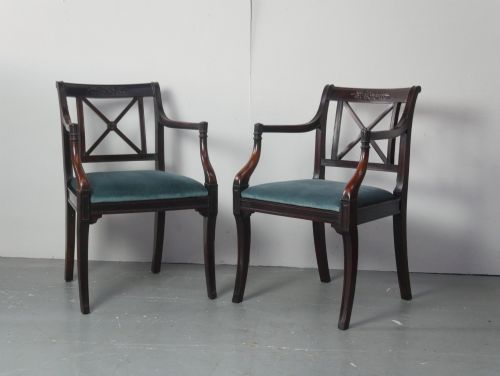
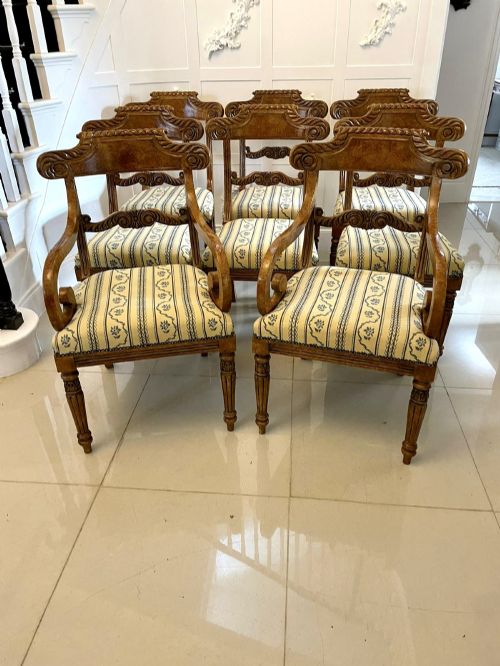
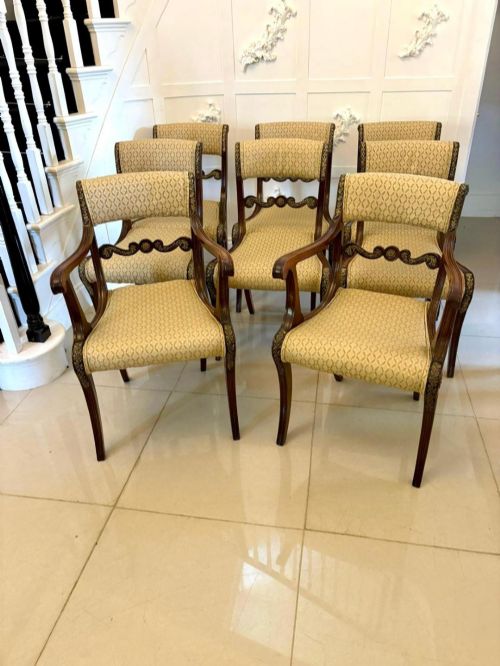
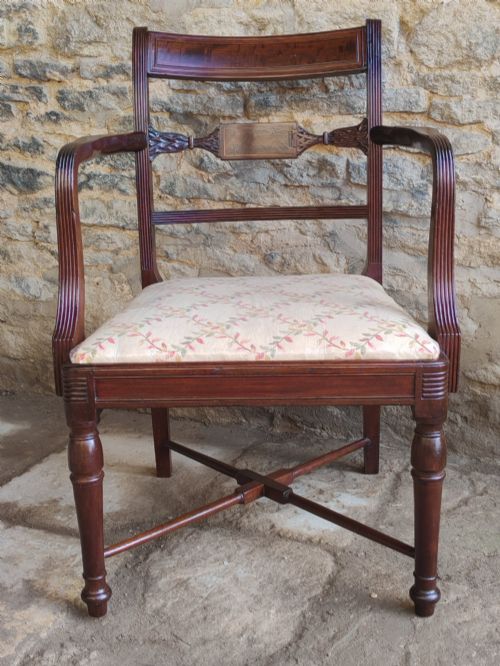
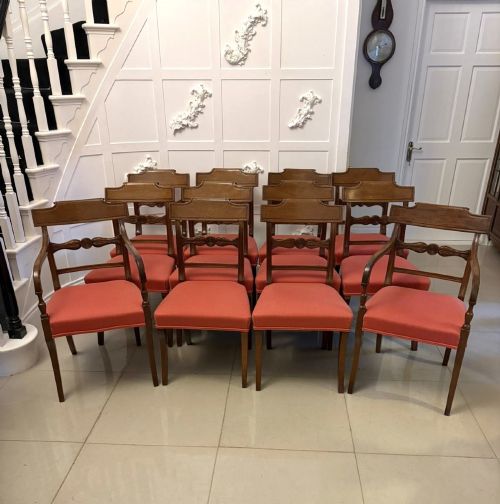
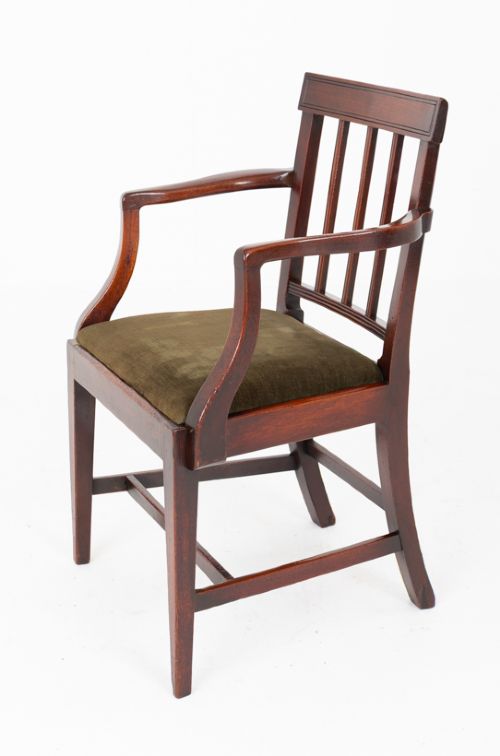
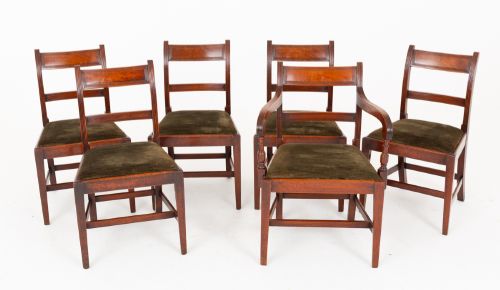
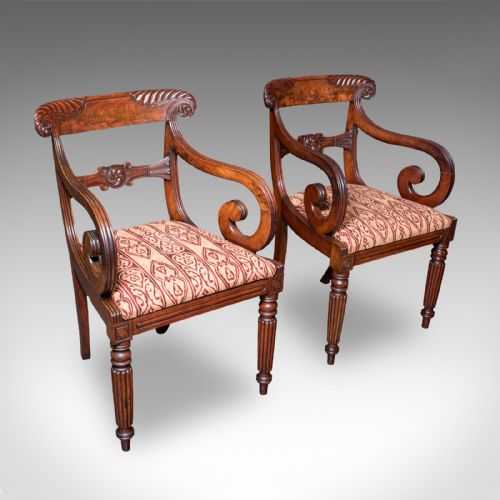
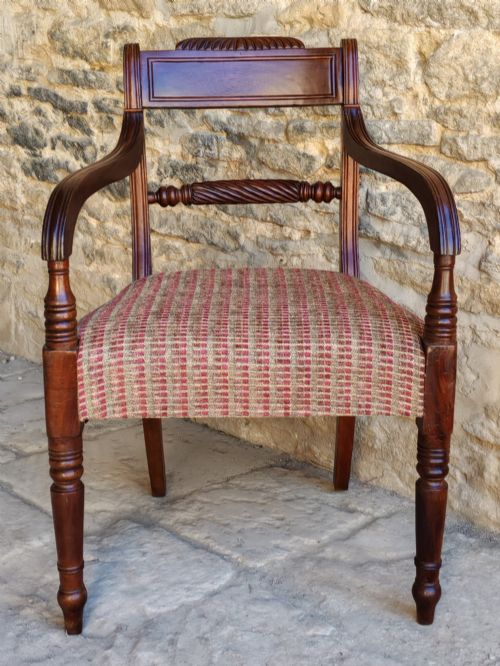
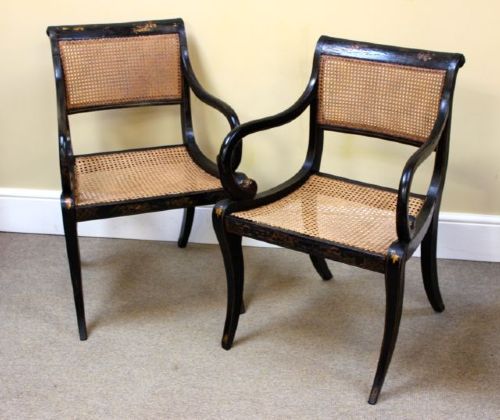
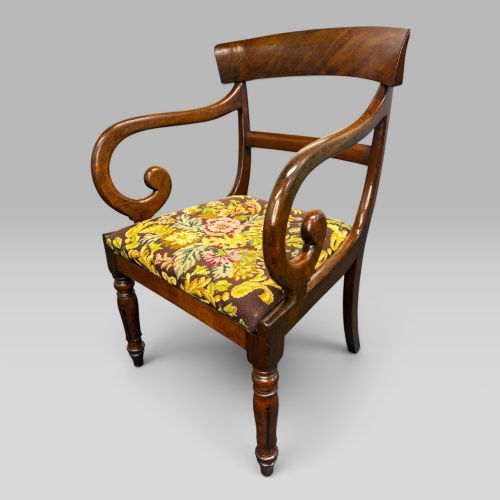
An antique regency carver is an armchair designed to stand at the head of a dining table or function as a desk chair, featuring prominent elbow supports and upright framing. These seats emerge predominantly from the early nineteenth century during the Georgian and Regency periods, though later revivals from the Edwardian era also appear across the selection.
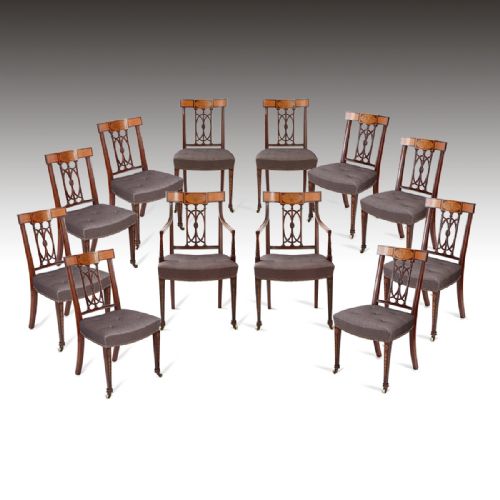
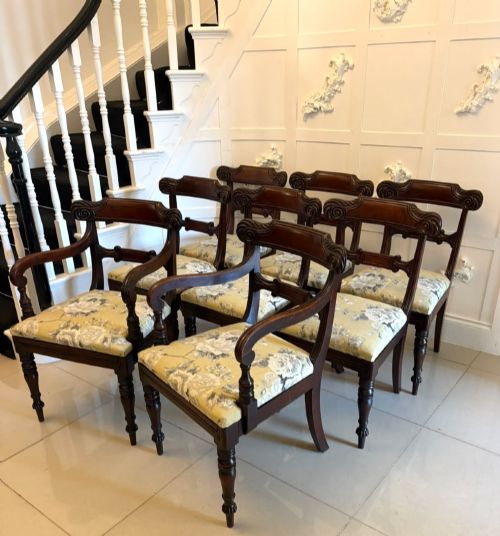
The form typically pairs with matching single dining chairs within larger sets, though solo armchairs and pairs are frequently encountered. Makers from this era constructed them to provide elevated comfort and distinct authority for the host, distinguishing them from standard dining chairs through their encompassing arms.
Distinctions in craftsmanship
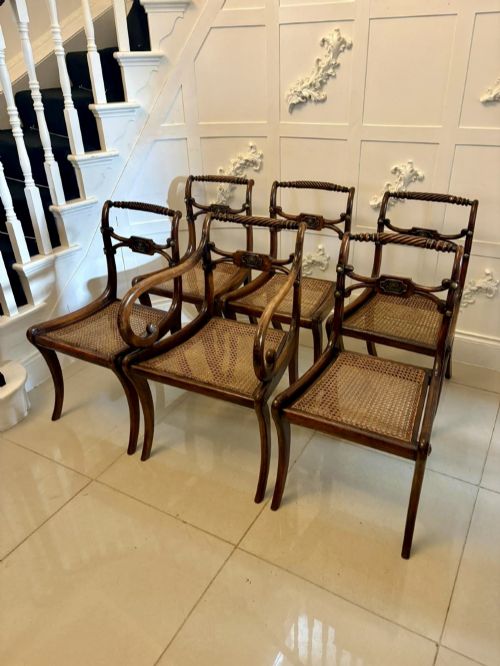
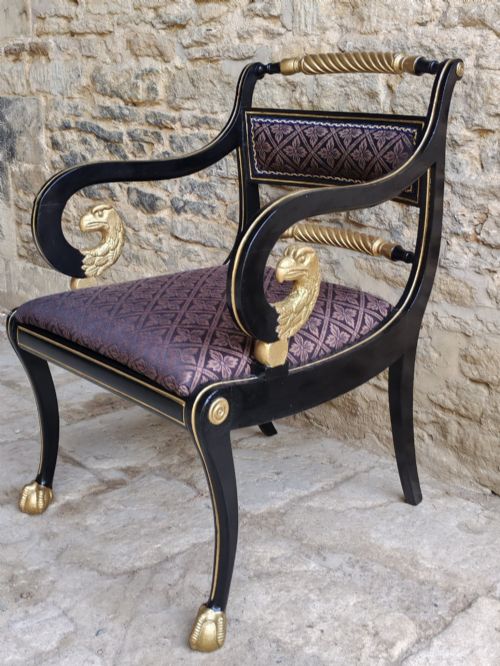
The distinction between standard workshop output and exhibition quality lies in the crispness of the carved details, such as ropebacks, lyre motifs, and scroll arms. Superior examples demonstrate thoughtful grain matching across the mahogany or walnut facades and maintain tight, unyielding joints throughout the frame.
Proportion and stance also dictate the standing of a piece, with finer carvers offering balanced arm heights and supportive backrests that reflect meticulous design during the manufacturing process. Original surfaces and unaltered structural components elevate individual chairs far above heavily restored or later revival equivalents.
Some nineteenth-century diners must have possessed remarkably slender elbows, judging by the snug embrace of certain scroll arm carvers.
Thomas Clarkson And Sons
The Antique Regency Carver Glossary
- Carver
- An armchair, typically designed en suite with a set of dining chairs, featuring integrated armrests for the head of the table.
- Ropeback
- A chair back featuring carved wooden members twisted to resemble the appearance of coiled rope, popular during the early nineteenth century.
- Lyre back
- A chair splat shaped in the openwork outline of an ancient Greek lyre, frequently utilised in Regency and revival seating.
- Elbow chair
- An alternative term for an armchair, often used historically to describe seating with low supports designed to rest the elbows.
- Drop-in seat
- A removable upholstered frame that fits neatly into a rebated wooden recess within the seat rail.
Antique Regency Carver: Frequently Asked Questions
How do I use an antique carver today?
These armchairs serve exceptionally well as desk chairs in a home study or as feature seating in a hallway or bedroom. Their sturdy timber construction and supportive arms provide practical comfort for daily sitting.
At a modern dining table, a single carver or a matching pair can be placed at the head and foot to introduce period character. Mixing an antique armchair with simpler contemporary tables creates a striking focal point in a dining room.
Were carvers always part of dining sets?
Historically, large dining sets were produced with a specific ratio of single chairs to armchairs, often including two carvers to accommodate the hosts. These armchairs were built slightly wider and more substantial than the matching side chairs.
Today, you will find both complete sets containing their original carvers and individual armchairs that survived on their own. Solo carvers function ideally as occasional chairs in reception rooms or offices.
Can I mix these chairs with modern furniture?
Pairing antique timber seating with modern decor adds warmth and textural contrast to a contemporary interior. The rich grain of mahogany and elm works well alongside clean lines and neutral colour palettes.
A single desk chair or library armchair can anchor a minimalist workspace, bringing historical craftsmanship into everyday use without overwhelming the room.