

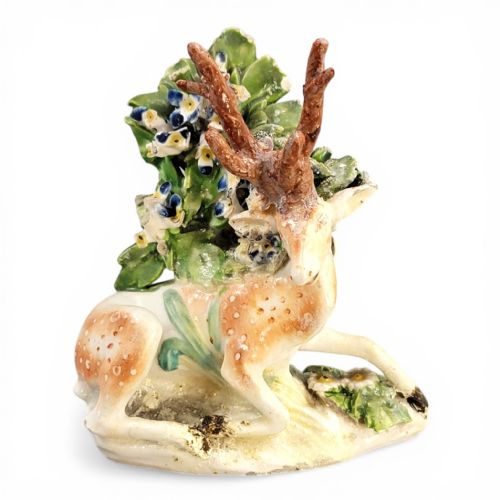


Antique Porcelain Table Ornament
When you search for an antique porcelain table ornament, you are looking for decorative figures, centrepieces, and lamps that bring 18th-to-20th-century craftsmanship onto a surface.
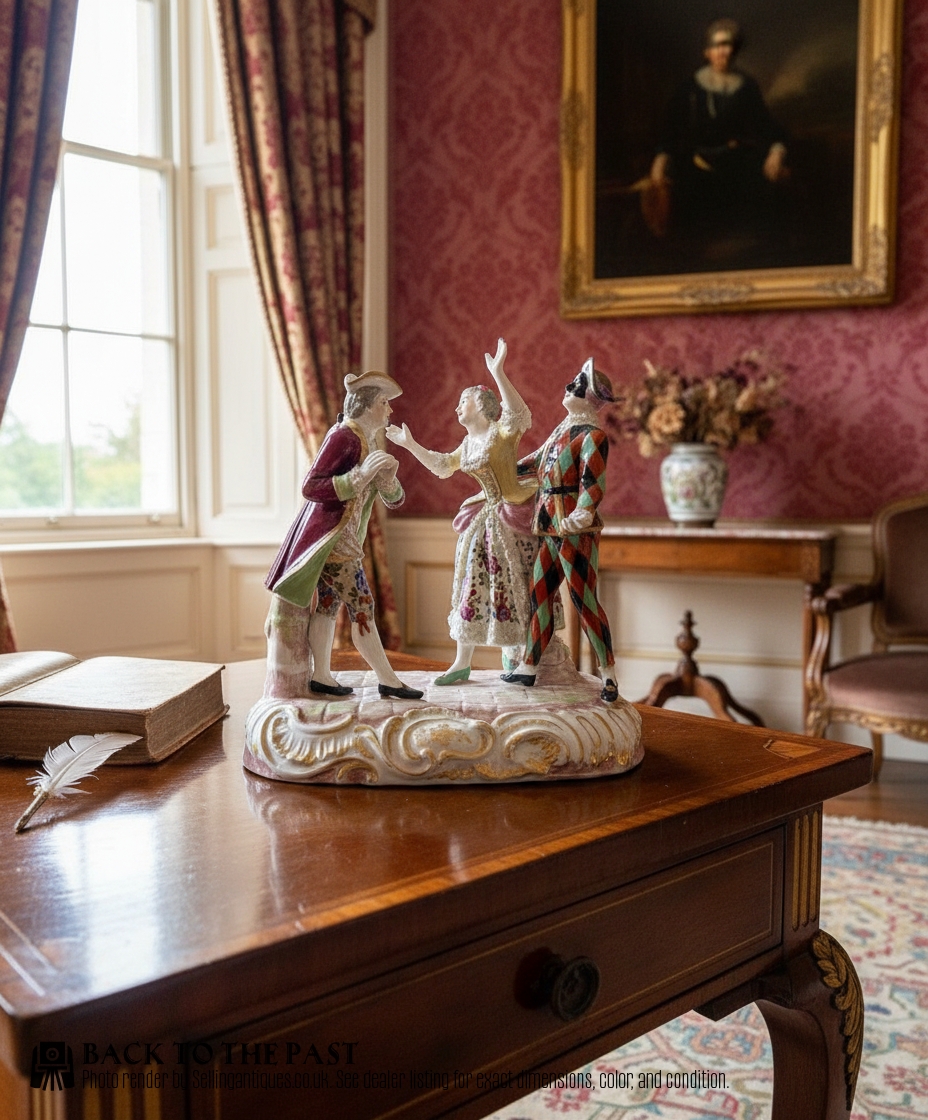
Antique Porcelain Table Ornament
An antique porcelain table ornament covers a diverse range of decorative objects designed to sit upon furniture, from animal lamps and figural groups to candlesticks and miniature furniture pieces. You will frequently encounter 19th-century works alongside Georgian and early-20th-century examples.
The forms span from German spitz dogs and Meissen cockatoos to French soft-paste figures and Dutch delftware. Centrepieces, ewers, and figural flower carts also populate this category.
Makers and regional styles range across English factories like Derby and Royal Worcester to continental European porcelain from Meissen, KPM, and Sitzendorf. These pieces served primarily as indoor decoration for formal rooms.
How they were made
These items rely on porcelain, ceramic, and soft-paste bodies shaped into complex figurines and vessels. Many incorporate applied details such as bocage foliage or architectural elements.
Makers utilised glaze, gold leaf, and hand-painted pigments to colour the surfaces, sometimes combining the porcelain with brass or glass mountings. Firing techniques and enamel application define the period of origin.
Listings feature porcelain, enamel, gold leaf, and brass, spanning the Georgian era through the Art Deco period of the 1930s.
What varies in quality
Quality rests upon the crispness of the modelling and the precision of the hand-painting across the porcelain body. Finer examples display subtle facial expressions and carefully applied gilding rather than heavy, thick enamel.
The integrity of applied elements like delicate porcelain leaves or floral garlands distinguishes workshop output. Early production pieces often show superior sculptural depth compared to later mass-produced variants.
Derby·Vion & Baury·Kister Scheibe-Alsbach·Chantilly·Volkstedt·Royal Worcester·Kerr & Binns·Eugene Clauss·Meissen·Sitzendorf·Carl Thieme Dresden
The Antique Porcelain Table Ornament Glossary
- Bocage
- Foliate background screen made of porcelain applied behind figures. This technique appears frequently on mid-18th-century animal and human groups.
- Soft-paste
- Type of porcelain made from clay mixed with ground glass and other materials rather than true kaolin. It fires at a lower temperature and yields a warm texture.
- Biscuit
- Unglazed porcelain fired once to a matte, white finish resembling marble. It became popular for French figural groups and portrait busts.
- Chinoiserie
- European decorative style reflecting Chinese artistic traditions. It appears on figures and vessels with imaginative Eastern motifs.
- Patch Period
- Phase in English porcelain production leaving small unglazed marks on the base from kiln supports. These marks help date early Derby pieces.
Antique Porcelain Table Ornament: Frequently Asked Questions
What is a porcelain table ornament?
These objects are decorative sculptures, lamps, and centrepieces made from ceramic materials to adorn interior spaces.
They range from single animal figures to elaborate mythological and seasonal groups produced in European factories.
How do I identify Georgian porcelain?
Georgian pieces often display characteristic patch marks, soft-paste bodies, and hand-painted details typical of 18th-century English factories.
Look closely at the modelling style and glaze characteristics to distinguish them from later 19th-century revivals.
Where were these figures made?
Production centres span across England, France, and Germany, involving renowned works such as Meissen, Derby, and various Thuringian potteries.
Each region developed distinct paste compositions and painting styles that separate German salon porcelain from English figures.
How should I display them?
Place them on stable surfaces away from high-traffic areas where vibrations might cause accidental drops.
Ensure they sit out of direct sunlight to protect hand-painted enamel colours and gilt highlights over time.
What does bocage mean?
Bocage refers to the leafy, tree-like porcelain background often wrapped around figures and animals.
It provides structural support in the kiln while adding a decorative naturalistic frame to the scene.