

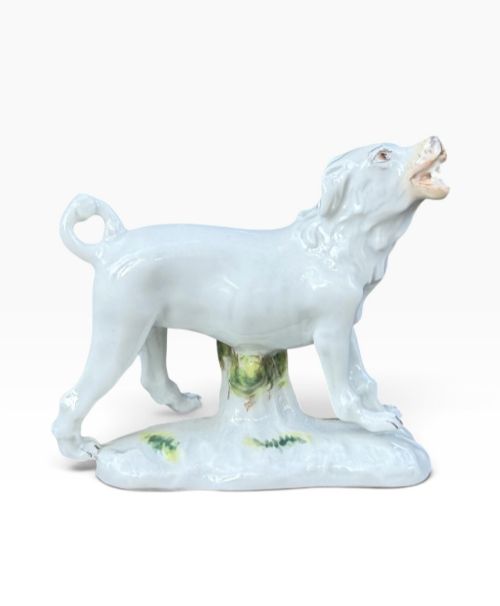
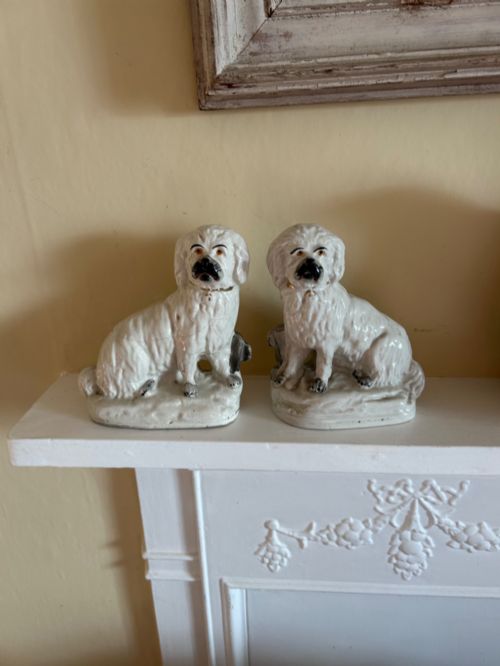


Vintage White Glazed Figurine
These vintage white glazed figurine examples bring character to a room, ranging from playful animal models to detailed human figures.
Vintage White Glazed Figurine
A vintage white glazed figurine selection brings together ceramic representations of animals, people, and decorative subjects from various eras. Buyers seeking a vintage white glazed figurine will encounter numerous dog models, including Staffordshire spaniels, poodles, and terriers, alongside human figures and sculptural groups.
The objects span multiple periods, drawing on Victorian, Georgian, and Art Deco styles. Pieces originate from English potteries, German porcelain factories, and French workshops, reflecting diverse regional manufacturing traditions.
Domestic animals and human characters dominate the forms, shaped as pairs, single statues, bookends, or functional powder boxes. Most examples utilise traditional ceramic bodies finished with a white glaze, occasionally accented with enamel or gilt details.
Materials and construction
Potters shaped these pieces using earthenware, porcelain, and soft-paste ceramics, often employing moulds to create consistent forms. Artisans then applied liquid glaze over the clay body before firing the piece in a kiln to achieve a smooth, vitreous surface.
Assessing quality and detail
The consistency of the white glaze layer also affects the overall appearance, where even application without pooling or heavy crazing preserves the crisp contours of the underlying ceramic sculpture.
Meissen·Royal Dux·Karl Tutter·Theo Voss·Beswick
The Vintage White Glazed Figurine Glossary
- Glaze
- A glassy coating fused to ceramic surfaces through firing. It waterproofs the earthenware or porcelain body and provides a smooth finish.
- Earthenware
- A porous ceramic fired at lower temperatures. It requires a glaze to hold liquids and forms the heavy body of many nineteenth-century figures.
- Porcelain
- A dense, vitrified ceramic made from kaolin and petuntse, fired at high temperatures. It yields a hard white body that rings when struck.
- Enamel
- Opaque vitreous colours applied over the glaze and fired again at a lower temperature. It adds bright surface decoration to figures.
- Flatback
- A ceramic figure modelled fully on the front and sides but left flat or unadorned at the back. These pieces were designed to stand against a mantelpiece or wall.
Vintage White Glazed Figurine: Frequently Asked Questions
Where were these figures displayed?
These decorative objects typically stood on mantelpieces, sideboards, and display shelves within Victorian and Edwardian parlours. Pairs of dogs were often arranged symmetrically at either end of a fireplace.
Later Art Deco pieces found places on dressing tables or within glass cabinets as ornamental accents.
How do I care for glazed ceramics?
Maintenance requires only gentle dusting with a soft, dry cloth to keep the white glaze clean. Avoid harsh cleaning agents or abrasive materials that could scratch the enamel or gilt highlights.
Keep pieces away from direct, prolonged sunlight to prevent any painted surface details from fading over time.
How can I tell the period?
Dating relies on examining the ceramic body, glaze characteristics, and stylistic markers such as Victorian folk art traits or streamlined Art Deco geometries. Maker marks, where present, help pinpoint specific factories and decades of production.
Comparing the manufacturing technique with known regional styles also assists in establishing an approximate date of origin.
What is a Staffordshire flatback?
A flatback is a figural ceramic piece moulded with a detailed front and a flat, unglazed or minimally decorated reverse side. These domestic ornaments were designed specifically to be placed against walls or on narrow mantel ledges.
Potters produced numerous subjects in this format, ranging from historical personages to domestic animals and literary characters.