
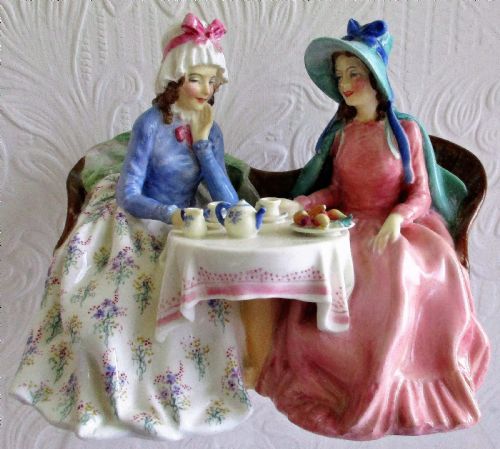


Polychrome Porcelain Group Statue
A polychrome porcelain group statue brings multi-figured narrative sculpture into the interior, rendered in brilliant enamel colours and glazed ceramics.
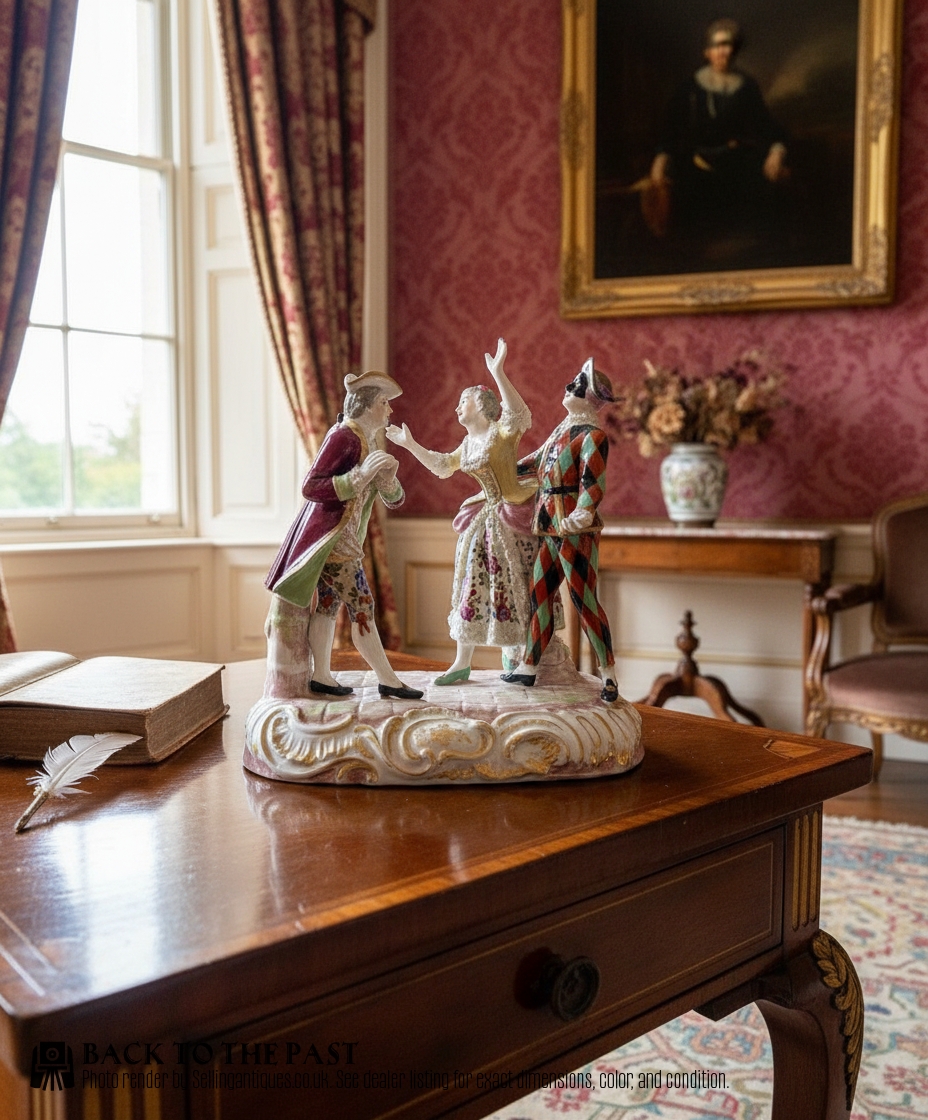
Polychrome Porcelain Group Statue
A polychrome porcelain group statue depicts multiple figures engaged in mythological, allegorical, or domestic scenes, modelled as a single ceramic sculpture. These sculptural groups range from delicate eighteenth-century eighteenth-century German and English works to nineteenth-century Continental and Victorian interpretations.
The objects appear under forms such as porcelain figures, decorative figurines, and large figure groups. Eighteenth-century examples often present classical deities like Pluto and Cerberus or Father Time, while later Victorian pieces turn to royal portraits and social scenes.
Makers and factories span historic German manufactories like Meissen and Ludwigsburg alongside English establishments such as Derby and Royal Doulton. Styles transition from exuberant Rococo and Neoclassical designs to later Victorian and twentieth-century interpretations.
Materials and production
Makers utilised various ceramic compositions including hard-paste porcelain, soft-paste porcelain, bone china, and standard porcelain. These bodies were formed in moulds to create complex multi-figure compositions before undergoing initial firing.
Surface decoration relies upon applied enamel pigments, sometimes accented with gold leaf beneath or over the transparent glaze. The glaze seals the porous or vitrified body, producing the glossy finish characteristic of these figurines.
Materials documented across the inventory include enamel, gold leaf, bone china, hard-paste porcelain, and soft-paste porcelain.
Assessing quality and execution
Quality rests in the crispness of the modelling, where fine details in facial expressions, drapery, and surrounding elements remain sharp rather than softened by worn moulds. The complexity of the group and the ambition of the composition set the finest examples apart.
Enamel painting determines visual success, with skilled brushwork bringing depth and precision to the polychrome palette. The careful application of gold leaf and the smooth, even coverage of the glaze further distinguish superior sculptural groups.
Meissen·Derby·Ludwigsburg·Royal Doulton·Eugene Clauss
The Polychrome Porcelain Group Statue Glossary
- Polychrome
- Decoration executed in multiple enamel colours. This multi-coloured palette defines the painted surfaces of these sculptural groups.
- Hard-paste porcelain
- A durable ceramic body composed of kaolin and petuntse fired at high temperatures. It forms the robust base for many eighteenth and nineteenth-century figures.
- Soft-paste porcelain
- An artificial ceramic paste containing glass frit and white clay, fired at lower temperatures than hard-paste. It yields a distinctive translucent body found in early European pieces.
- Rococo Revival
- A nineteenth-century stylistic movement reviving the asymmetric curves and scrollwork of the eighteenth century. This aesthetic influences the bases and framing of numerous Victorian figures.
Polychrome Porcelain Group Statue: Frequently Asked Questions
What subjects do these figure groups show?
The subjects range widely from classical mythology and allegory, such as Father Time or the Drunken Silenus, to romantic pairs and royal portraits. Makers drew upon literature, theatre, and contemporary society for inspiration.
These narratives often involve several interacting figures arranged on an integral ceramic base, creating a complete theatrical vignette within a single sculpture.
How were these ceramic groups used historically?
Historically, such sculptures served as sophisticated table centrepieces for elite dining or decorative ornaments displayed on mantelpieces and cabinets. They demonstrated the owner's taste and wealth through costly materials and artistic skill.
Unlike utilitarian wares, their primary purpose was visual enjoyment and conversation among guests in domestic drawing rooms.
Where should I display a porcelain group?
These pieces require stable display surfaces away from heavy traffic areas, ideally inside glass cabinets or on secure shelves where the delicate limbs and projecting elements remain protected.
Proper placement also ensures adequate lighting to appreciate the detailed enamel painting and the glossy finish of the glaze.
How do I distinguish eighteenth-century pieces from later revivals?
Distinguishing periods involves examining the characteristics of the porcelain body, the style of the base, and the handling of the enamel colours. Eighteenth-century works often exhibit soft-paste or early hard-paste bodies with hand-modelled nuances.
Later Victorian and revival pieces frequently utilise different mould technologies and brighter, more uniform factory marks or glazing techniques.