

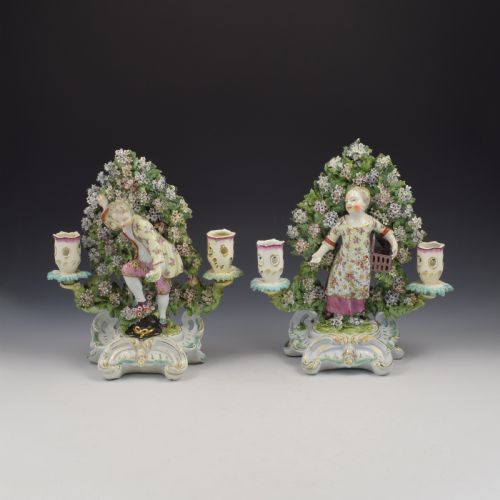


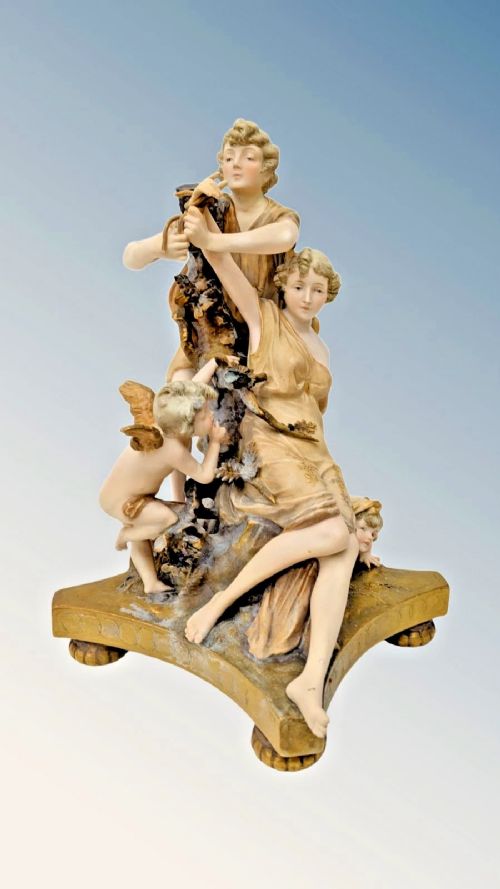


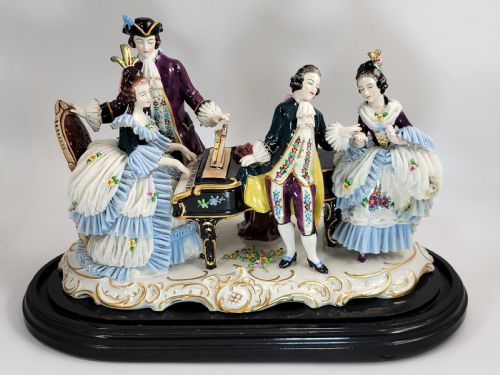


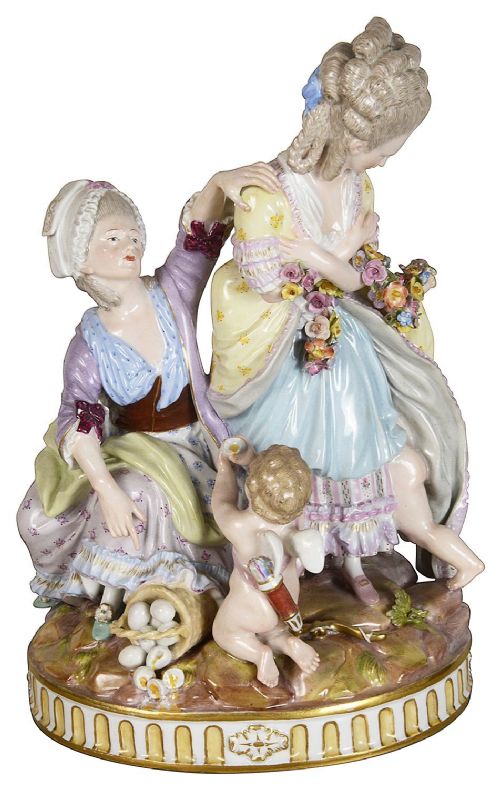
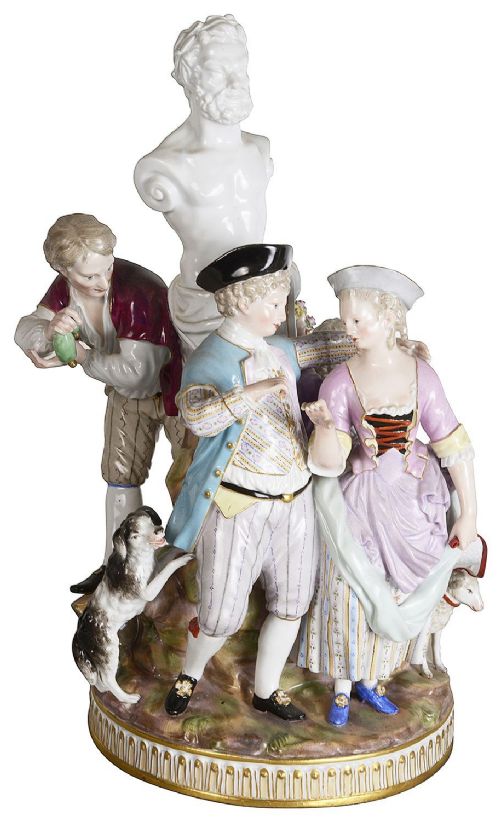

Gilded Porcelain Figure Group
These gilded porcelain figure group pieces are sculptural arrangements in ceramic, dressed with enamel and gold leaf.
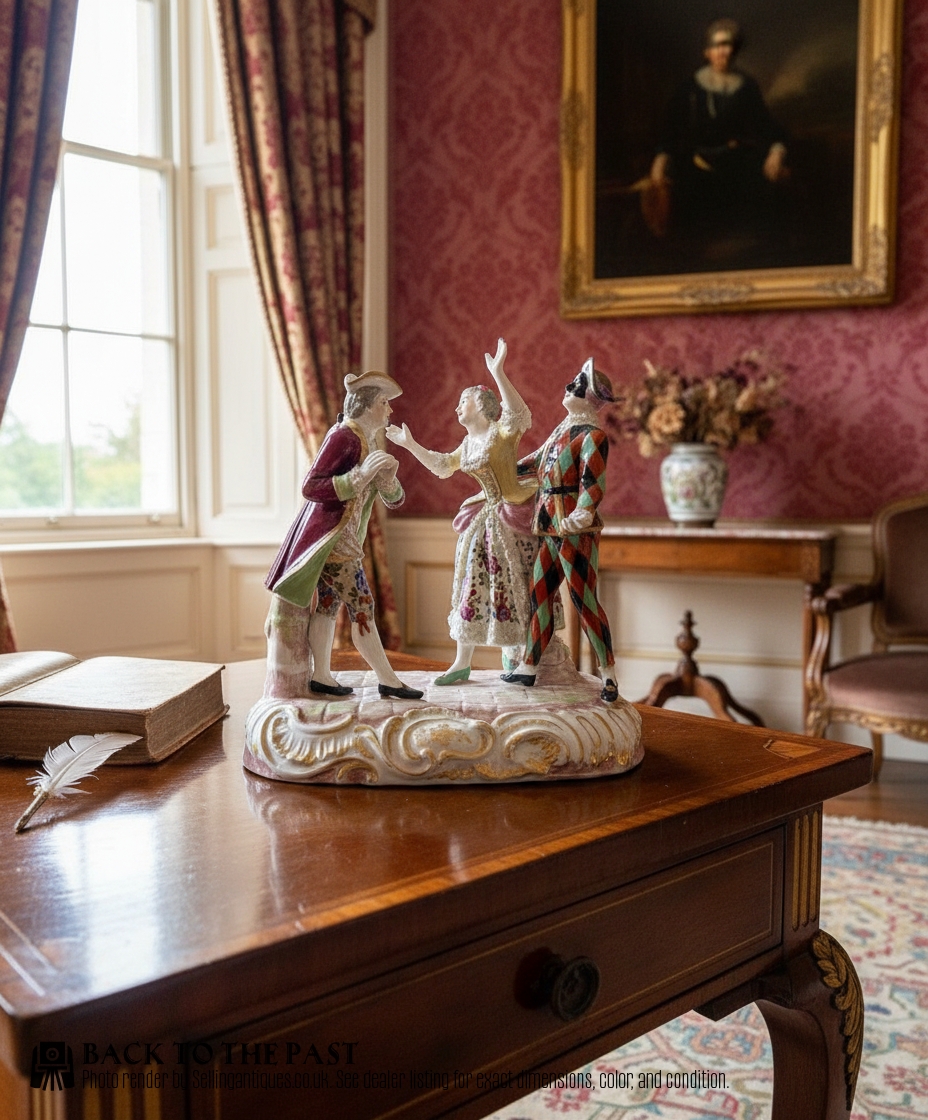
Gilded Porcelain Figure Group
A gilded porcelain figure group brings together multiple modelled characters in pastoral, allegorical or romantic scenes. Buyers seek these works for their intricate detail and decorative presence on a mantelpiece or side table.
The versions met most frequently on this page date from the eighteenth and nineteenth centuries. They encompass Rococo Revival, Neoclassical and Victorian styles, taking the form of musical groups, courting couples and allegorical figures.
Materials and Techniques
Makers shaped hard-paste porcelain and ceramic bisque into complex multi-figure compositions before firing the clay. Artisans then applied enamel colours and gold leaf highlights to define garments, faces and foliage.
Certain pieces incorporate delicate porcelain lace, formed by dipping real fabric into liquid slip and firing it until the textile burns away. Gilding and parcel-gilt treatments complete the surface decoration.
Listings span the eighteenth and nineteenth centuries, featuring works from 1750 through the Victorian era up to 1900.
Judging Quality and Execution
The application of enamel and gold leaf distinguishes high production standards. Skilful brushwork on the gilding and naturalistic tones on the figures elevate a piece above simpler output.
Meissen·Derby·Bourdois and Bloch·Samson Paris·Carl Thieme·Ernst Wallace·Ernst Bohne Sohne·Eugene Clauss·Royal Worcester
The Gilded Porcelain Figure Group Glossary
- Hard-paste porcelain
- A vitrified ceramic composed of kaolin and petuntse, fired at very high temperatures. This material yields a bright, durable body that accepts fine glaze and enamel decoration.
- Bocage
- An open background of modelled leaves and flowers applied behind figures. It appears frequently on eighteenth-century candlesticks and pastoral groups.
- Bisque
- Unglazed ceramic fired once to a porous, matte finish. It presents a smooth, marble-like texture favoured for classical and figurative sculpture.
- Parcel-gilt
- A method of applying gold leaf to specific selected areas of an object rather than the entire surface. This technique highlights particular architectural or sculptural details.
Gilded Porcelain Figure Group: Frequently Asked Questions
What are gilded porcelain figure groups?
These works are ceramic sculptures depicting two or more characters engaged in musical, romantic or allegorical activities. They combine modelled porcelain with enamel paint and gold leaf.
Craftsmen produced them across European factories during the eighteenth and nineteenth centuries to ornament formal rooms.
How do I identify the period?
Dating relies on stylistic clues such as Rococo curves, Neoclassical restraint or Victorian elaboration. Eighteenth-century pieces often display hand-painted enamel and distinct paste characteristics.
Nineteenth-century revivals tend to use brighter polychrome palettes and more complex manufacturing techniques like porcelain lace.
Where were these figures made?
Production centred on major European ceramic hubs, notably German manufactories such as Meissen and Dresden, alongside English works like Derby and Worcester.
French makers in Paris also produced significant figural groups and lace porcelain during the nineteenth century.
How should I display them?
Position these delicate groups on stable surfaces away from direct sunlight and heavy foot traffic. Their intricate construction requires secure placement on mantelpieces or within glass cabinets.
Keep them away from areas prone to temperature fluctuations to protect the enamel and gilding.