


Antique Porcelain Dog Figures
These antique porcelain dog figures bring character and historic charm to a room, ranging from Staffordshire pairs to fine Continental porcelain models.
Antique Porcelain Dog Figures
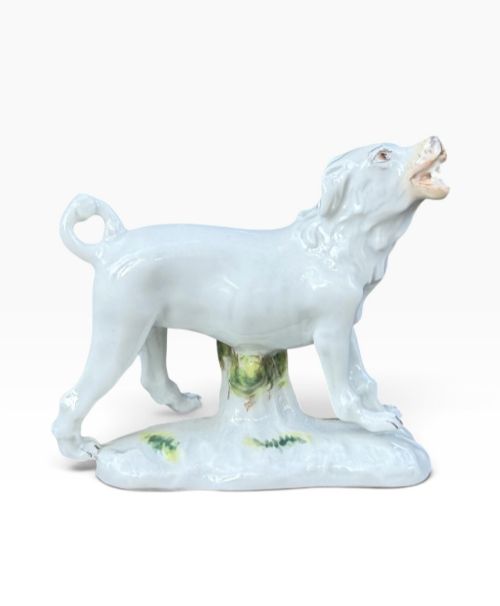
When searching for antique porcelain dog figures, buyers encounter a wide variety of ceramic animals, decorative groups, and sculptural ornaments. The selection spans the Georgian, Victorian, and Edwardian eras, produced by English potteries, German factories, and Asian kilns.
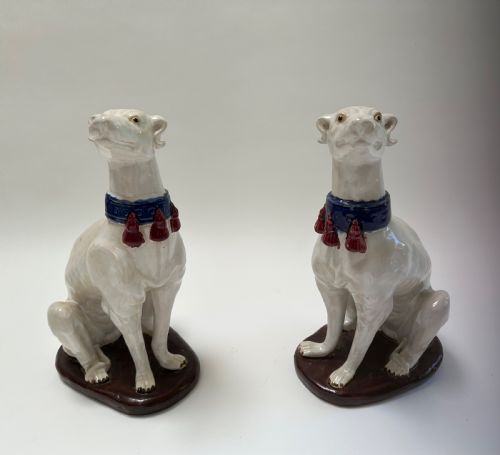
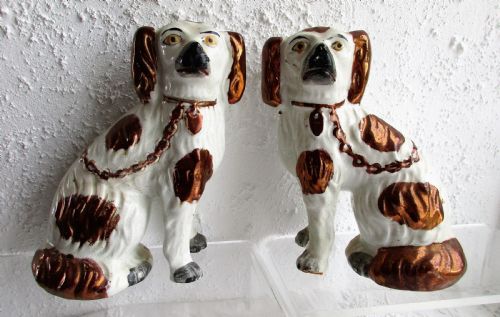
Staffordshire pottery spaniels and greyhounds dominate the English offerings, often formed as pairs intended for mantelpiece display. Continental porcelain works from makers like Meissen and Derby present finely modelled figures, sometimes incorporating dogs into pastoral or mythological scenes.
Asian ceramic traditions contribute Foo dogs, Buddhist lions, and Japanese models created in porcelain and earthenware. These diverse forms reflect the shifting domestic tastes and ceramic technologies across the eighteenth, nineteenth, and early twentieth centuries.
How they were made
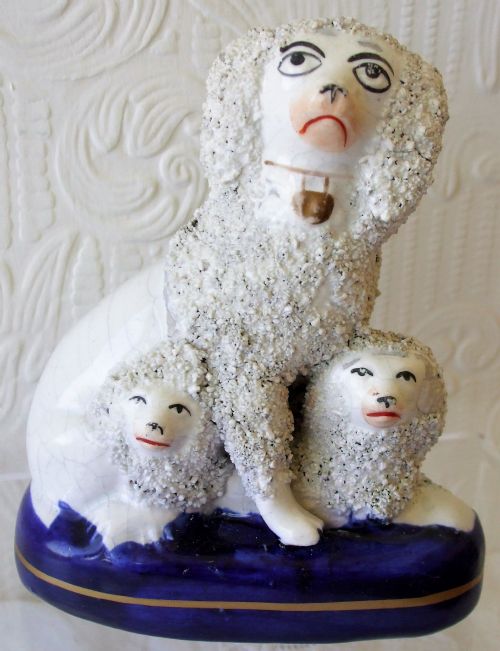
Maker's workshops utilised liquid clay poured into moulds or shaped by hand to achieve the lifelike postures of spaniels, greyhounds, and poodles. Artisans applied enamel paints and glazes over the ceramic body before firing the pieces in kilns to fix the surface colour.
Several ceramic hounds double as practical desk accessories by incorporating built-in inkwells and quill holders.
What varies in quality
The application of hand-painted enamels and the evenness of the glaze also define quality, with finer pieces displaying careful brushwork rather than hasty stencil decoration. Complete pairs and undamaged limbs or ears command greater appreciation among collectors.
Thomas Parr·John Durham·Wedgwood and Co
The Antique Porcelain Dog Figures Glossary
- Staffordshire pottery
- Ceramic wares produced in the Staffordshire region of England, famous for earthenware figures of spaniels and greyhounds. These items were widely made for domestic mantelpiece decoration during the nineteenth century.
- Parian ware
- A fine-grained, unglazed biscuit porcelain resembling white marble, developed in the nineteenth century. It gained popularity for sculptural figures and portrait busts.
- Foo dog
- A traditional Chinese guardian lion depicted in ceramic or stone, symbolising protection. Figures are often glazed in pale green or enamelled colours.
- Quill holder
- A desk accessory featuring a hollow section or base designed to hold writing quills or pens. Animal figures frequently incorporated this practical function into their ceramic design.
Antique Porcelain Dog Figures: Frequently Asked Questions
How do I spot reproduction Staffordshire dogs?
Authentic Staffordshire dogs from the nineteenth century display characteristic crazing in the glaze, weight appropriate to earthenware, and hand-painted details that show minor irregularities.
Modern reproductions often feel lighter, use brighter transfer-printed colours instead of hand-applied enamels, and lack the genuine wear and patina accumulated over generations.
What are comforter spaniels?
Comforter spaniels are pottery figures modelled after King Charles spaniels, traditionally displayed on either side of a fireplace mantelpiece in Victorian homes.
Potteries produced these in matched pairs facing inwards, serving a purely decorative purpose to bring warmth and symmetry to the parlour hearth.
Are Parian figures made of porcelain?
Parian ware is a type of porcelain specifically formulated to imitate marble when fired without a glaze, giving it a smooth, matte surface texture.
This material allowed nineteenth-century manufacturers to produce highly detailed sculptural groups and portrait figures with a neoclassical appearance.
How should I clean antique porcelain dogs?
Dust these ceramic figures gently with a soft, dry brush to remove surface particles without risking abrasion to delicate painted enamels or gilt highlights.
Avoid immersing antique earthenware pieces in water, as old porous bodies can absorb moisture through existing cracks or unglazed areas.