
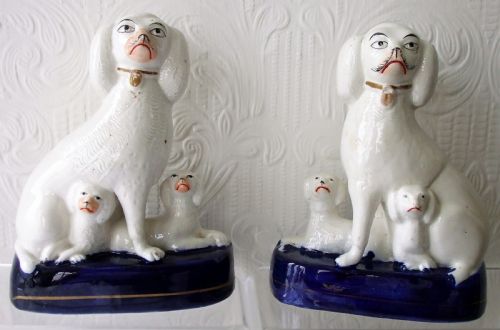
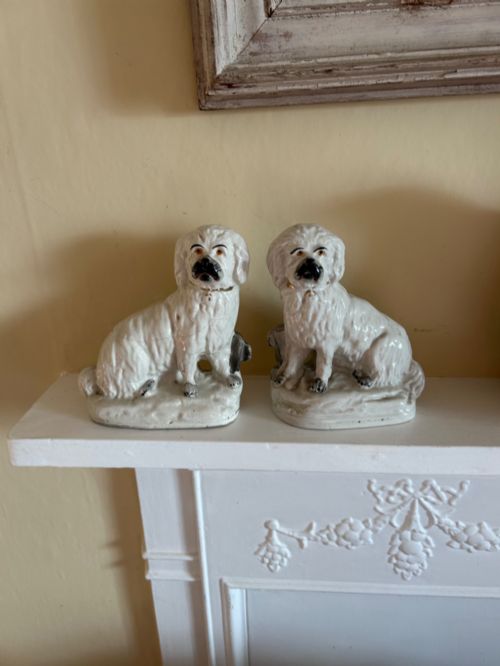


White Glazed Ceramic Spaniels
White glazed ceramic spaniels are nineteenth-century mantelpiece figures that bring traditional English character to a room.
White Glazed Ceramic Spaniels
White glazed ceramic spaniels are decorative figurines produced during the Victorian period, most frequently encountered as pairs of seated dogs intended for mantelpiece display. These ornamental figures capture the domestic taste of the nineteenth century, often appearing as standard spaniels alongside variations such as poodles, maltese terriers, and specialised quill holders. Collectors searching for white glazed ceramic spaniels will find these traditional Staffordshire forms represented across multiple decades of nineteenth-century production.
The objects span various production dates from the mid-nineteenth century up to nineteen hundred, demonstrating the enduring popularity of canine ceramic figures in English homes. Alongside standard seated pairs, the evidence includes larger figures, clock groups, and multi-piece collections featuring hand-painted details or copper lustre accents. This variety reflects how potters adapted the basic spaniel form into different decorative configurations for Victorian interiors.
Materials and construction
Production relied on traditional Staffordshire pottery techniques from the nineteenth century, shaping the ceramic body through moulding before applying the characteristic glaze and decorative enamel details by hand.
Some nineteenth-century dogs doubled as stationery assistants, featuring built-in slots to hold writing quills on the desk.
Assessing quality in the figures
The application of secondary finishes such as gold leaf, enamel, or copper lustre further distinguishes individual pairs, with superior work exhibiting deliberate brushwork that enhances the decorative presence of the mantelpiece group.
Beswick
The White Glazed Ceramic Spaniels Glossary
- Earthenware
- A porous pottery body fired at lower temperatures, commonly used for nineteenth-century Staffordshire figures. It requires a glaze to achieve a waterproof and decorative surface.
- Lead glaze
- A glossy coating applied to ceramic wares before firing, creating the smooth exterior seen on Victorian figures. This finish gives the earthenware its characteristic sheen.
- Staffordshire pottery
- Ceramics produced in the Staffordshire region of England, famous for traditional animal figures and mantelpiece ornaments. The term encompasses various local works from the nineteenth century.
- Quill holder
- A hollow ceramic figure designed with apertures to hold writing quills on a desk. These functional ornaments combine decorative animal forms with practical use.
- Copper lustre
- A metallic glaze finish that produces a reflective, coppery sheen on pottery surfaces. It appears on specific Victorian dog figures to accent collars and markings.
White Glazed Ceramic Spaniels: Frequently Asked Questions
Where were white glazed ceramic spaniels displayed?
These figures were traditionally placed on mantelpieces in Victorian homes, often arranged as matching pairs facing inwards toward the centre of the fireplace. Their primary function was domestic decoration, bringing colour and character to the main living spaces.
Collectors today continue to display them on mantelpieces, sideboards, or bookshelves, following the historical placement that showcased the matched pairs to best effect.
How do I date a Staffordshire dog?
Dating relies on examining the specific potting characteristics, glaze types, and decorative techniques associated with nineteenth-century production periods. Mid-century examples often display simpler earthenware forms, while later pieces from the turn of the century show refined moulding.
Comparing the style of the gilding, enamel work, and base construction helps narrow down whether a piece originates from the eighteen-sixties or the Victorian decades that followed.
What is a dog clock group?
A dog clock group is a specialised Staffordshire ceramic piece that incorporates a figure of a dog alongside or around a clock face. These domestic ornaments combined timekeeping utility with the popular animal imagery of the Victorian period.
Such group pieces stand out among standard figurines by offering a more complex sculptural composition on the mantelpiece.
How do I care for antique ceramic spaniels?
Care involves gentle dusting with a soft, dry cloth to prevent the accumulation of dirt on the lead glaze and enamel surfaces. Avoid using liquid cleaners or harsh abrasives that could damage the hand-painted details or the underlying ceramic body.
Placing the figures away from direct sunlight and areas of high temperature fluctuation will help protect the nineteenth-century materials over time.