
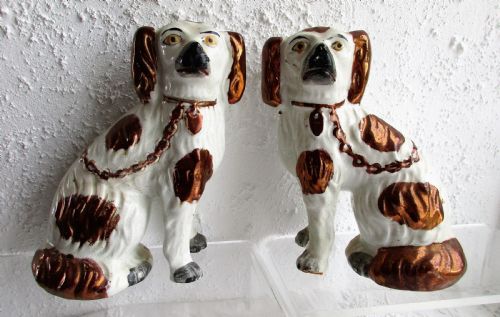
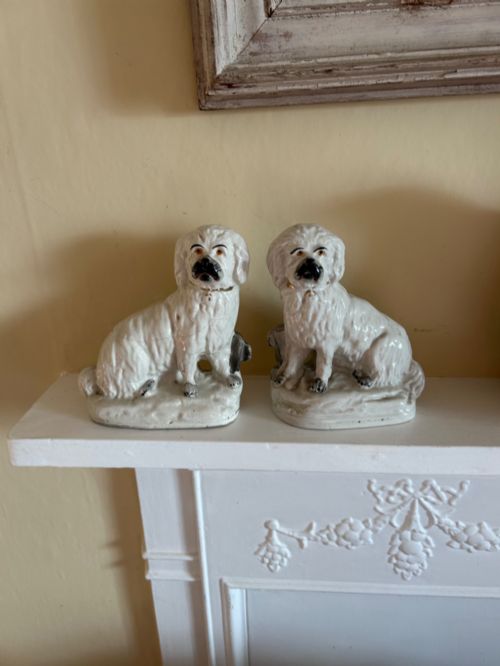


Antique Ceramic Hearth Spaniels
These antique ceramic hearth spaniels are the quintessential Victorian mantelpiece ornaments, offering a touch of domestic tradition to any fireplace.
Antique Ceramic Hearth Spaniels
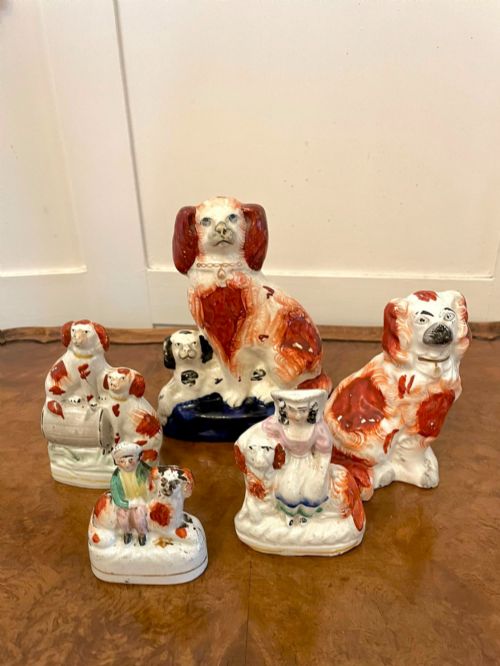
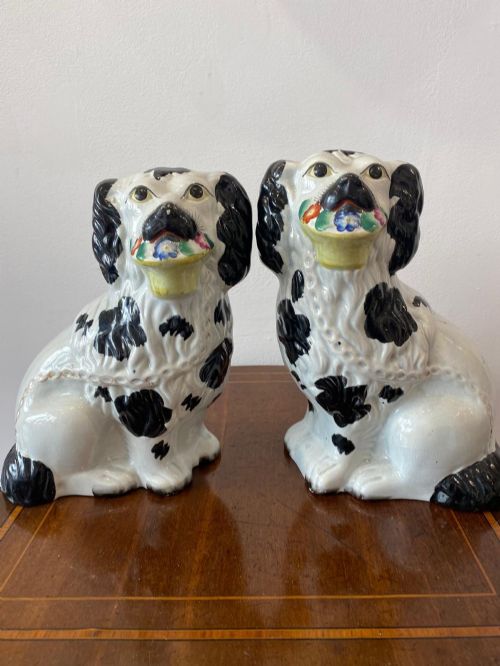
When you search for antique ceramic hearth spaniels, you encounter decorative figures created to sit on Victorian fireplaces. The listings show pairs of seated spaniels predominantly from the nineteenth century, alongside related poodles, pugs, and terriers.
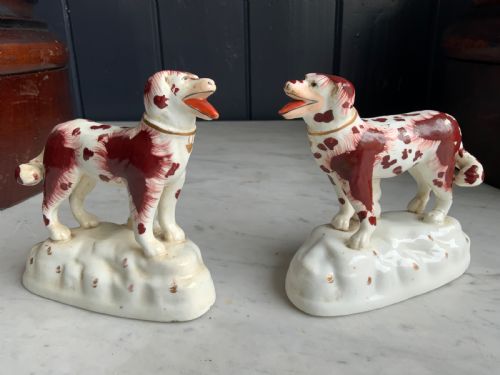
Most pieces date from the Victorian era, spanning decades such as eighteen sixty and eighteen eighty. Forms range from white glazed bodies to colourful red and white versions, often modeled as comforter spaniels.
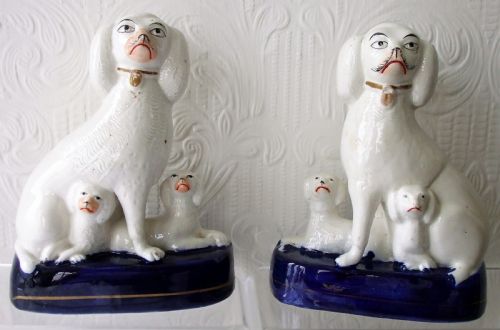
The objects appear as single pairs or larger collections. Some feature added details like blue cushions with encrusting, whilst others display copper lustre or gold leaf accents.
How They Were Made
Potters utilised earthenware and ceramic bodies moulded into animal shapes. These figures received hand-painted enamel decoration alongside glazed surfaces.
Finishing touches frequently included copper lustre, gilt highlights, and gold leaf applied to the fired clay. Some examples incorporate detailed textures such as encrusting on moulded cushions.
Listings feature earthenware bodies decorated with hand-painted enamel, copper lustre, and gold leaf.
What Varies In Quality
The execution of the hand-painted enamel work dictates much of the visual appeal. Crisp facial expressions and clean application separate finer modelling from simpler production.
Presence of original decorative elements such as gold leaf, copper lustre, and moulded cushion details enhances the character of individual pairs.
Beswick
The Antique Ceramic Hearth Spaniels Glossary
- Staffordshire pottery
- Earthenware figures produced in the Staffordshire potteries during the nineteenth century. These include the characteristic spaniels made for mantelpiece display.
- Comforter spaniels
- A term for the seated ceramic dogs traditionally placed on hearths. They represent the beloved pets kept by Victorian owners.
- Copper lustre
- A metallic glaze finish imparting a coppery sheen. It appears on specific nineteenth-century pairs to create a reflective surface.
- Gilt
- Gold leaf or gold paint applied to decorate collars, chains, and surface highlights. It brings brightness to the white ceramic bodies.
Antique Ceramic Hearth Spaniels: Frequently Asked Questions
Where were hearth spaniels displayed?
These ceramic figures sat traditionally upon the mantelpiece above the fireplace. Owners arranged them facing inward toward each other.
They served as domestic ornaments in Victorian parlours, bringing symmetry and a sense of companionship to the hearth.
What animals besides spaniels appear?
Potters shaped similar figures representing poodles, pugs, and Maltese terriers. These canine subjects shared the same mantelpiece function.
Some variations include poodles accompanied by small pups or dogs resting upon decorated cushions.
How do I identify Victorian pieces?
Nineteenth-century examples rely on characteristic earthenware bodies and hand-painted enamel details. Stylistic markers include copper lustre finishes and gold leaf accents.
Date attribution draws upon manufacturing methods and the typical Victorian costume or cushion motifs seen in the modelling.
Did these dogs have a purpose?
Victorian households kept these ceramic dogs as decorative mantel ornaments rather than functional items. They reflected the popularity of King Charles spaniels.
Folklore suggests facing pairs looked inward to guard the home, though primarily they provided domestic cheer.