


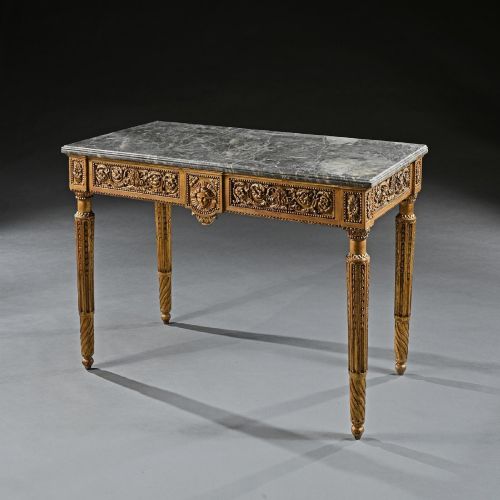
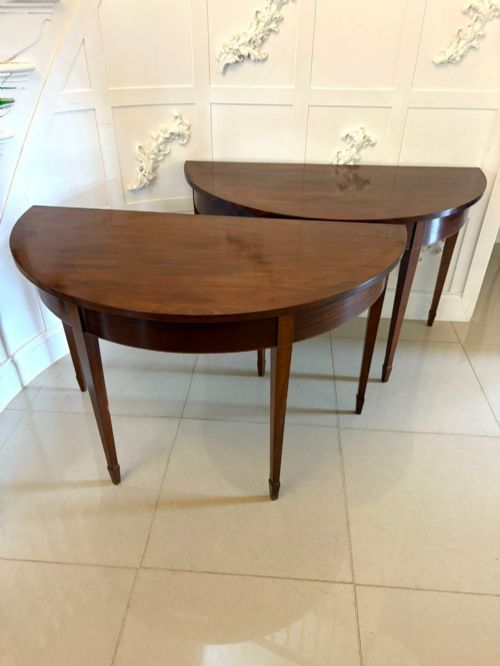
Antique Pier Console Table
An antique pier console table brings classical proportion and surface display into hallways and principal reception rooms alike.
Antique Pier Console Table
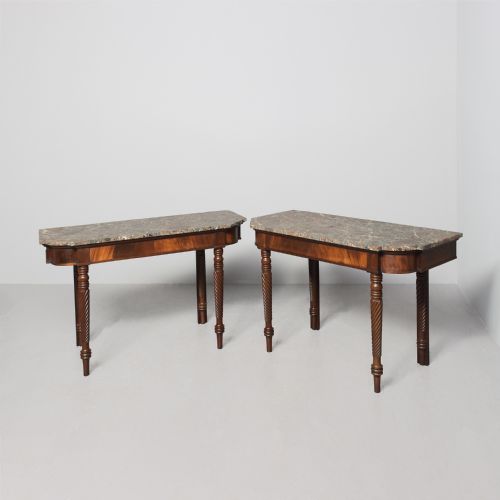
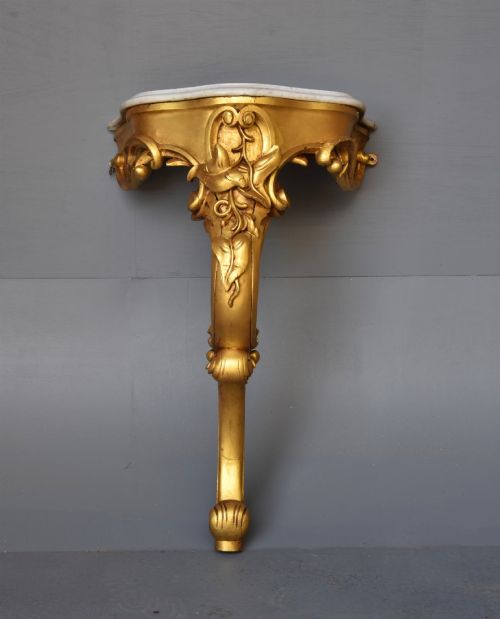
When searching for an antique pier console table, buyers encounter furniture designed to stand flat against a wall, frequently positioned beneath a mirror or architectural pier. The selections span the eighteenth, nineteenth, and early twentieth centuries, encompassing styles from George III and Regency to French Rococo and Victorian.
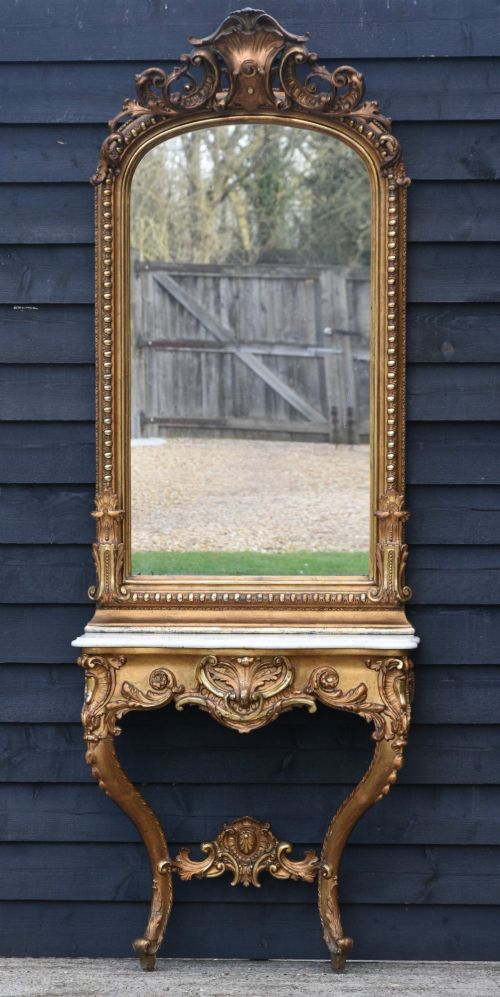
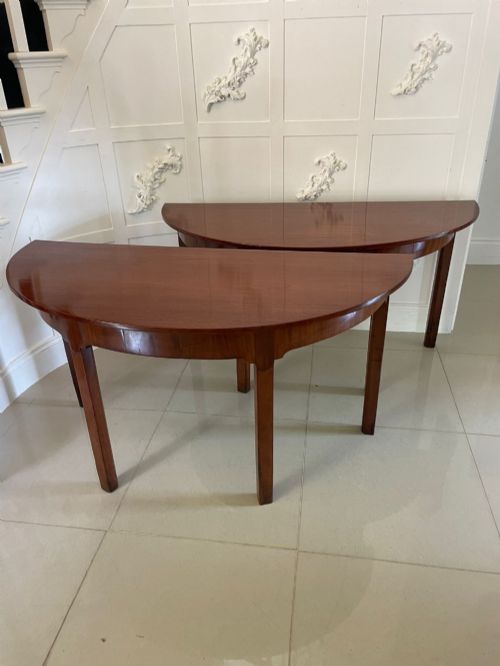
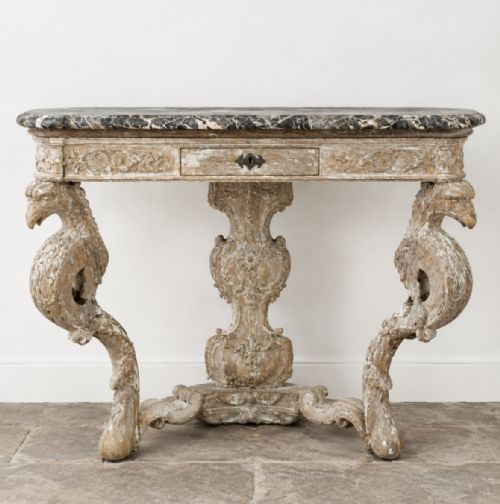
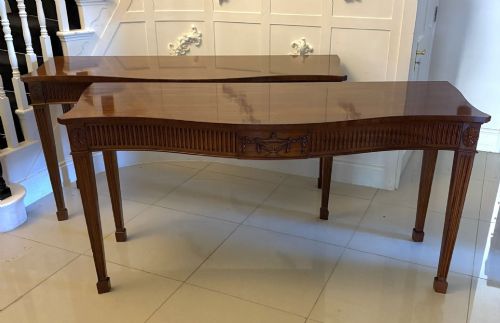
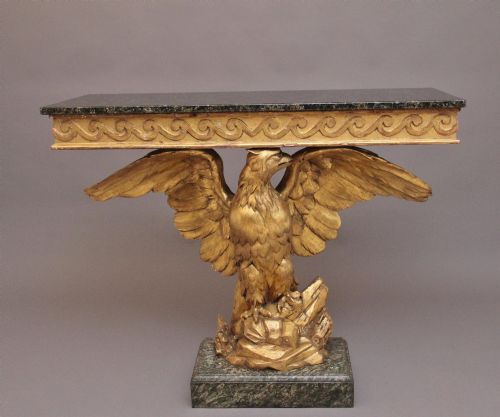
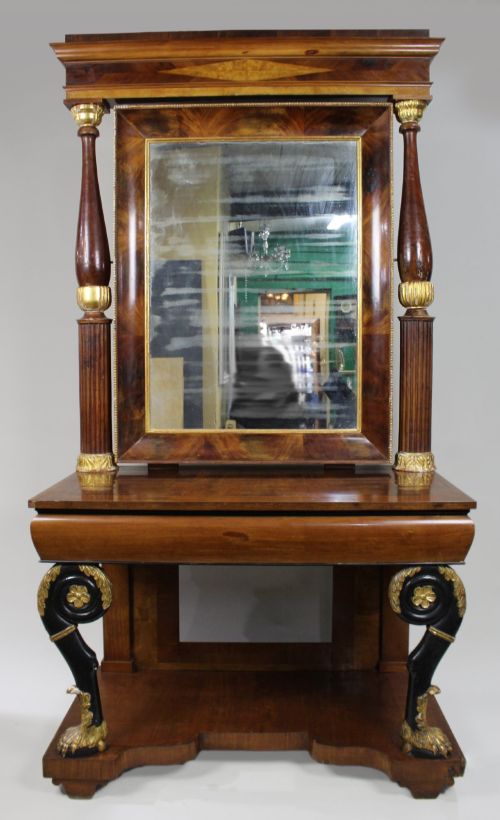
The dominant forms on this page include demilune, serpentine, and break-front side tables constructed from timbers such as mahogany, walnut, and oak, alongside heavily carved and gilded variants. Many examples incorporate fitted marble tops or pair directly with matching pier mirrors.
Origin points range widely across British, French, Italian, and Dutch workshops, showing both formal neoclassical restraint and ornate decorative carving.
Materials and construction methods
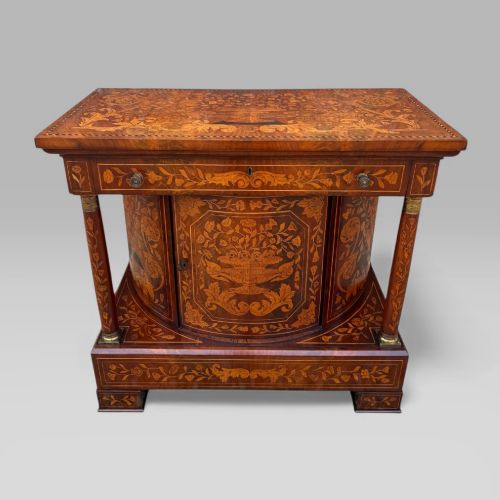
Makers utilised dense cabinet timbers like figured mahogany, rosewood, and walnut, often applying marquetry, crossbanding, or satinwood inlay to create patterned surfaces. Solid oak and pine served as secondary woods for framing and carcases.
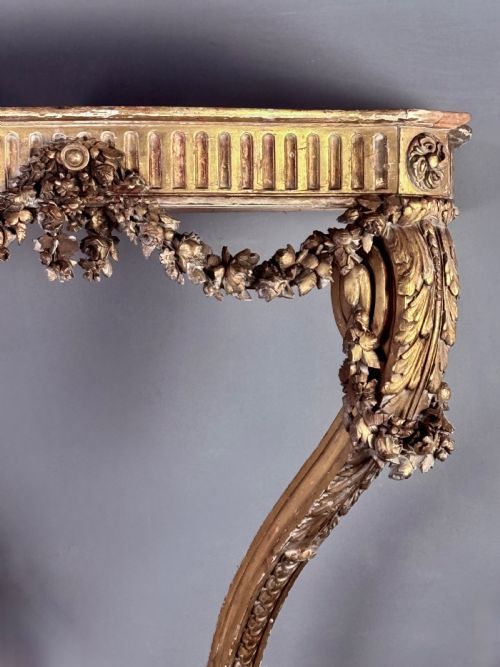
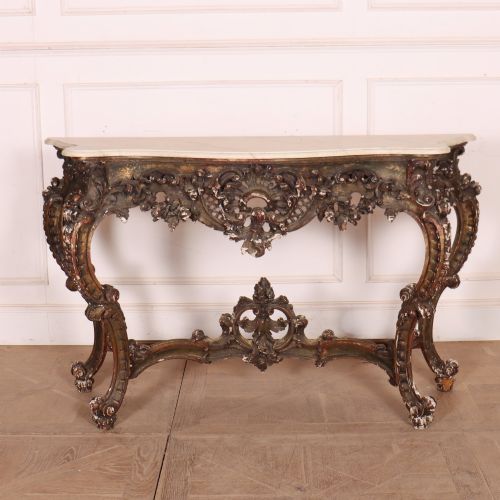
Giltwood and gesso pieces relied on carved softwood foundations coated in layers of gesso before receiving applications of gold leaf or silver gilt. Stone elements featured heavily, with fitted marble slabs forming durable, cool surfaces on both French and British models.
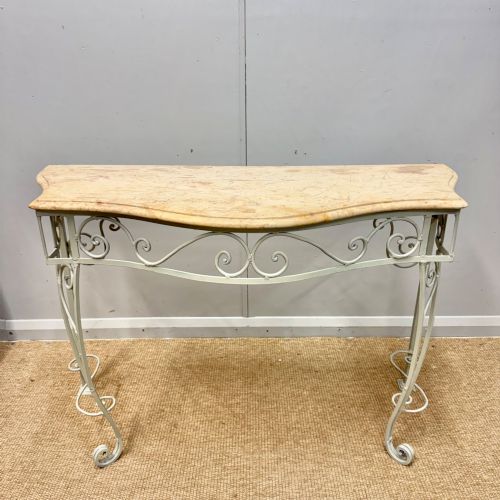
Ironwork appears in specific rustic and Continental formats, combining forged wrought iron frames with inset marble tops.
Several Victorian and Regency examples even boast carved wooden dolphins ready to leap straight into your hallway.
Distinctions in execution and grade
Quality reveals itself in the crispness of carved detail, whether in the depth of acanthus leaves on a giltwood frame or the precision of dovetailing within drawer construction. Superior examples display carefully selected timber veneers with matched figuring across the top and apron.
The integration of materials dictates distinction, such as the thickness and figuring of a breche d'alep marble slab compared to standard plain stone. Original gilding surfaces that retain their depth without modern overpainting hold greater structural and visual integrity.
Felix Alfred Ternisien·Gillingtons of Dublin·Gillows Lancaster
The Antique Pier Console Table Glossary
- Demi-lune
- Halffircular in plan, this shape allowed tables to sit flush against a wall while projecting minimally into narrow hallways. It became especially popular during the George III and Regency periods.
- Console table
- A table supported by wall brackets or front legs, designed originally to stand against a pier wall. Many examples duplicate the function of traditional side or hall tables.
- Giltwood
- Timber, typically lime or pine, carved and coated with gold leaf over gesso. It defines the rich decorative vocabulary of French and Italian neoclassical pieces.
- Marquetry
- The art of applying pieces of veneer to a structure to form decorative patterns and pictorial designs. Dutch and continental makers utilised floral and geometric marquetry extensively.
- Serpentine
- A curved line of furniture fronts featuring a convex centre flanked by concave ends. This contour adds visual movement to mahogany and walnut side tables.
Antique Pier Console Table: Frequently Asked Questions
Where should I place an antique pier console table?
These tables suit narrow entrance halls, stair landings, or living rooms where floor space is at a premium. Placing one beneath a corresponding wall mirror follows historical placement.
Because they sit flush against vertical surfaces, they provide a display surface without blocking main thoroughfares.
How do I care for a marble top?
Marble surfaces require simple wiping with a damp cloth and neutral soap, avoiding acidic cleaning agents that etch the stone. Coasters help prevent moisture rings on antique polished stone.
Regular dusting keeps the porous surface protected over decades of domestic use.
What is the difference between a console and a side table?
Traditional console tables were structurally tied or anchored to the wall for stability, whereas side tables stood entirely on their own four legs. Over time, terminology merged as console designs gained independent front legs.
Both forms served similar display and serving functions in formal interiors.
How do I identify a Regency period piece?
Regency items often feature classical architectural motifs, rosewood or mahogany veneers, and brass inlay or mounts. Sabre legs and reeded edges appear frequently in this era.
Proportions lean towards bold, clean lines influenced by Roman and Greek archaeological discoveries.