
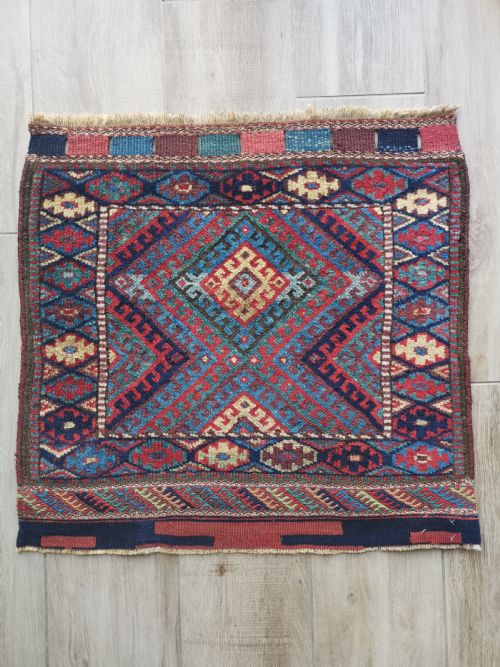

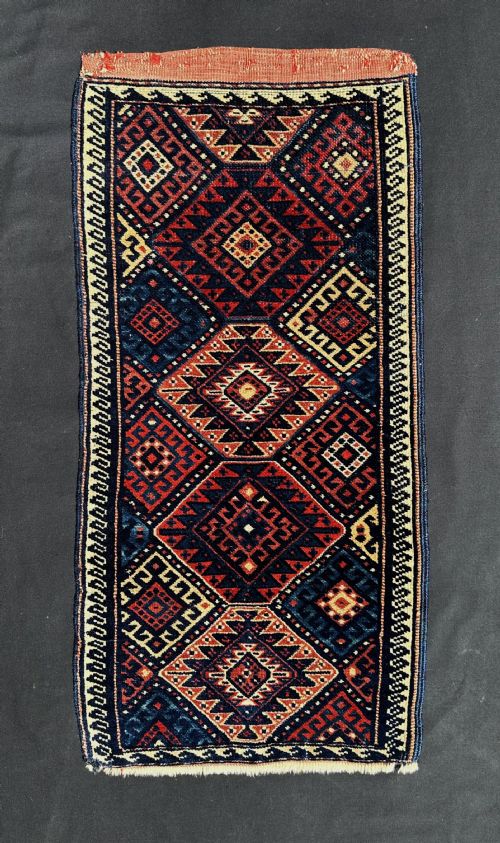


Antique Persian Cushion
An antique persian cushion brings tactile warmth and nomadic history into a room through hand-woven wool and vegetable dyes.
Antique Persian Cushion
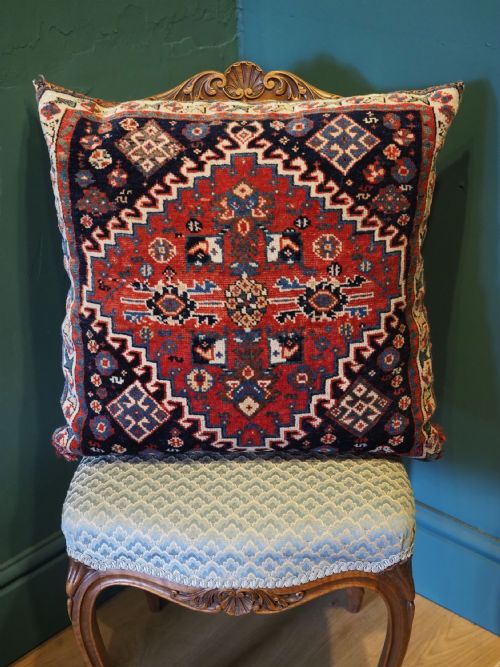
An antique persian cushion typically originates from utilitarian nomadic weaving, repurposed from saddle bags, salt bags, and wheat sacks into decorative furnishings. The pieces found here span the nineteenth and early twentieth centuries, capturing the distinct tribal output of regions such as Fars, Khorassan, and Western Persia.
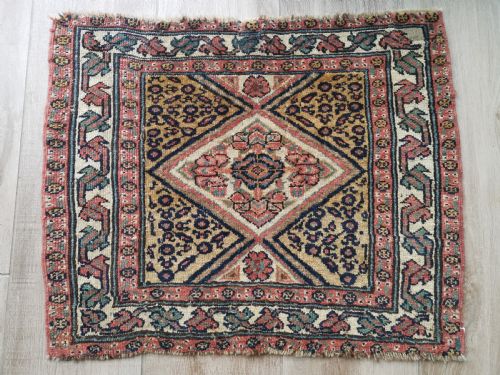
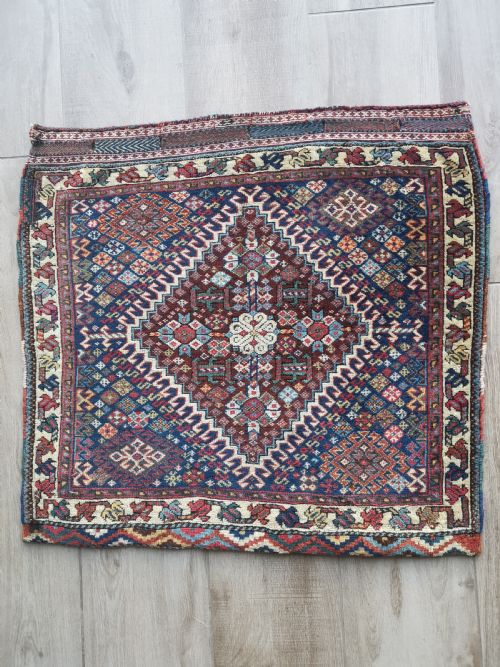
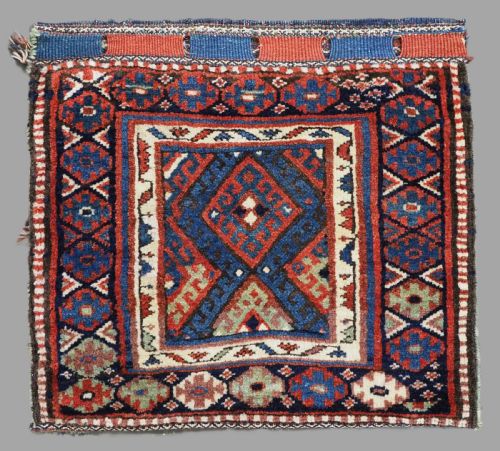
Buyers frequently encounter bagfaces and saddlebag halves that retain their dense pile or flatweave structures, often padded and backed for modern floor or sofa use. These textiles carry geometric medallions, boteh motifs, and animal markers specific to confederations like the Qashqai, Afshar, and Baluch.
The assortment relies heavily on tribal expressions rather than court manufactories, offering a direct link to pastoral domestic life. Each example demonstrates the functional transformation of utilitarian storage into decorative cushion art.
Materials and construction
Weavers utilised hand-spun wool for the pile and face, often combined with cotton foundations and structural goat hair selvedges for durability. The handle and weight depend entirely on this local pastoral fleece, which absorbs natural and vegetable dyes with rich variation.
The structural technique bridges knotted pile weaving with flatweave kilim methods, depending on whether the item began life as a storage bag or a transport sack. Backings are frequently integrated from plain weave panels or added later to facilitate use as a cushion.
Nomadic weavers occasionally incorporated camel hair into the weave, yielding a golden fibre that resists wear and smells faintly of the desert.
Evaluating the weaving
Quality rests in the handle of the wool and the clarity of the dye palette, where natural vegetable and insect colours achieve depth and luminous wear over time. Tighter knot density and precise execution of tribal motifs elevate a bagface from utilitarian storage to fine textile art.
Condition matters regarding pile retention and the integrity of the original plain weave backings, though structural adaptations for modern padding are common. The vigour of the drawing and the saturation of the wool ultimately separate standard tribal work from exceptional examples.
The Antique Persian Cushion Glossary
- Bagface
- The decorated front panel of a tribal storage sack, most commonly preserved and converted into a cushion or rug. These panels display the primary knotting and iconography of the weaver.
- Balisht
- A traditional Persian term for a small pillow or cushion, often woven by nomadic and village women for domestic use. They share the structural patterns of larger saddle bags.
- Boteh
- A stylised almond or paisley motif representing a floral spray, cypress tree, or flame. It appears frequently across Afshar and Baluch tribal weaving.
- Soumac
- A warp-wrapping flatweave technique that creates a durable, textured surface without pile. Shahsavan weavers utilised this method extensively for transport bags.
- Khorjin
- The Persian designation for a paired saddle bag designed for transport on animals. Many surviving cushions derive from individual halves of these split bags.
Antique Persian Cushion: Frequently Asked Questions
What is an antique persian cushion?
These items are historic tribal textiles, principally converted from nineteenth and early twentieth-century saddle bags, grain sacks, and storage pouches. Artisans wove them across Persian tribal regions for nomadic utility rather than decorative trade.
Today, they function as decorative floor or sofa cushions while retaining their original wool pile, flatweave structures, and tribal iconography.
How do I care for antique wool?
Maintain these textiles by vacuuming gently with a low suction attachment, avoiding the rotating brush bars that can pull hand-spun wool fibres. Keep them out of direct sunlight to protect the natural vegetable dyes from fading.
Professional specialist cleaning is recommended for heavier soil, avoiding domestic washing machines entirely to preserve the fragile cotton and goat hair foundations.
Which tribes made these textiles?
The production stems from various nomadic confederations and tribal groups across Persia, including the Qashqai, Afshar, Baluch, Shahsavan, and Kurdish populations. Each group employed distinct geometric repertoires, structural weaves, and colour palettes unique to their ancestral regions.
Regions such as Fars, Khorassan, and Western Persia account for the majority of these historic tribal bagfaces and cushions.