
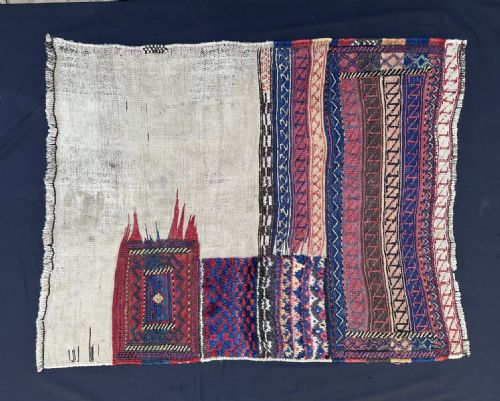


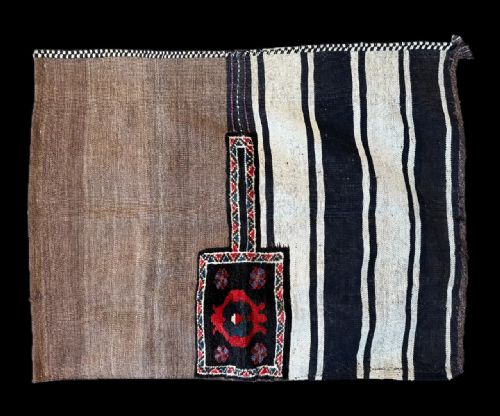
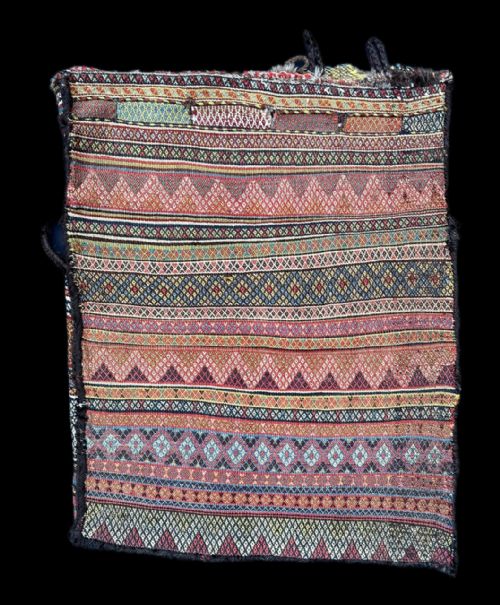

Antique Kilim Bag Face
These antique kilim bag face textiles are woven tribal fragments with rich geometric patterns, prized by collectors for their bold nomadic character.
Antique Kilim Bag Face
When you search for an antique kilim bag face, you are looking at the decorative front panels of nomadic storage sacks and saddle bags created by tribal makers across Persia, Turkey, and Central Asia. These textiles were originally utilised by pastoral groups for household storage or transport during seasonal migrations.
On this page, you are most likely to meet flatwoven fragments originating from groups such as the Lori-Bakhtiari, Yomut Turkmen, Shahsavan, Jaf Kurd, Baluch, Tekke, Qashqa'i, and Kurdish nomads. Many of these pieces now survive as trimmed panels or have been thoughtfully adapted into cushions and soft furnishings.
The periods represented stretch across the nineteenth and early twentieth centuries, capturing a time when tribal weaving still served a strictly functional role within daily nomadic life. Each piece reflects the specific decorative vocabulary and weaving traditions of its particular regional tribe.
What Varies in Quality
The finest examples display exceptional tightness in the flatweave structure and a sophisticated balance of proportion within the tribal motifs. Superior pieces also retain their original colour saturation and show a precise execution of complex geometric symbols.
Weaving density and the quality of the initial wool preparation ultimately determine how well the panel retains its structural integrity over time. Pieces that demonstrate a masterly handling of natural dyes stand apart from simpler or more hastily executed regional work.
Nomadic weavers frequently embedded small protective symbols into the side selvedges to guard their grain sacks against the evil eye.
The Antique Kilim Bag Face Glossary
- Kilim
- A flatwoven textile produced without pile by tightly interweaving the warp and weft strands. This technique creates a smooth, durable surface suitable for practical nomadic storage.
- Mafrash
- A large rectangular storage bag or chest face used by nomadic tribes for bedding and household goods. These pieces are frequently encountered as surviving flatwoven panels.
- Chuval
- A large tent bag traditionally woven by Turkmen groups for storing domestic items inside the yurt. They often feature distinct primary gul motifs arranged in structured rows.
- Tacheh
- A specific type of grain or wheat sack made by tribal weavers, notably in Western Persia. They combine robust utility with intricate banded flatweave designs.
- Warp
- The stationary vertical threads stretched across a loom before weaving begins. The weft threads are passed over and under these foundational yarns.
Antique Kilim Bag Face: Frequently Asked Questions
What is an antique kilim bag face?
An antique kilim bag face is the decorative flatwoven front panel cut or preserved from a nomadic storage sack. These textiles display the distinct tribal patterns of the weavers who made them.
Over time, many of these panels have been separated from their original wool or cotton backs and repurposed as cushions or wall displays for modern interiors.
How were these bags used originally?
Nomadic and tribal peoples utilised these large bags for packing, transporting, and storing household possessions, blankets, and grain during seasonal migrations. They were hung inside tents or loaded onto pack animals.
The sturdy flatweave construction protected the contents from dust and moisture while serving as a proud display of the tribe's artistic identity.
How do I care for a textile cushion?
Protect antique flatweave cushions from direct, prolonged sunlight to prevent natural dye fading. Gentle vacuuming through a mesh screen helps remove dust without pulling the wool fibres.
Professional textile conservation cleaning is recommended if deep maintenance is required, as harsh domestic washing can damage the fragile historic threads.
How can I tell different tribal styles apart?
Tribal styles are distinguished by their specific colour palettes, geometric symbol arrangements, and regional weaving structures. For instance, Turkmen pieces often feature deep madder reds and octagonal gul motifs, while Persian tribal fragments show varied banded designs.
Comparing the wool preparation and structural borders helps attribute a piece to groups like the Shahsavan, Qashqa'i, or Baluch.