
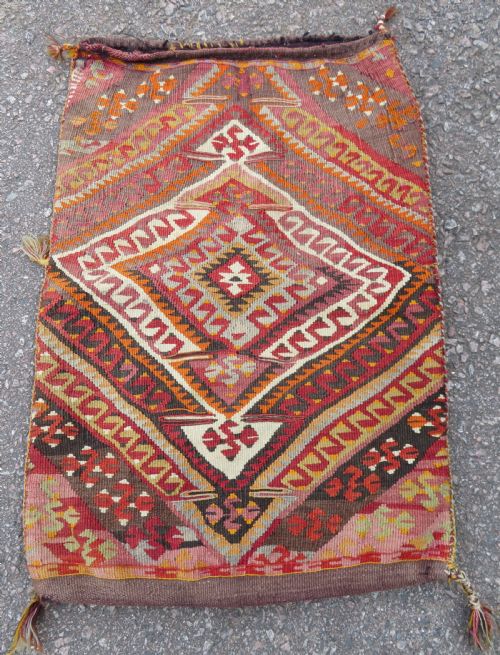
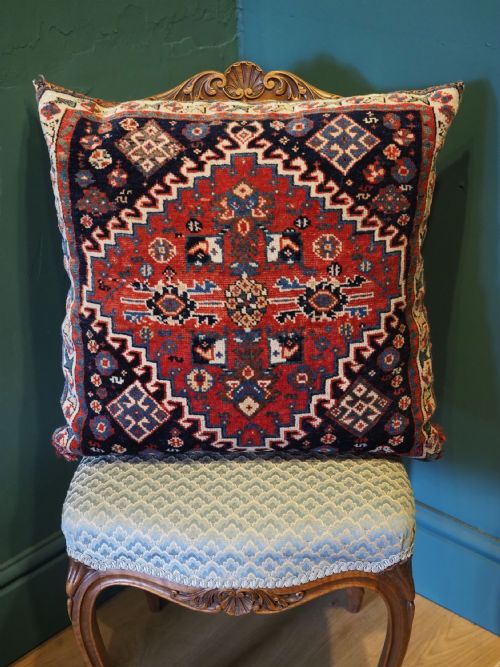
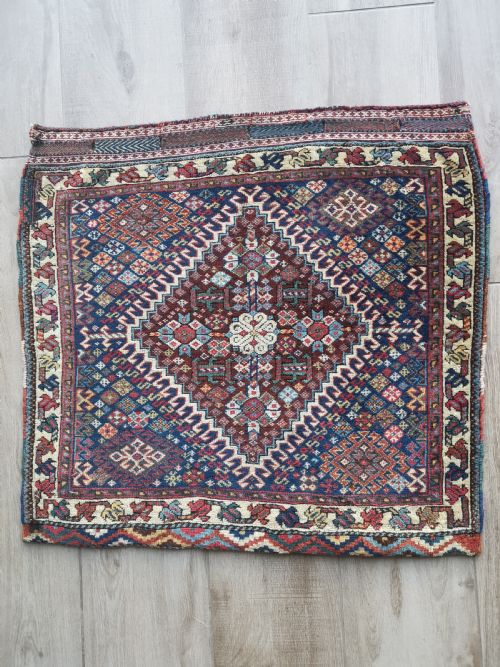
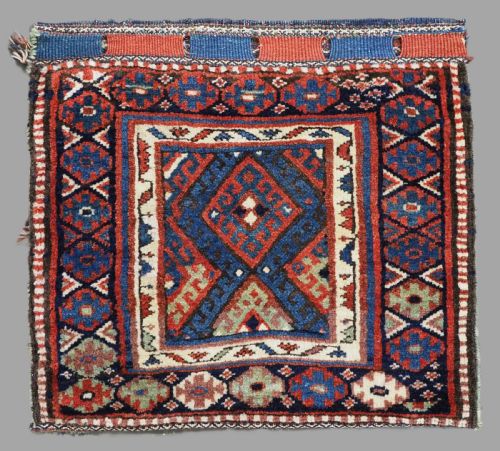



Nomadic Wool Bag Cushion
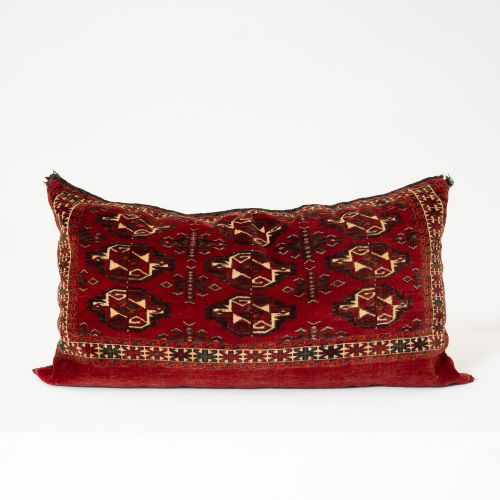
A nomadic wool bag cushion brings the rich textures and tribal patterns of nineteenth and early twentieth-century weavers directly into modern interiors.
Nomadic Wool Bag Cushion
A nomadic wool bag cushion originates from functional utilitarian containers created by tribal groups across Persia, Central Asia, and the Caucasus for transport and storage. These items include saddlebags, storage bags, grain sacks, and vanity bags repurposed into cushions and pillows.
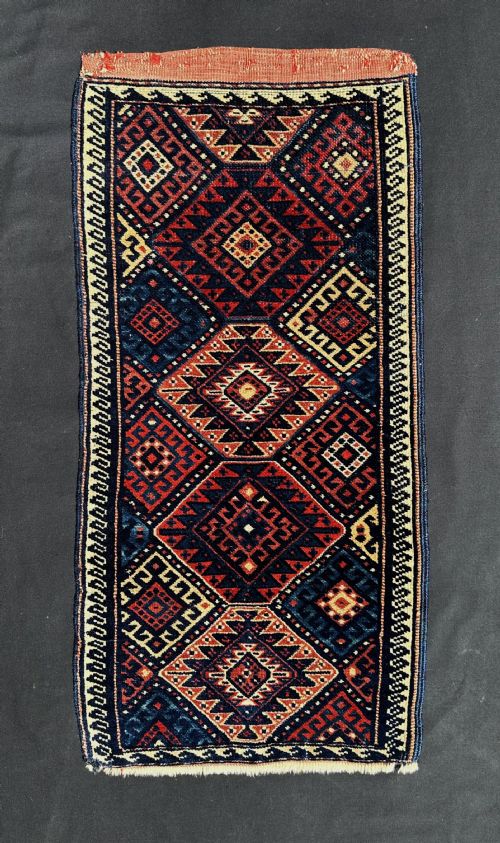
The pieces encountered on this page span from the mid-nineteenth century through the early twentieth century, reflecting the heritage of nomadic confederations and tribal weavers. They appear as complete bags with original plain weave backs, flatweave faces, or individual bag faces adapted for domestic furnishing.
Represented traditions encompass Qashqai, Kurdish, Turkmen, Baluch, Shahsevan, Khamseh, Afshar, and Luri groups. Each tribal identity brings distinct structural forms and regional design vocabularies to the resulting cushion format.
How they were made
Makers utilised hand-spun wool and goat hair to construct durable textiles capable of withstanding the rigours of nomadic life. Natural dyes provided the deep, variegated palette characteristic of these regional tribal works.
Construction techniques combine pile weaving with flatweave structures such as soumac and banded plain weave. Many examples incorporate original wool or flatweave backs, completed with tassels and structural reinforcement.
Some storage bags retain their original tassels and wool backs, having transitioned from camel transport directly to the sofa.
What varies in quality
Quality rests upon the fineness of the weave, the clarity of the tribal motifs, and the depth of the natural dyes. Superior examples display tighter knotting or precise flatweave execution alongside balanced proportions.
The integrity of the piece depends on the survival of original components, such as flatweave backs, borders, and tassels. Complete bags and well-preserved bag faces with intact structural weaving sit at the upper end of the scale.
The Nomadic Wool Bag Cushion Glossary
- Chuval
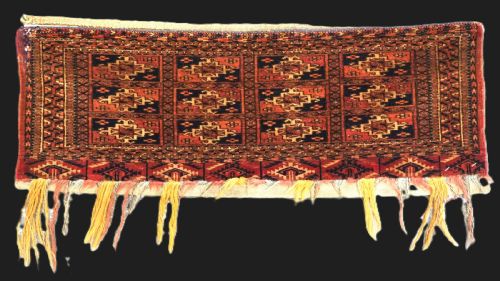
- A large Turkmen storage bag traditionally used for household goods inside a yurt. These tent bags feature distinctive guls and geometric repeat patterns.
- Torba
- A smaller Turkmen bag utilised for hanging on tent walls or storing specific items. They often display banded flatweave designs or subsidiary motifs.
- Balisht
- A traditional pillow or small sleeping bag face created by tribal weavers. These items form comfortable cushions while retaining authentic nomadic iconography.
- Tacheh
- A woven wheat sack or storage container made by Luri and Bakhtiari tribes. They employ sturdy construction methods designed for agricultural transport.
- Gul
- A medallion-like primary design motif repeated across Turkmen tribal carpets and bags. Each tribal group utilises distinct gul variations to signify lineage.
- Soumac
- A wrap-weft flatweave technique that produces a durable textile with a smooth face and floating threads on the reverse. It adds structural relief and crisp pattern definition.
Nomadic Wool Bag Cushion: Frequently Asked Questions
What is a nomadic wool bag cushion?
These items are repurposed tribal bags, such as saddlebags, grain sacks, and storage pouches, originally woven by nomadic groups in Persia and Central Asia.
Craftsmen and weavers constructed them from hand-spun wool and natural dyes using techniques like pile knotting and flatweaving for daily nomadic life.
How were these bags originally used?
Nomadic tribes utilised these functional textiles for transporting possessions on animals, storing grain, and keeping household goods organised within tents.
They served practical roles in migration and domestic life before being converted into decorative cushions for contemporary interiors.
How do I care for a wool cushion?
Maintenance requires gentle vacuuming without a rotating brush to remove dust from the wool pile and flatweave surfaces.
Professional specialist cleaning is recommended for antique textiles to protect the natural dyes and hand-spun fibres from damage.
How can I identify tribal origins?
Distinctive design elements, palette choices, and structural weaving techniques point directly to specific groups like the Qashqai, Turkmen, or Baluch.
Motifs such as specific guls, boteh patterns, and banded flatweave layouts act as visual signatures for regional tribal workshops.