






Blue Wool Pillow
A blue wool pillow brings deep indigo dye and nomadic weave into a modern room, turning antique tribal bags and tapestry fragments into comfortable seating.
Blue Wool Pillow
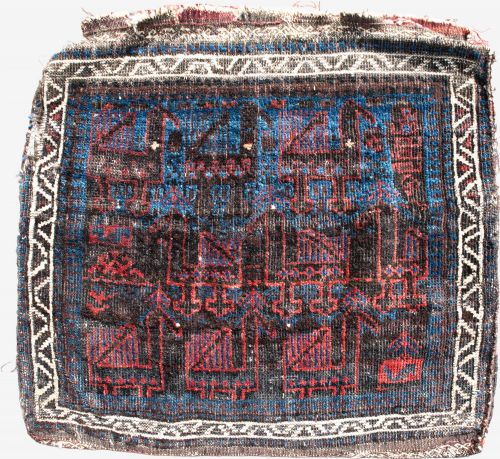
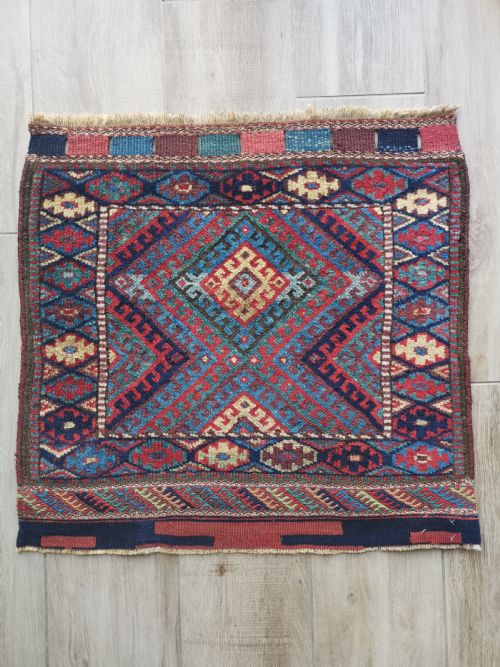
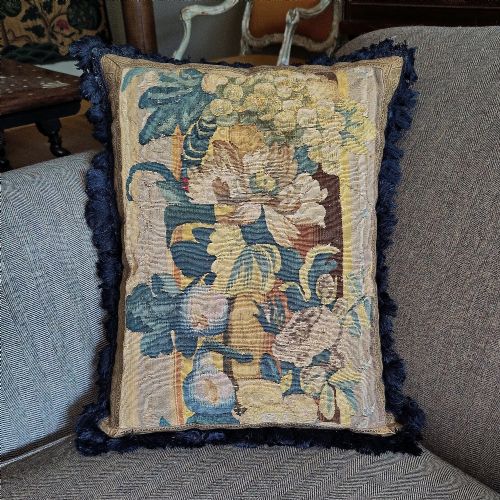
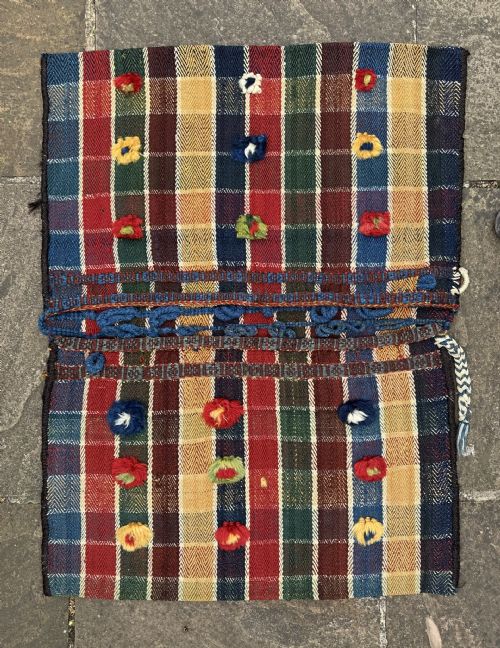
When you search for a blue wool pillow, you encounter repurposed tribal bagfaces, half-saddlebags, and fragments of seventeenth-century Flemish tapestry borders fashioned into cushions. These pieces draw on nomadic traditions from Kurdish, Baluch, Shahsevan, and Qashqa'i weavers, as well as European textile art.
The most common version met on this page is the bagface cushion, where a sturdy tribal textile from the nineteenth century is backed and stuffed to serve as a soft furnishing. Alongside these tribal works, seventeenth-century tapestry cushion covers provide a different texture, featuring formal baroque designs executed in wool and silk.
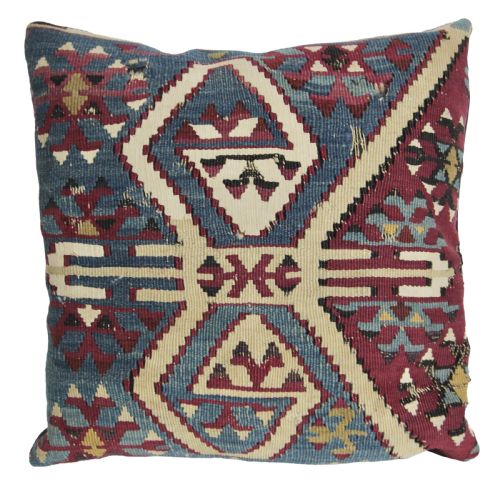
Forms range from square cushions made from kilim fragments and saddlebags to longer carpet cushions dated to the early twentieth century. Each object retains the original hand-woven structure of its source material, whether that is a compact village weave or a coarser nomadic structure.
Assessing quality
Quality rests in the integrity of the original textile and the depth of the dye work. Pieces featuring rich natural dyes and tight, even hand-spinning sit at the higher end of the range, showing clear detail in tribal motifs or tapestry foliage.
The distinction between a superior item and a simpler one lies in the preservation of the weave and the character of the wool. Early seventeenth-century tapestry fragments and finely knotted nineteenth-century nomadic bags display greater complexity in design and material than later commercial adaptations.
Nomadic weavers often embedded stray animal hairs directly into their wool yarn, leaving a quiet trace of the flock inside the weave.
The Blue Wool Pillow Glossary
- Bagface
- The front panel of a nomadic carrying bag, usually featuring the most intricate weaving and design work. These panels are frequently converted into cushions.
- Kilim
- A flat-woven textile produced without a pile, created by tightly interweaving warp and weft strands. This technique forms the sturdy face of many nomadic cushions.
- Natural Dyes
- Colourants derived from plants, insects, and minerals rather than synthetic compounds. They create the variegated blue tones seen in traditional wool textiles.
- Saddlebag
- A paired utilitarian container woven by nomadic groups for transport on animals. Surviving halves or complete bags are often adapted into soft furnishings.
- Tapestry
- A form of textile art woven by hand on a vertical loom, using coloured weft threads to build pictorial designs. Seventeenth-century Flemish examples utilise this method.
Blue Wool Pillow: Frequently Asked Questions
Are these cushions made from old rugs?
Many of these items are fashioned from authentic antique tribal bags, saddlebags, and carpet fragments rather than newly manufactured rugs.
Nomadic weavers originally produced these textiles for utilitarian purposes before they were later adapted into decorative cushions.
How do I clean a wool cushion?
Wool and natural dyes require gentle treatment to preserve the integrity of the hand-spun fibres and historic weaves.
Professional specialist cleaning is recommended for antique textile pieces to avoid damaging the historical material.
What is a bagface cushion?
A bagface cushion uses the decorative front panel of a nomadic storage bag as the primary surface of the pillow.
These panels display the distinct geometric or pictorial patterns characteristic of specific tribal groups.
How can I tell the age of a textile?
Age is determined by observing the materials, the structure of the weave, and the characteristics of the natural dyes.
Seventeenth-century pieces typically feature European tapestry work, while nineteenth-century items display tribal nomadic patterns.