


Oriental Carpet Cushion
An oriental carpet cushion brings rich tribal textile patterns and deep wool pile directly onto your seating.
Oriental Carpet Cushion
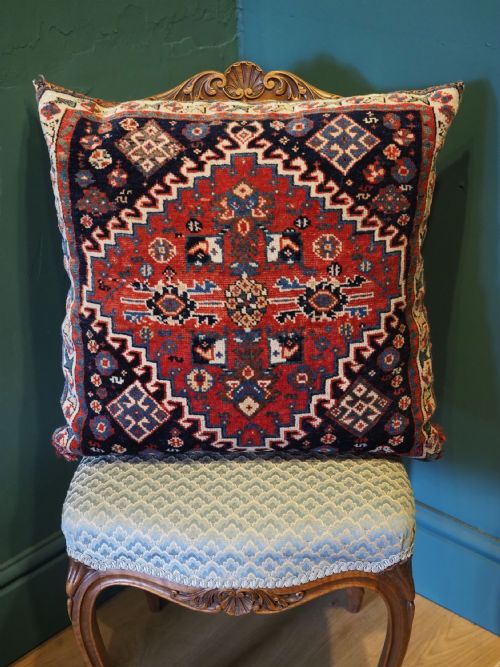
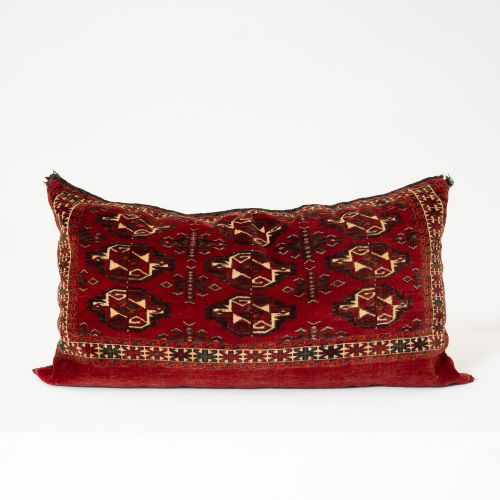
An oriental carpet cushion transforms antique tribal and nomadic weaving fragments into functional home furnishings. When you search for an oriental carpet cushion, you encounter transformed saddle bags, torbas, chuvals, and seating mats from nineteenth and early twentieth century traditions. These pieces repurpose authentic nomadic weavings, giving old bags and rug faces a new lease of life as decorative cushions.
The selections range from Persian tribal examples to Turkmen and Central Asian nomadic pieces. You will find Qashqai, Shahsevan, Tekke, Ersari, and Yomut tribal weavings adapted into cushions and pillows. Each item retains the distinct geometric or pictorial iconography of its original tribal context, whether worked as a full bag face or a half saddlebag.
The origins span various regional workshops and nomadic camps across Persia, Azerbaijan, and Central Asia, alongside Qing Dynasty Chinese seating mats. The forms include complete bag assemblies with their original backs and simple hand-woven bag faces. This variety ensures that every cushion displays the characteristic dyes and motifs of its specific regional heritage.
How they were made
These items rely on traditional hand-weaving techniques executed in hand-spun wool and cotton. Weavers utilised natural dyes and vegetable dyes to achieve deep, lasting colour variations across the pile and foundation. The resulting textile structures demonstrate the dense knotting and flat-weave soumak techniques native to nomadic production.
The conversion process involves taking authentic nineteenth and early twentieth century bag faces or panels and mounting them onto supportive fabric backs. Skilled makers stitch the antique wool textiles carefully to ensure the structural integrity of the cushion while preserving the historical front panel. This method protects the delicate pile and embroidery from undue stress during daily use.
The object types span Qashqai and Shahsevan saddle bags, Turkmen torbas, and Chinese seating mats.
What varies in quality
The distinction between tiers rests on the integrity and fineness of the original textile fragment. Finer knots, tighter weaves, and more complex tribal designs indicate a higher grade of craftsmanship in the source material. Pieces retaining complete formats, such as full bag faces with intact borders and clear iconography, command greater attention than heavily worn fragments.
Material preparation also dictates overall quality, particularly the depth and saturation of the natural and vegetable dyes. Examples exhibiting rich, varied colour tones and hand-spun wool superior in handle demonstrate a higher standard of nomadic production. The quality of the subsequent conversion work, including the durability of the attached backing and finishing, completes the evaluation.
The Oriental Carpet Cushion Glossary
- Torba
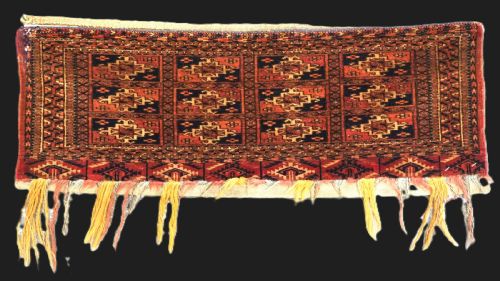
- A small Turkmen bag used for storage inside a tent, frequently converted into cushion faces. These rectangular wall hangings display characteristic guls and secondary motifs.
- Chuval
- A large Turkmen tent storage bag designed for bedding and clothing. Their faces provide substantial panels for decorative cushion adaptation.
- Soumak
- A flat-weave textile technique where decorative pattern wefts are wrapped over the warp threads. This produces a textured surface distinct from knotted pile carpets.
- Gul
- A primary medallion or octagonal design motif repeated across Turkmen and Central Asian tribal carpets and bags. Each tribal group utilises distinct gul variations.
- Saddle bag
- A paired set of bags designed to hang across a pack animal for nomadic travel. Surviving examples are often separated into half faces for cushions.
Oriental Carpet Cushion: Frequently Asked Questions
What is an oriental carpet cushion made from?
An oriental carpet cushion uses traditional hand-spun wool and cotton structures sourced from antique nomadic weavings. The makers employ natural dyes and vegetable dyes within the pile and flat-weave surfaces.
The materials originate from nineteenth and early twentieth century tribal pieces, which are then backed to form durable cushions.
How were these antique tribal bags originally used?
Nomadic tribes utilised bags like torbas, chuvals, and saddle bags for domestic storage inside tents and transport on animals. They held household goods, bedding, and personal possessions during seasonal migrations.
Over time, surviving textile fragments from these functional bags are repurposed into decorative home furnishings.
How do I identify different tribal designs on cushions?
Tribal designs vary by region, showing specific motifs associated with groups like the Qashqai, Shahsevan, and Tekke Turkmen. Turkmen examples often feature repeating octagonal guls, whilst Persian tribal pieces display geometric or animal subjects.
Examining the border patterns, knotting structure, and colour palette helps pinpoint the exact nomadic origin.
How should I care for an antique carpet cushion?
Protect your cushion from direct sunlight to prevent natural and vegetable dyes from fading over time. Gentle vacuuming without a beater bar removes surface dust safely.
Professional textile cleaning is recommended for deep maintenance, avoiding harsh detergents that might harm the hand-spun wool.