
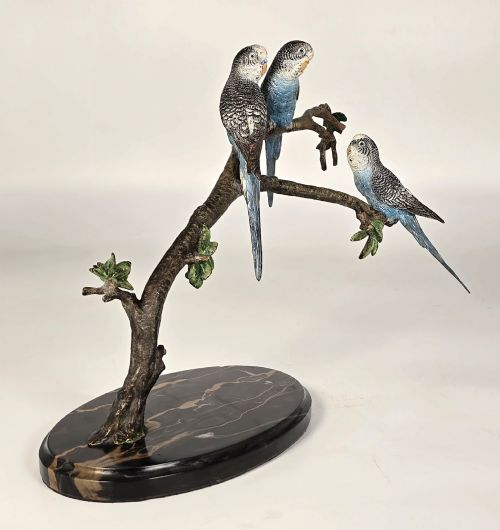


Antique Parrot Sculpture
These antique parrot sculpture pieces bring vivid colour and character into a room, spanning nineteenth-century porcelain and twentieth-century bronze.
Antique Parrot Sculpture
An antique parrot sculpture captures exotic birds in media ranging from porcelain to carved wood and cold painted bronze. When searching for an antique parrot sculpture, collectors encounter figures designed as ornamental shelf pieces, bookends, and tree-perched pairs.
The selection on this page leans heavily towards nineteenth-century Meissen porcelain examples alongside Austrian cold painted bronze studies and Victorian folk art. These pieces function primarily as decorative objects that enliven a study, mantelpiece, or library table.
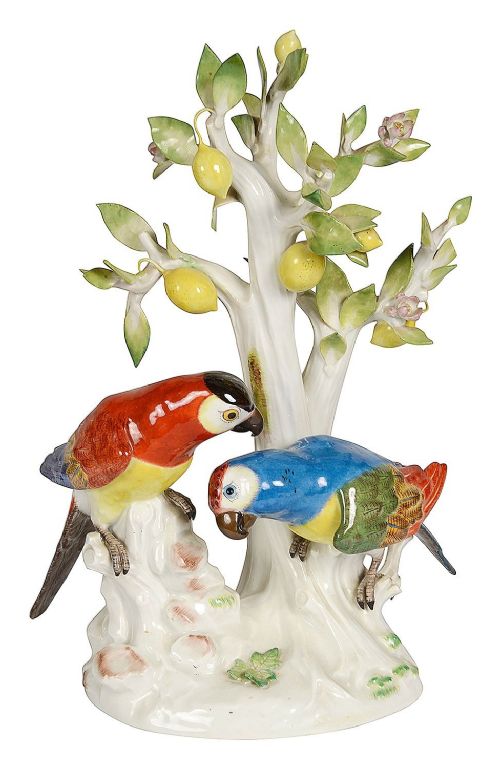
Forms vary from single birds perched on tree trunks to pairs sheltered beneath lemon trees and budgerigars resting on leafy branches. The influence of Chinese export styles and Victorian tastes shapes the broader visual range available here.
How they were made
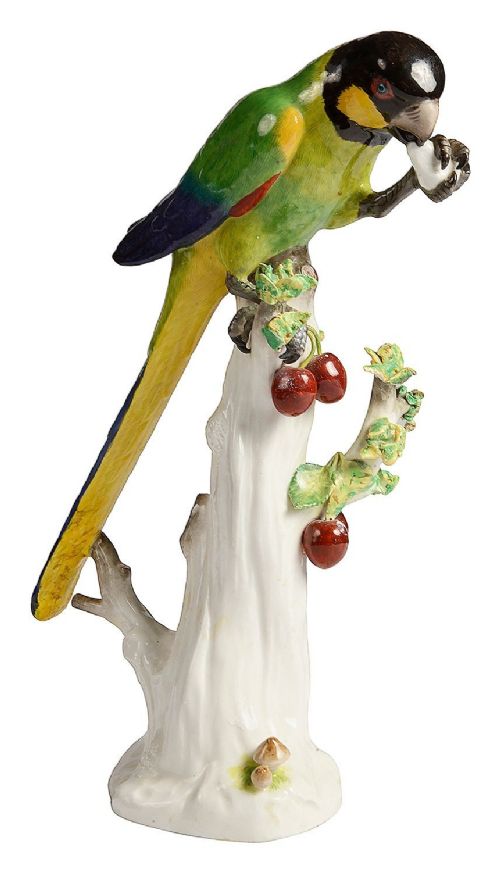
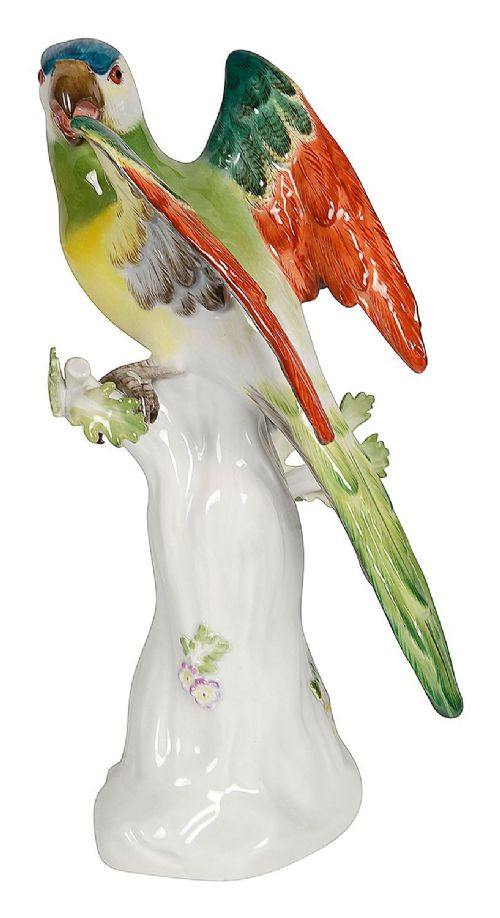
Hard-paste porcelain pieces rely on careful moulding and detailed hand-painting beneath glossy or matte glazes, particularly evident in nineteenth-century Meissen productions. Artists applied enamel colours to capture the varied plumage of parrots and cockatoos before high-temperature firing.
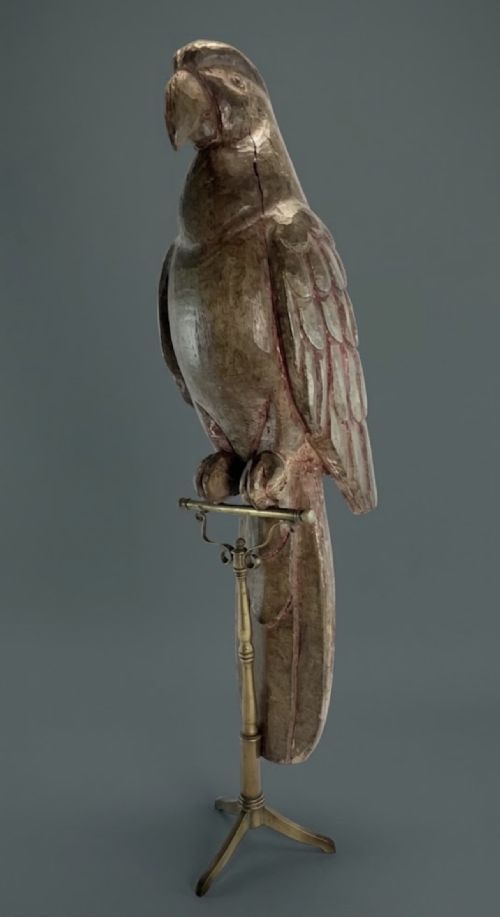
Bronze works utilise the cold painting technique, where metallic pigment sits on the surface of cast metal rather than undergoing high-heat kiln baking. Carved wooden examples combine timber bodies with brass stands to create structured decorative objects.
Staffordshire pottery pieces employ traditional earthenware moulding techniques finished with coloured glazes suited to domestic mantel displays. Marble components occasionally serve as weighted bases for bronze bookends and sculptural studies.
Budgerigars share branch space with large cockatoos and parrots.
What varies in quality
Quality rests in the fidelity of the modelling and the precision of the hand-painting across the plumage. Superior porcelain and bronze examples display nuanced feather texture and naturalistic posture rather than rigid, mechanical shaping.
The preservation of original surface finishes, such as delicate cold paint on bronze or fine enamel detailing on porcelain, dictates the desirability of a piece. Finer works also demonstrate greater scale and complexity, such as paired birds or intricate botanical settings.
Maker attribution elevates certain porcelain and bronze works, particularly where established factories or named sculptors achieved superior anatomical accuracy and kiln control.
Meissen·Herzig
The Antique Parrot Sculpture Glossary
- Cold painted bronze
- Metal sculpture decorated with non-fired paint applied directly to the bronze surface. This technique allows for vibrant colouration on small animal studies.
- Hard-paste porcelain
- A durable ceramic material composed of kaolin and petuntse fired at high temperatures. It forms the base for many nineteenth-century European bird figurines.
- Famille verte
- A palette of green enamels dominant in Chinese export ceramics. This colouring style influenced Western representations of exotic birds.
- Staffordshire pottery
- Earthenware figures produced in the English county of Staffordshire. These decorative items often featured animals modelled for domestic display.
- Meissen porcelain
- Hard-paste ceramic ware from the renowned German factory. Figures from this origin typically feature naturalistic bird studies.
Antique Parrot Sculpture: Frequently Asked Questions
What materials were used?
Makers utilised hard-paste porcelain, cast bronze, carved wood, and Staffordshire pottery. Enamel and paint provided surface colouration.
Marble also appears as a base material for bronze bookends and sculptural studies.
How do I date a piece?
Dating relies on stylistic markers, manufacturing techniques, and factory marks where present. Nineteenth-century examples often show detailed hand-painted glazes.
Twentieth-century pieces frequently adopt Art Deco styling or employ cold painted bronze techniques.
Where were these displayed?
Owners placed these decorative figures on mantelpieces, library tables, and within cabinets. Pairs were often set as balanced ornaments.
Some functional examples served as bookends on study shelves.
Are pairs common?
Makers frequently produced birds in matching pairs, particularly when depicting species perched together or beneath fruit trees.
Single figures also feature prominently across porcelain and bronze categories.