


1920s Cold Painted Bronze
These 1920s cold painted bronze pieces bring vibrant Art Deco character to a room through dynamic figurative design.
1920s Cold Painted Bronze
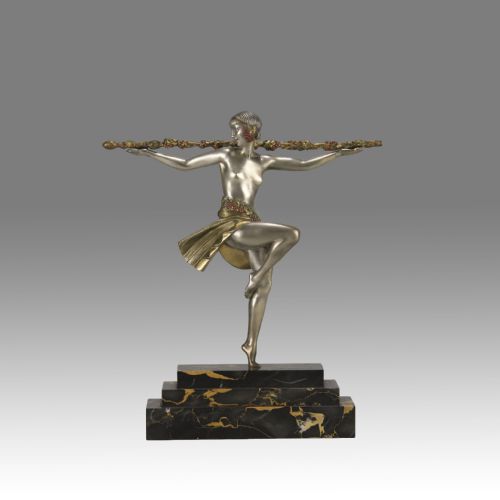
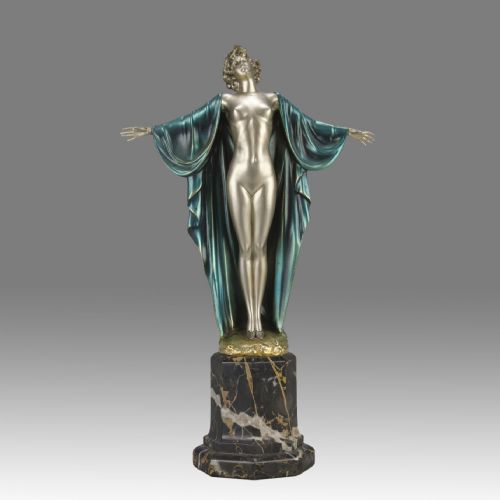
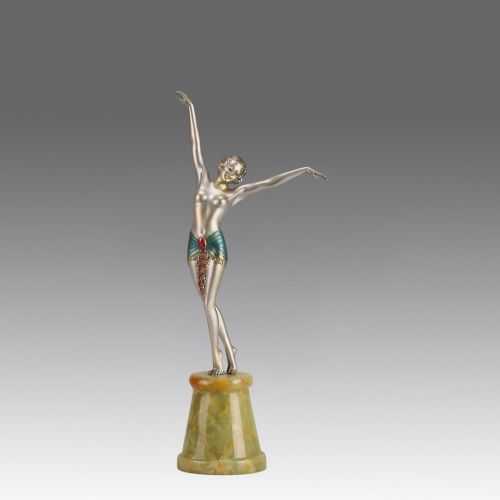
When you search for 1920s cold painted bronze, you find sculptural works embodying the sleek energy of the Art Deco period. Dancers, animal studies and desk accessories dominate these listings, capturing human movement and natural forms with striking immediacy.
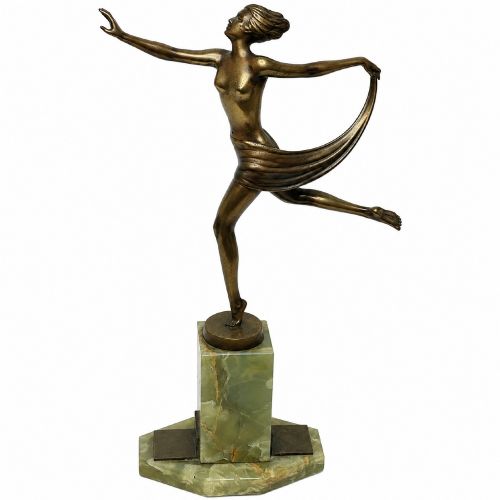
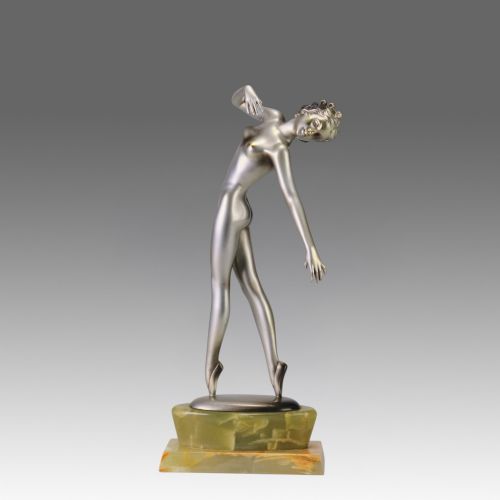
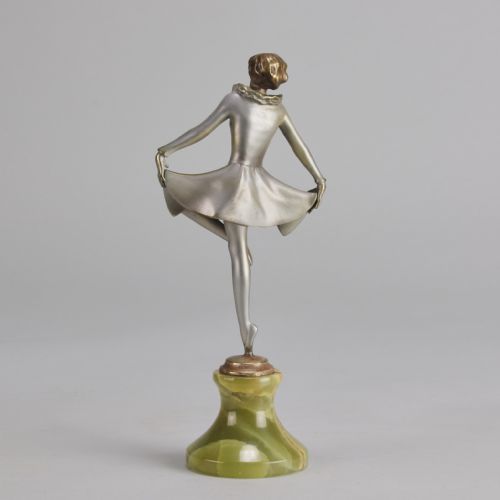
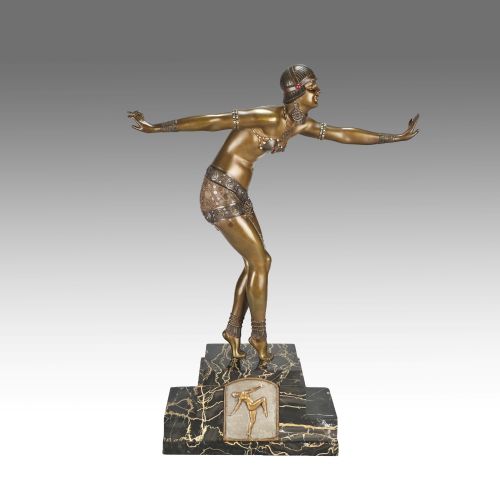
You are most likely to meet figures of female dancers mounted on marble or onyx bases. These pieces span the 1920 and 1930 periods, often cast in Austria or France.
The objects serve as decorative sculptures, table lamps and desk tidies. Their compact scale suits side tables, mantelpieces and desks.
How they were made
The foundational forms are cast from bronze, sometimes utilising gilt bronze or incorporating ivory elements. Artisans then apply cold paint or enamel by hand directly onto the metal surface without subsequent firing.
Many figures are mounted upon heavy bases of green onyx or marble. This combination grounds the slender bronze casts and provides a stable display plinth.
A pair of budgerigars keeps quiet company among the high-kicking dancers and mysterious harem lamps.
What varies in quality
The integration of the sculpture with its stone base also indicates standard of manufacture. Well-balanced proportions between the bronze figure and the marble or onyx plinth distinguish superior studio output.
Pierre le Faguays·Ferdinand Preiss·Josef Lorenzl·Demetre Chiparus·Paul Philippe·Bruno Zach·Claude Mirval
The 1920s Cold Painted Bronze Glossary
- Cold-painted bronze
- Metal sculpture decorated with unfired paint applied directly to the surface. This technique allows for intricate polychrome detailing on the cast figures.
- Chryselephantine
- A term describing statues made from a combination of bronze and ivory. Several sculptures in this group pair metal bodies with carved ivory faces and hands.
- Art Deco
- The dominant design style of the 1920s and 1930s, characterised by streamlined shapes, stylised human forms and dynamic geometric lines. It influences the posture of nearly every dancer figure listed here.
- Desk tidy
- A functional desk accessory designed to hold stationery items. In this category, such accessories incorporate small bronze figures as decorative elements.
- Onyx
- A banded variety of chalcedony used frequently as a heavy mounting base for these bronzes. Its smooth, variegated stone surface contrasts with the dark metal.
1920s Cold Painted Bronze: Frequently Asked Questions
How do I clean cold painted bronze?
Dust gently with a soft dry cloth to protect the delicate unfired paint surface.
Avoid all liquids, polishes and chemical cleaners which will strip the colour.
What is the difference between cold painted and hot painted bronze?
Cold painting applies oil or enamel paints to the bronze after casting without heat.
Hot painting uses kiln-fired enamels or chemical patination bonded to the metal.
Why are so many figures mounted on marble?
Heavy stone bases provide essential stability for slender, dynamic dancing figures.
Green onyx and marble also offer a clean visual contrast to the dark metal.
How can I tell a 1920s piece from a later reproduction?
Examine the casting quality, the wear on the paint and the natural ageing of the metal.
Period pieces show consistent material wear and distinct stylised Art Deco proportions.