


Austrian Bronze Birds
Austrian bronze birds are charming metal sculptures capturing avian life in intricate detail, prized for their vibrant cold-painted finishes and remarkable character.
Austrian Bronze Birds
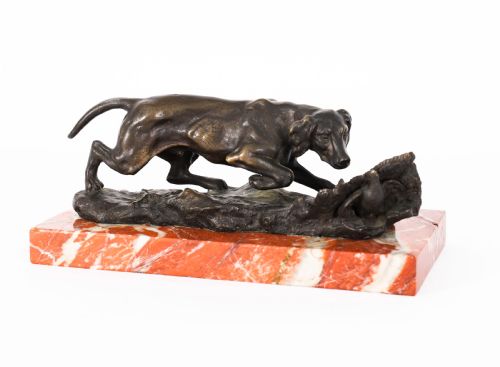
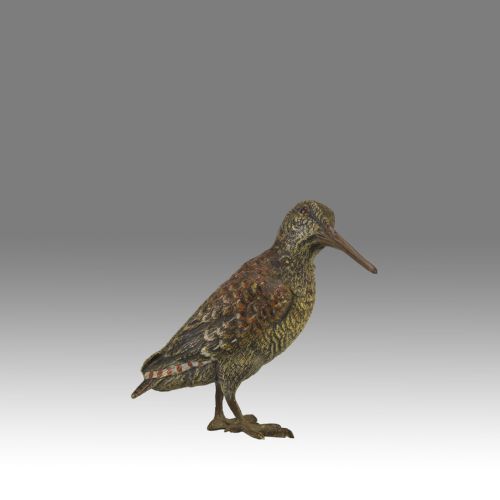
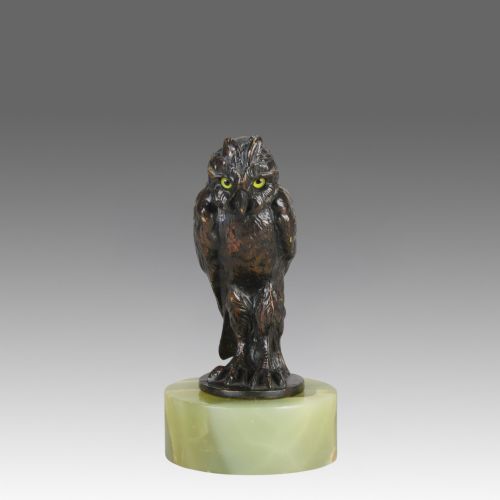
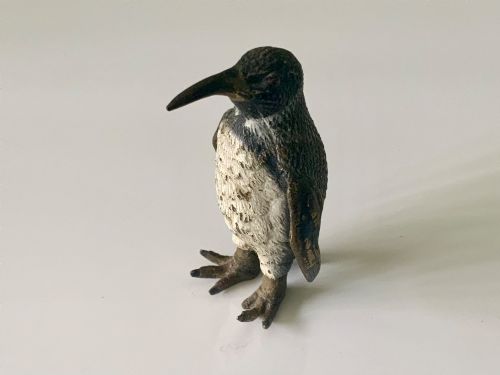
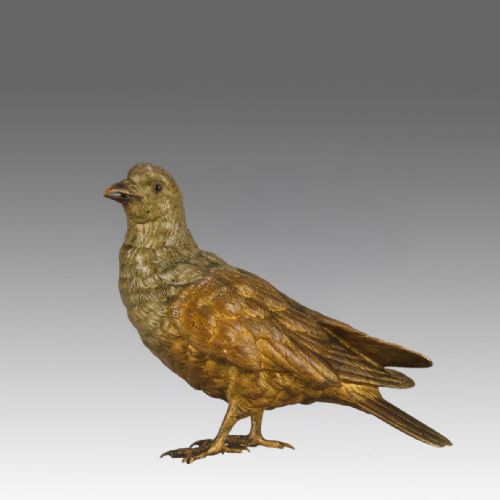
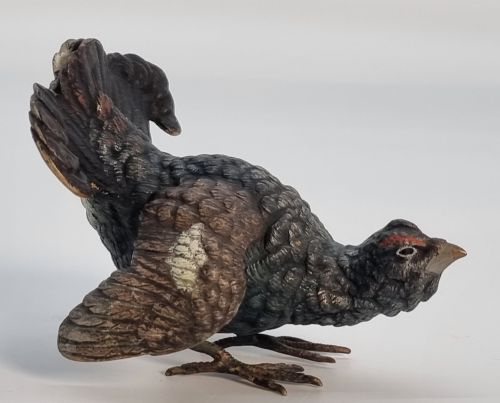
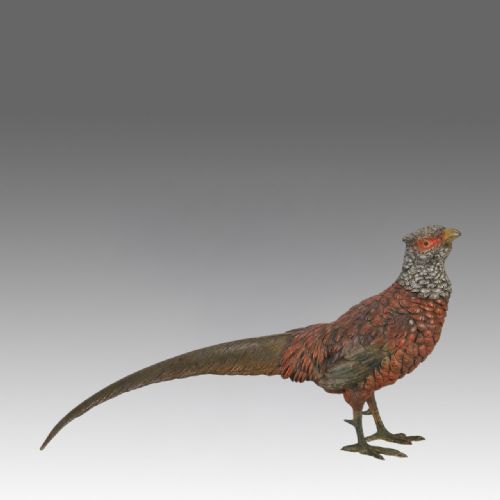
When you search for austrian bronze birds, you encounter sculptures and figurines depicting an array of avian subjects, from game birds like pheasants and grouse to smaller garden birds such as budgerigars and owls. These pieces frequently manifest as singular animalier studies, though occasional pairs or complex nest scenes appear within the selection.
The majority of these pieces originate from the late nineteenth century and early decades of the twentieth century. Production spans the Victorian era through the Art Nouveau and Art Deco periods, encompassing both cabinet bronzes and functional desk accessories like pin trays.
Many examples adhere to the Viennese animalier tradition, portraying subjects with acute anatomical observation. Naturalistic plumage and lifelike postures dominate the offerings, whether the subject stands independently or mounts a stone base.
How they were made
Foundries manufactured these sculptures using traditional bronze casting methods before applying pigment by hand. Artisans utilised cold-painting techniques, meaning the enamel or polychrome paint was applied to the cured metal without subsequent firing.
Certain pieces integrate natural stone elements, mounting the metal figures onto bases fashioned from marble, onyx, or quartz rock. This combination of cast bronze and polished mineral provides substantial weight and a contrasting textural backdrop for the painted feathers.
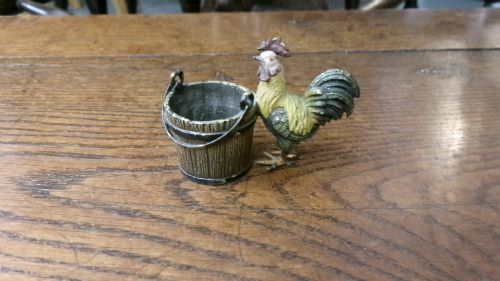
A tiny cockerel stands ready for action alongside its own miniature bucket.
What varies in quality
The sophistication of the hand-applied cold paint largely dictates the distinction between standard and exceptional pieces. Finely rendered polychrome feather detailing and well-preserved enamel surfaces elevate a sculpture's visual impact.
Sculptural precision and the naturalism of the bird's pose also define the hierarchy. Dynamic casting work that captures subtle anatomical nuances separates master foundry output from simpler production.
Carl Kauba·Franz Bergman·Franz Xaver Bergmann
The Austrian Bronze Birds Glossary
- Cold-Painted Bronze
- A bronze sculpture decorated with paint applied directly to the cold metal surface rather than fired in a kiln. This technique allows for subtle, polychrome colouration.
- Vienna Bronze
- Small-scale metal sculptures produced in Austrian foundries during the late nineteenth and early twentieth centuries. These works are celebrated for their naturalistic animal subjects.
- Animalier
- Artworks depicting realistic animals in their natural states or poses. The genre gained immense popularity across Europe during the nineteenth century.
- Art Nouveau
- A decorative style prevalent from the late nineteenth century until the First World War, characterised by fluid, organic lines. Traces of this aesthetic occasionally influence the bases or settings of bronze figures.
- Pin Tray
- A small shallow dish designed for holding pins, often adapted to incorporate a bronze animal figure. These serve as functional desk accessories from the period.
Austrian Bronze Birds: Frequently Asked Questions
Are these birds mounted on bases?
Several pieces are mounted on natural stone plinths made from materials like marble, onyx, or quartz rock.
Others are cast to stand entirely on their own feet as standalone cabinet sculptures or desk accessories.
What bird species are usually depicted?
Sculptors favoured a wide variety of avian subjects, ranging from common garden birds to game species.
Commonly encountered forms include pheasants, grouse, owls, woodcock, and smaller songbirds like budgerigars.
How can I tell the period?
Examine the casting quality, the style of the paintwork, and the specific materials used for any accompanying stone plinths.
Parks of production typically align with nineteenth-century manufacturing methods and early twentieth-century design movements.