


Green Cold Painted Bronze
Green cold painted bronze sculptures and figurines bring miniature wildlife and human figures to life with vivid enamel colours.
Green Cold Painted Bronze
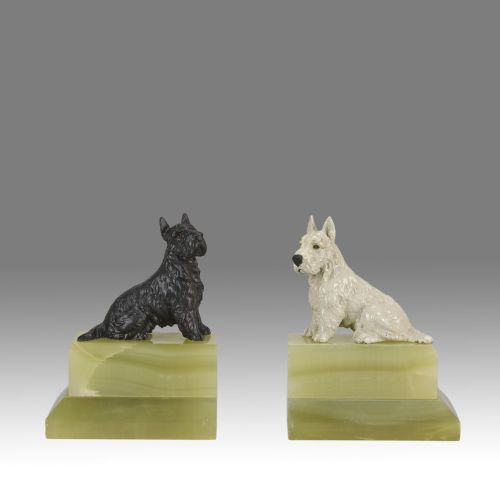
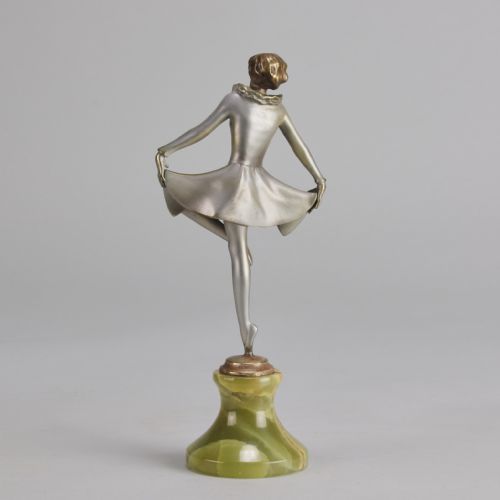
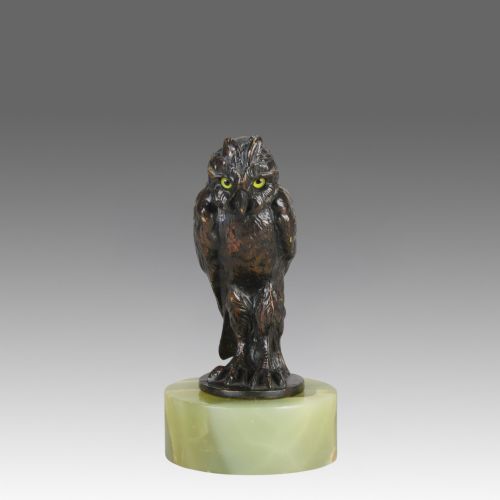
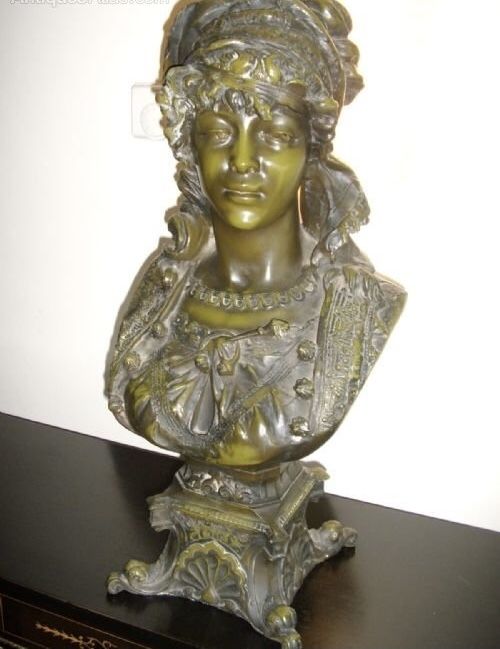
Green cold painted bronze objects include small animal studies, human figures, bookends, and desk accessories originating from periods such as the Victorian era, the nineteenth century, and the early twentieth century. Buyers encounter Austrian and Viennese works alongside French pieces, featuring styles like Art Deco, Art Nouveau, and Orientalism. These items range from single animal figurines to complex sculptural groups mounted on stone bases.
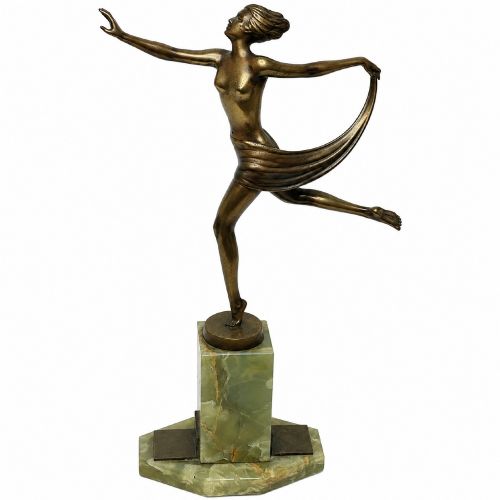
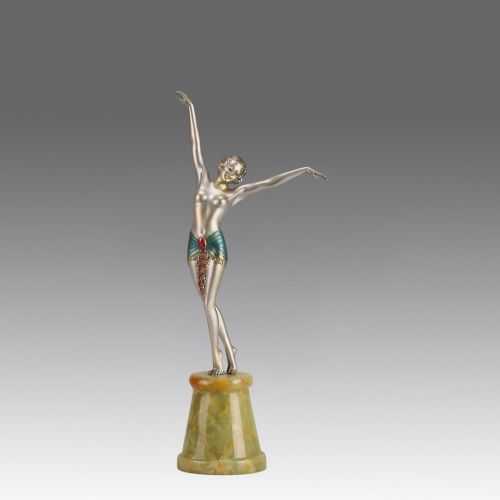
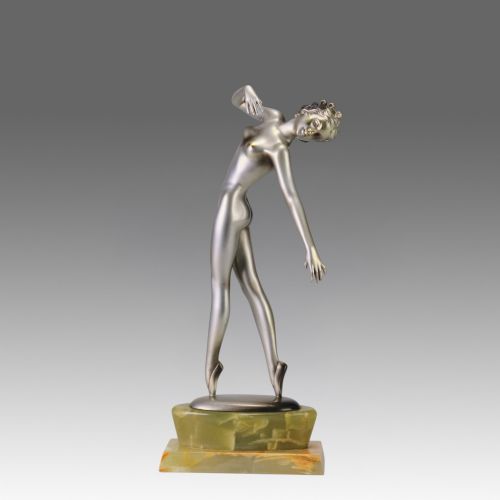
The most common forms on this page are animal studies and human figures, particularly dancers and figurines by makers associated with Austrian workshops. Many pieces incorporate functional elements, serving as bookends, desk tidies, oil lamps, pin trays, and vide poche or pen holders. Bases frequently utilise green onyx and marble to support the metal figures.
Materials and technique
These pieces begin as cast metal sculptures formed in bronze, sometimes accompanied by plomb de Nuremberg. The metal receives surface detail through chiselling and engraving before the application of paint. Artisans utilise cold painting techniques, applying unfired paint directly onto the metal surface rather than using traditional kiln firing.
Colour is added using oil-based paints or enamels, which sit on top of the bronze. Many figures are mounted onto natural stone plinths made from green onyx or marble using mechanical fixings.
Materials recorded across these objects include bronze, cold paint, enamel, green onyx, and marble, configured as sculptures, lamps, and desk accessories.
Judging quality
The choice of mounting materials influences the overall character of the piece. High-grade works feature carefully selected green onyx or marble bases that complement the sculpture, while simpler items rely on the bronze figure alone or basic plinths.
Josef Lorenzl·Franz Bergman·Henry Wissen Senior·Bruno Zach
The Green Cold Painted Bronze Glossary
- Cold-Painted Bronze
- Bronze sculpture decorated with paint applied without heat, usually oil-based or enamel. This technique allows for vibrant polychrome finishes on small decorative metalwork.
- Vienna Bronze
- Small bronze sculptures produced by Viennese foundries, notably during the late nineteenth and early twentieth centuries. These pieces are celebrated for naturalistic animal studies and human figures.
- Onyx
- A banded variety of chalcedony used frequently as a heavy base for desk accessories and sculptures. Green onyx provides a contrasting plinth for bronze figures.
- Vide Poche
- A small tray or receptacle designed for emptying pockets, often integrated into desk tidies and pen holders. They frequently feature bronze animal or human figures.
- Art Deco
- A design style spanning the 1920s and 1930s characterised by streamlined forms and geometric abstraction. Figures from this period often depict dancers and modern clothing.
Green Cold Painted Bronze: Frequently Asked Questions
What is green cold painted bronze?
It is cast bronze sculpture decorated with unfired paint or enamel, featuring prominent green tones in either the subject matter or the mounting.
These pieces encompass small animal studies, human figures, and functional desk items produced primarily in Austria and France during the late nineteenth and early twentieth centuries.
How were these bronzes painted?
Artisans applied oil-based paints or enamels directly to the cold metal surface without subsequent kiln firing.
This cold-painting method produced rich polychrome finishes that captured fine details on miniature figures and animal studies.
How do I display them at home?
These small sculptures suit placement on desks, shelves, and mantelpieces where their detailed painting can be appreciated closely.
Many incorporate practical functions like bookends, pin trays, or pen holders, allowing them to serve active roles in a study or living space.
What styles are represented here?
The selection includes Victorian, Edwardian, Art Nouveau, and Art Deco designs alongside Austrian and Viennese productions.
Subjects range from naturalistic birds and animals to Orientalist figures and stylized dancers from the interwar period.