
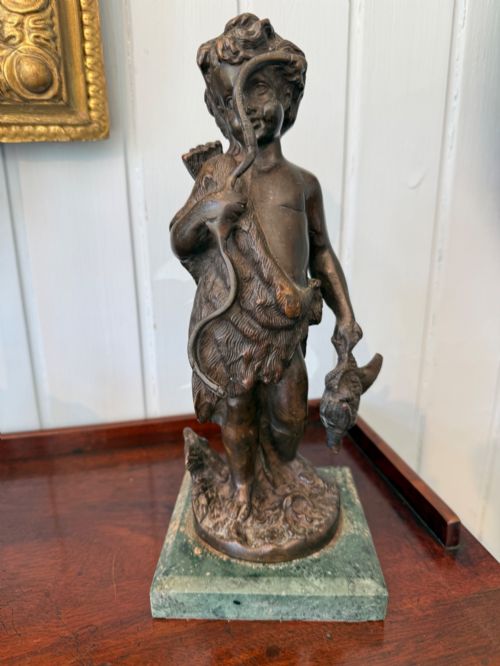
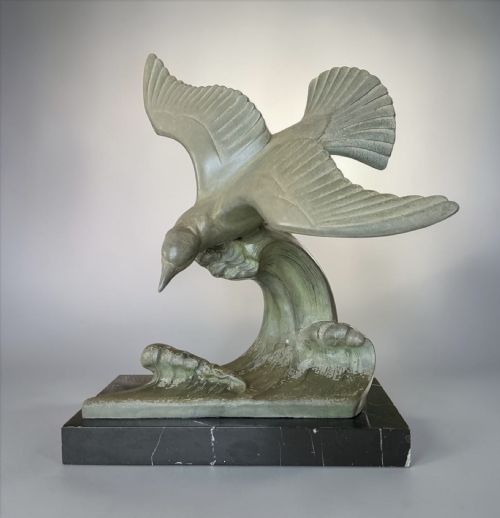
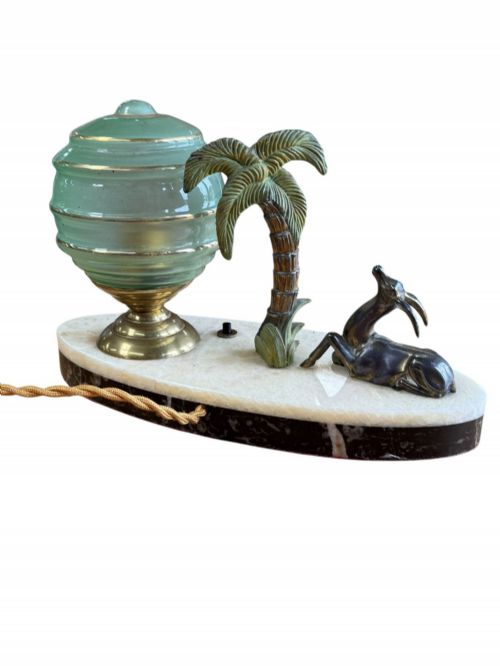


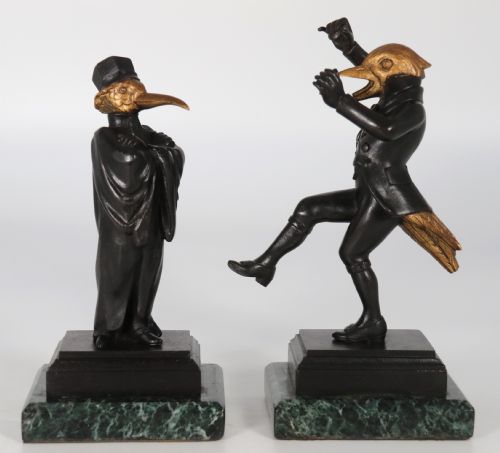
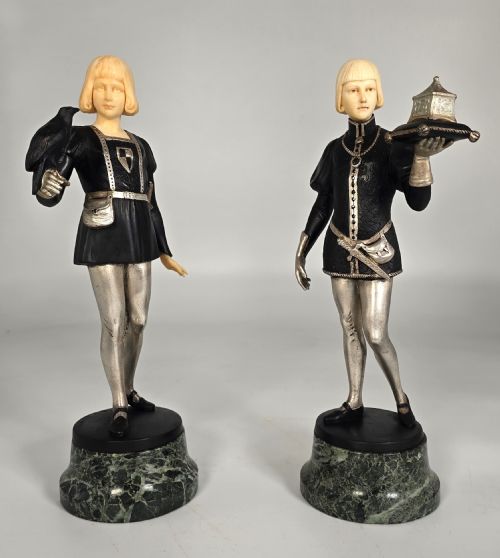





Green Marble Base Figurine
A green marble base figurine combines metal casting with stone support, offering a sturdy mounting for subjects ranging from classical figures to Art Deco dancers.
Green Marble Base Figurine
A green marble base figurine typically presents a cast metal subject mounted securely onto a polished stone plinth. These pieces emerge from the nineteenth and twentieth centuries, spanning periods from Victorian production through the Art Deco era.
The subjects mounted upon these green marble bases vary widely across the available pieces. You encounter mythological figures, animal studies, human dancers, and practical objects such as table lamps and car mascots.
The forms originate largely from European workshops, notably French and Austrian foundries. They reflect distinct aesthetic movements including Neoclassical, Art Nouveau, and French Animalier styles alongside Grand Tour souvenirs.
Materials and construction
The upper figures are produced using metal casting techniques. Workshops utilise bronze, silvered bronze, brass, spelter, and patinated metal to form the subjects.
The plinths are fashioned from quarried marble and onyx. These stone bases are cut, shaped, and polished to provide a stable foundation for the metal sculptures fixed upon them.
Materials recorded across the inventory include solid bronze, silvered bronze, brass, spelter, patinated metal, marble, and onyx.
Assessing quality
Quality rests upon the precision of the metal casting and the crispness of the chisel work. Finer figures display sharp anatomical details and clean finishing without surface pitting.
The selection and preparation of the green marble base also influence the overall standard. Superior examples feature dense stone with harmonious veining fitted neatly to the metal sculpture.
Delabrierre·Gotthilf Jaeger·Paul-Édouard Delabrièrre·C Masson·Willems·Josef Lorenzl·P.MAREC·E.Drouot·Pierre le Faguays·Jose Dunach·L.Bureau
The Green Marble Base Figurine Glossary
- Spelter
- An alloy of zinc and lead or copper used as a cost-effective alternative to bronze in decorative metalwork. It takes patination well but is softer than bronze.
- Patinated metal
- Metal treated with chemicals and heat to produce a stable surface colour or aged finish. This coating protects the underlying material and enhances visual depth.
- Grand Tour
- A nineteenth-century tradition where travellers collected classical bronzes and antiquities as souvenirs of European journeys. These items often copy ancient statues.
- Car mascot
- A small sculpture mounted on the radiator cap of an automobile during the early twentieth century. Many were later detached and mounted on stone bases for display.
Green Marble Base Figurine: Frequently Asked Questions
What metals are used for these figures?
The upper sculptures utilise bronze, silvered bronze, brass, and patinated metal alongside alternative alloys like spelter. Each metal responds differently to finishing and patination techniques.
Bronze remains the most durable and prized metal used by the foundries, while spelter offers a lighter, more affordable composition found in various Victorian and Art Deco pieces.
How do I care for the marble base?
Keep the stone clean by dusting it with a dry, soft cloth. Avoid using harsh chemical cleaners or abrasive materials that can scratch the polished surface.
Moisture can penetrate unsealed stone, so ensure that any liquid spills are wiped away immediately to prevent staining the green marble.
Are these figures attached permanently?
Most metal figures are secured to the green marble base using threaded rods, screws, or pins that pass through the stone from underneath. This method holds the heavy components firmly together.
Over decades, these fixings can loosen with handling, so check the stability of the junction gently without applying twisting force to the upper sculpture.
How can I distinguish Art Deco pieces?
Art Deco pieces typically display stylised geometries, streamlined clothing, and dynamic poses associated with the nineteen-thirties. The figures often feature dancers, athletes, or sleek animals.
In contrast, nineteenth-century examples lean towards classical realism, mythological subjects, or detailed naturalism found in animalier studies and Grand Tour souvenirs.