
Antique Oriental Cloisonne
Antique oriental cloisonne unites metalwork and coloured glass enamel in vessels, chargers, and lamps spanning the nineteenth and early twentieth centuries.
Antique Oriental Cloisonne
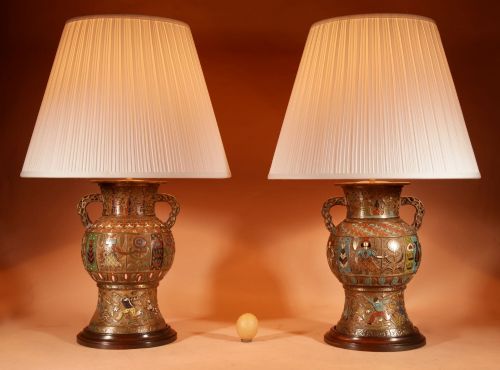
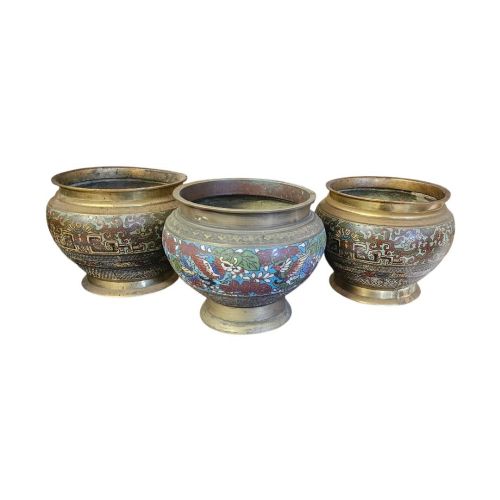
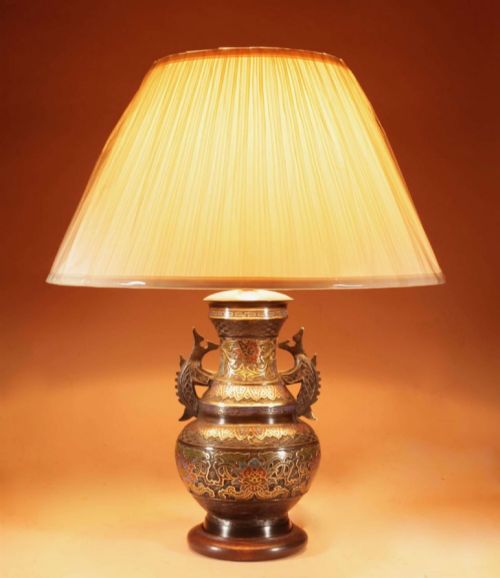
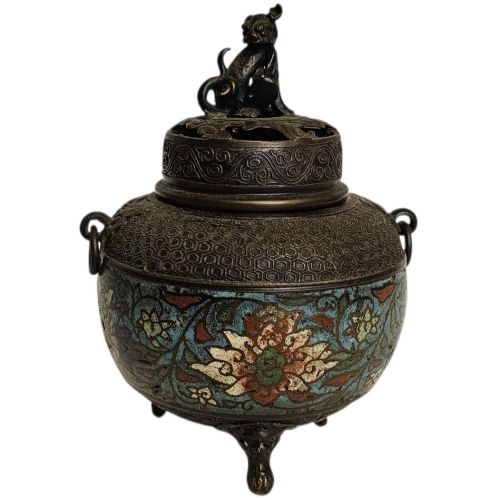
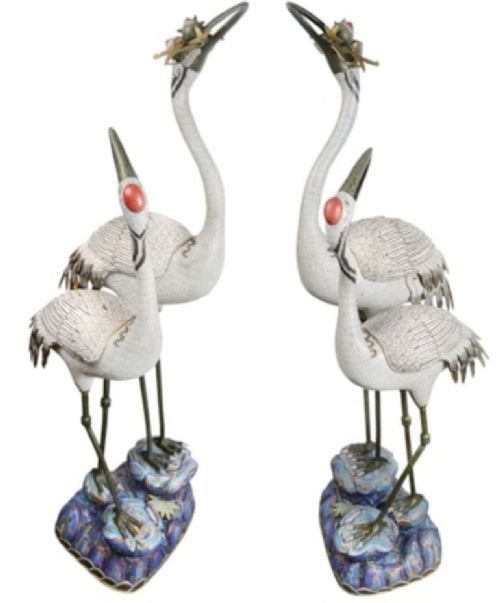
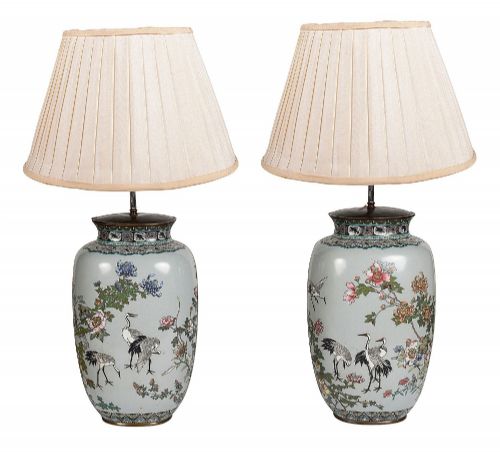
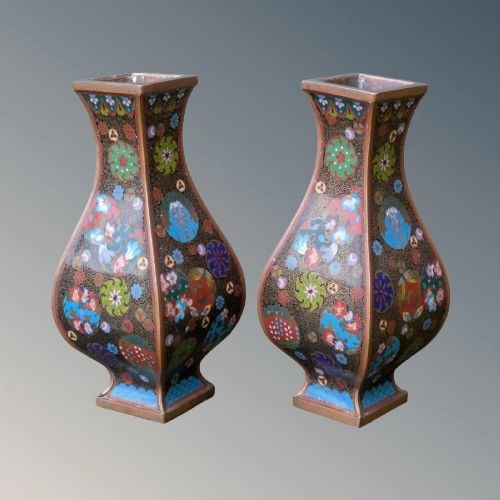
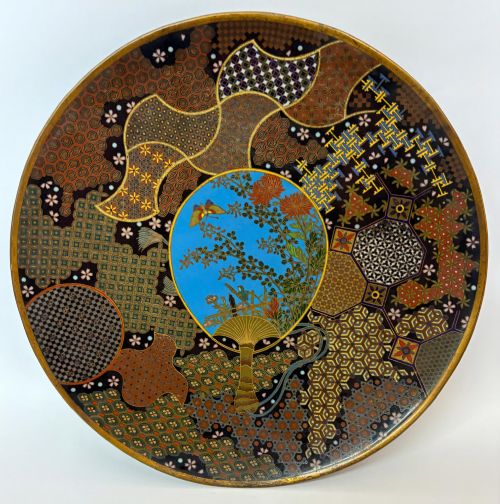
Antique oriental cloisonne encompasses decorative objects made with metal wires soldered to a foundation, creating cells that are filled with coloured enamel paste and fired. The selection includes vases, large chargers, incense burners, and table lamps originating from Chinese and Japanese workshops.
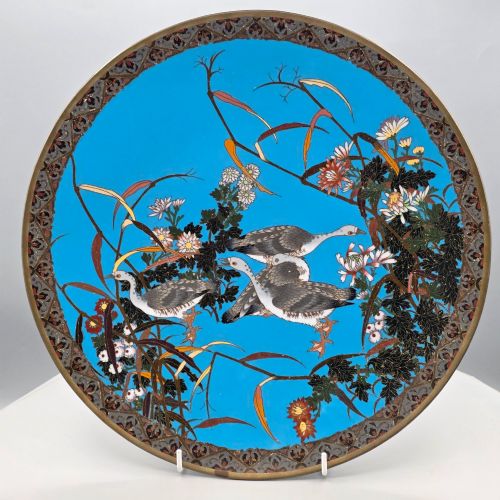
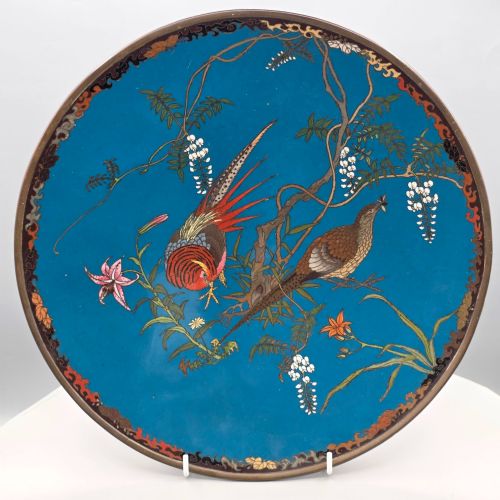
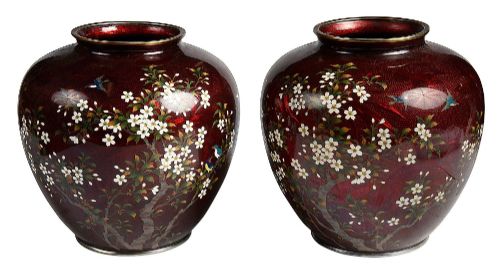
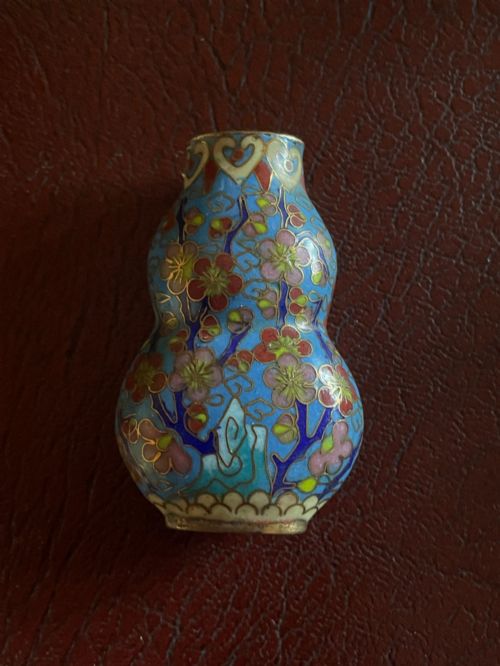
The objects derive from periods spanning the nineteenth and early twentieth centuries, particularly the Meiji period and the Qing dynasty. Buyers frequently encounter chargers depicting birds, flowers, and landscapes alongside miniature vases and lidded pots.
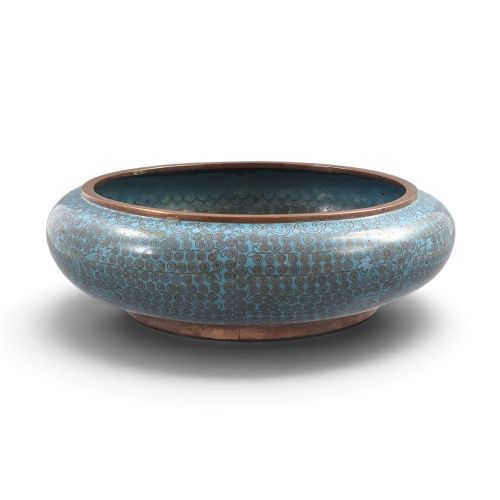
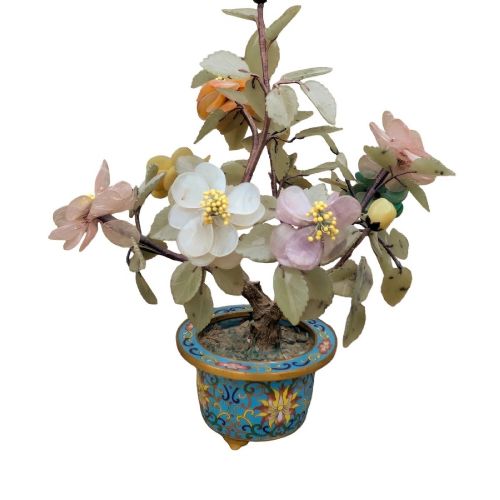
Form and function vary from scholar's brush washers and hanging boat koro to side tables and carved bonsai trees incorporating hardstone. These items merge utility with intricate surface decoration created through traditional metalwork techniques.
How they were made
Artisans formed the body of each vessel using copper, brass, or bronze, shaping bases, plates, and vases before applying the metallic wire grid. Thin copper or silver wires were bent into complex pictorial patterns to form the individual cloisons.
Workers packed coloured vitreous enamel pastes into the cells created by the wire framework before firing the piece in a kiln. Successive firings built up the enamel surface, which was subsequently ground down and polished to achieve a smooth finish flush with the wire partitions.
What varies in quality
The refinement of the wirework dictates the visual precision of the design, with thinner lines and denser cell patterns demanding greater technical skill. Artisans who maintained absolute uniformity across complex pictorial surfaces produced works of superior visual depth.
Enamel purity and the subtlety of colour graduation distinguish standard decorative wares from exceptional items. Mastery of kiln temperatures prevented discolouration or pitting within the glass paste, yielding a more resonant surface lustre.
Ando Jubei
The Antique Oriental Cloisonne Glossary
- Cloisonne
- A decorative metalwork technique where fine wires form raised barriers on a metallic body to contain compartments of coloured glass enamel. This method creates detailed pictorial and geometric motifs across vases and chargers.
- Champleve
- A technique where troughs or cells are carved or cast directly into a bronze or brass foundation rather than building up wires on the surface. These recessed channels are subsequently filled with enamel and fired.
- Meiji Period
- The era of Japanese history spanning from 1868 to 1912, noted for technical advancements in metalwork and enamel production. Pieces from this time frequently display naturalistic subjects such as birds, flowers, and landscapes.
- Ginbari
- A Japanese enamelling technique featuring a textured or foiled background beneath transparent enamel, creating a patterned reflective depth. This method is often paired with silver wire work on vases.
- Koro
- A traditional incense burner featuring a perforated lid or hanging mechanism used in domestic and ceremonial settings. These bronze and enamel vessels often take distinctive forms such as boats or tripod bowls.
Antique Oriental Cloisonne: Frequently Asked Questions
How do I clean antique oriental cloisonne?
Dust surfaces gently with a soft, dry cloth to prevent accumulation within the wire crevices. Avoid liquid cleaners and harsh abrasives that can damage the exposed metal wires and historical enamel.
Keep pieces away from direct sunlight and areas prone to extreme humidity or temperature fluctuations. Stable indoor conditions preserve the integrity of the metal foundation and the vitreous enamel.
Are these pieces Chinese or Japanese?
The selection includes items from both Chinese and Japanese traditions, spanning the Qing dynasty and the Meiji period. Chinese works frequently feature bronze tripod censers, scholar's items, and formal decorative vessels.
Japanese examples often highlight naturalistic motifs such as chargers with birds, Mount Fuji, and detailed floral arrangements. Maker signatures and stylistic conventions help distinguish the origin of individual pieces.
How are lamps converted from vases?
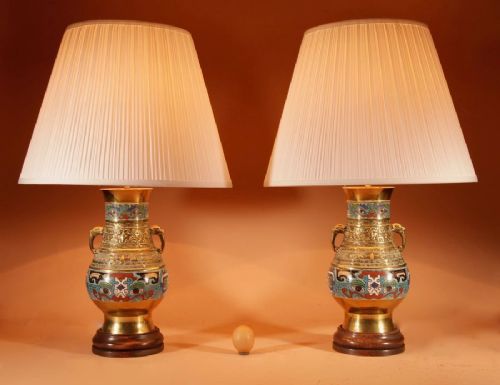
Many items listed as table lamps began as vases or bronze vessels that were later adapted for modern electrical use. These conversions typically incorporate fitted bases and wiring while retaining the original cloisonne body.
Inspectors can evaluate whether the mounting methods preserved the underlying metal and enamel structure. Such adaptations allowed decorative vessels to serve functional roles in domestic interiors.
What are the common motifs found?
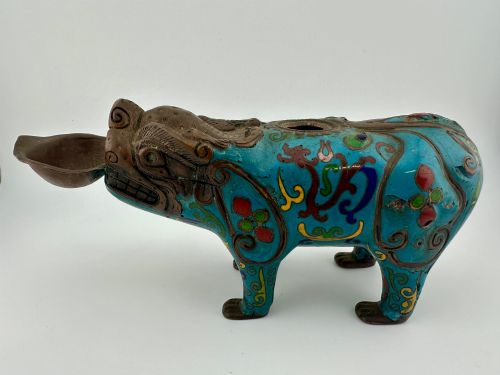
Decorative schemes frequently incorporate flora and fauna, including chrysanthemums, prunus branches, geese, owls, and phoenix birds. Landscapes and mythological beasts such as dragons and qilin lions also appear across chargers and jars.
Symbolic objects and auspicious signs reflect traditional iconography from East Asian art. These detailed compositions required precise wire placement during the initial manufacturing stage.