





Chinese Cloisonne Pair
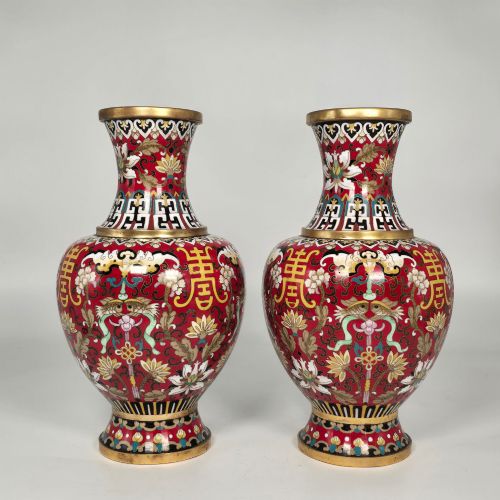
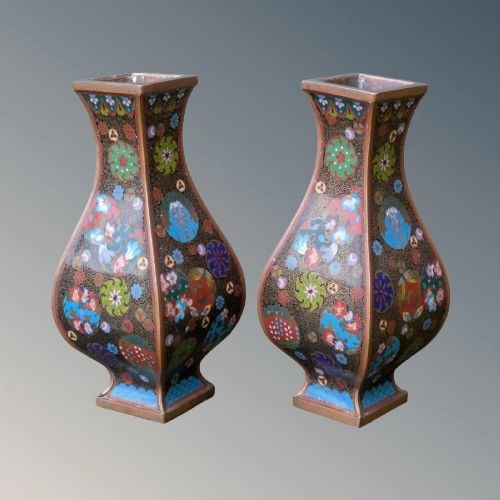
A Chinese cloisonne pair brings matching symmetry and vibrant metalwork into a room, offering coordinated decoration from the nineteenth and early twentieth centuries.
Chinese Cloisonne Pair
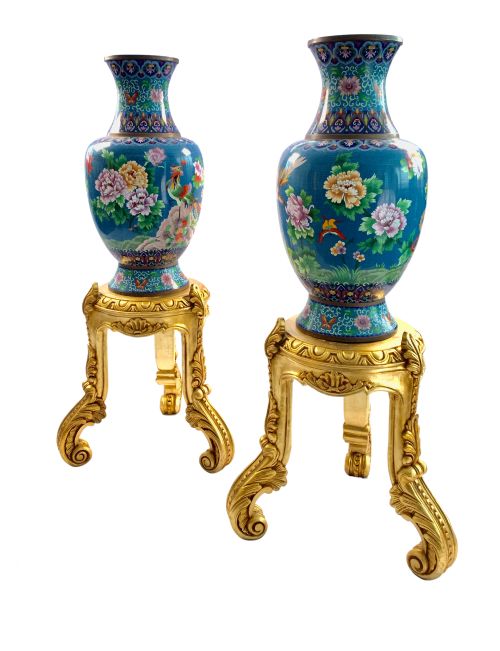
When searching for a chinese cloisonne pair, collectors encounter matching sets of decorative objects designed to sit together in balanced harmony. The selections span standard baluster vessels, lidded jars, and sculptural figures alongside pieces adapted into table lamps or paired with wooden stands.
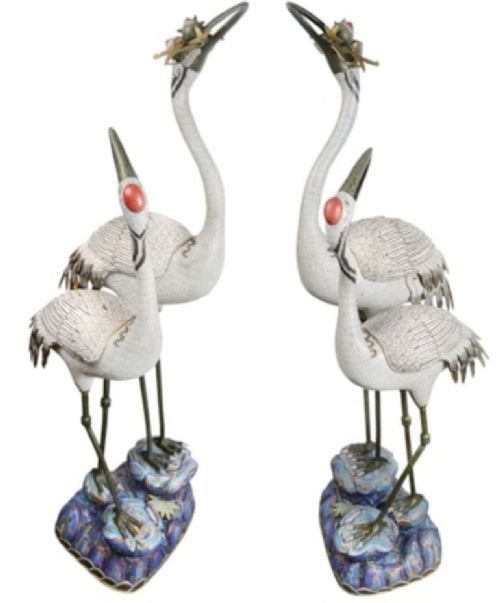
Vessels dominate the available forms, ranging from nineteenth-century vases and censors to early twentieth-century examples shaped as cranes, quails, and elephants. Side tables incorporating lacquer and enamel surfaces also appear among the dual configurations recorded in past and present holdings.
Materials and construction methods
The technique relies on soldering thin metal wire onto a base of brass, copper, or bronze to form raised compartments known as cloisons. Artisans fill these enclosed cells with coloured enamel paste before firing the piece and polishing the surface until the metal lines and glass paste rest in a smooth plane.
Secondary elements involve gilt bronze, ormolu mounts, and wooden bases that support the heavy metal bodies. Lacquered wood structures combine with the enamel panels on furniture items, while other specimens incorporate fabric shades when converted into lighting.
Chinese Cloisonne Pair Retail Price Guide 2026
Typical asking prices for chinese cloisonne pair among the pieces listed under this phrase on Sellingantiques today, from the lower quarter to the upper quarter. They describe what is for sale here now, not the wider market.
Metal quails and majestic cranes stand ready to guard the mantelpiece in pairs.
Distinctions in craftsmanship
Superior examples display precise wirework where the metal strands remain uniform in thickness and securely anchored to the underlying bronze or copper body. The enamel fills settle evenly without excessive pitting or shrinking between the delicate partitions.
The refinement of the decorative motifs and the richness of the colour palette separate standard decorative objects from finer specimens. Matching symmetry between the two items determines the visual success of the set.
The Chinese Cloisonne Pair Glossary
- Cloisonne enamel
- A decorative metalwork technique where thin wires form cells that hold coloured paste before firing. This method creates patterned surfaces across vases, animals, and vessels.
- Champleve
- An enamel technique where troughs or cavities are carved directly into the metal surface to receive the coloured paste rather than soldered wire partitions. It appears on selected vases.
- Ormolu
- Gilded bronze mounts applied to decorative objects, lamps, and furniture. This material provides structural accents and feet for nineteenth-century vessels.
- Censor
- An incense burner designed with a pierced lid or open top for ritual or decorative use. These vessels frequently feature matching counterparts.
- Tazza
- A shallow-footed bowl raised on a central pedestal base. Examples occur in nineteenth-century enamel configurations.
Chinese Cloisonne Pair: Frequently Asked Questions
How do I care for cloisonne pieces?
Dust the surface gently with a soft, dry cloth to prevent any accumulation of grime within the wire channels. Avoid using harsh chemical cleaners or abrasive materials that could scratch the polished enamel and metal.
Keep the items away from direct sunlight and damp environments to protect the underlying bronze, copper, or wooden components. Stable indoor conditions help preserve both the metallic sheen and the coloured paste.
Were these objects always made as lamps?
Many vessels began life as decorative vases, censors, or jars before being converted into lighting during later decades. Wiring was frequently added to nineteenth and early twentieth-century pieces to suit contemporary domestic interiors.
Original decorative functions remain evident where lidded vessels or sculptural figures retain their initial configuration without electrical fittings. Conversion is a common modification seen across the surviving items.
How can I distinguish different periods?
Nineteenth-century examples often display heavier bronze or brass foundations with deep, complex enamel palettes and meticulous wire placement. Pieces from around nineteen-hundred into the nineteen-twenties frequently show shifts in scale and modified mounting styles.
Examining the base and interior finish provides clues regarding the age and manufacturing techniques employed by the workshop. Stylistic markers align with Qing dynasty traditions or later decorative adaptations.
What subjects are common in the designs?
Floral motifs, particularly chrysanthemums, frequently cover the background surfaces of vases and jars. Animal forms including cranes, quails, and elephants also appear as sculptural pairs.
Imperial and export styles dictate the visual vocabulary, drawing on traditional Chinese decorative art themes. Symmetrical compositions ensure each half of the set mirrors the other's pictorial elements.