





Pair Vintage Enamel Vases
These pair vintage enamel vases bring rich colour and decorative metalwork into a room, spanning Japanese Meiji works to Victorian English glass.
Pair Vintage Enamel Vases
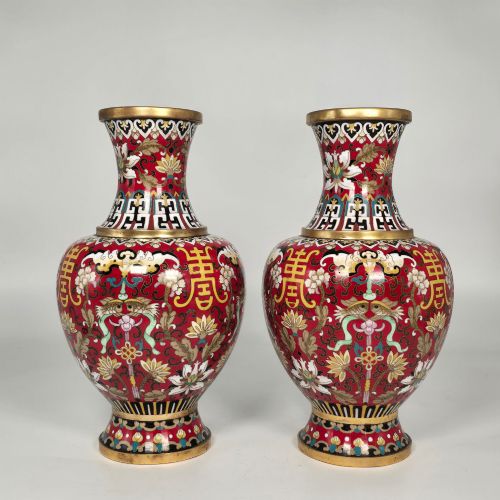
When you search for pair vintage enamel vases, you encounter matched sets of decorative vessels created across the nineteenth and twentieth centuries. These objects range from miniature creations to substantial mantel pieces, originating chiefly from workshops in Japan, China, and Europe.
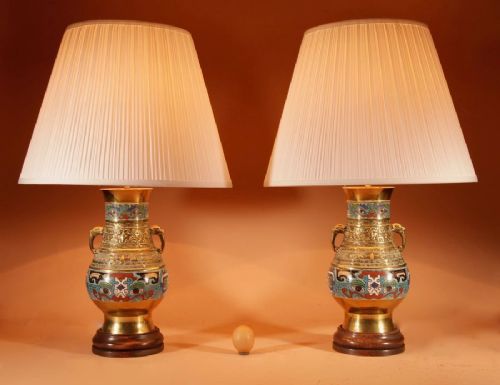
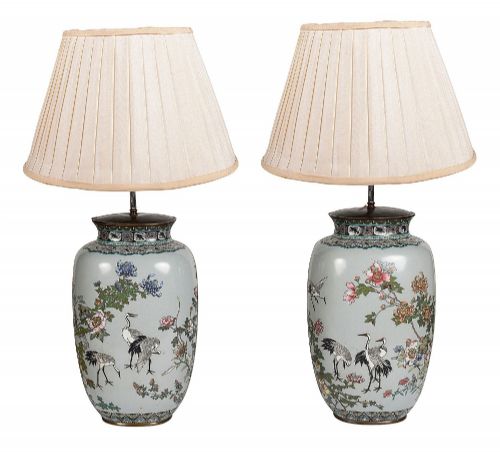
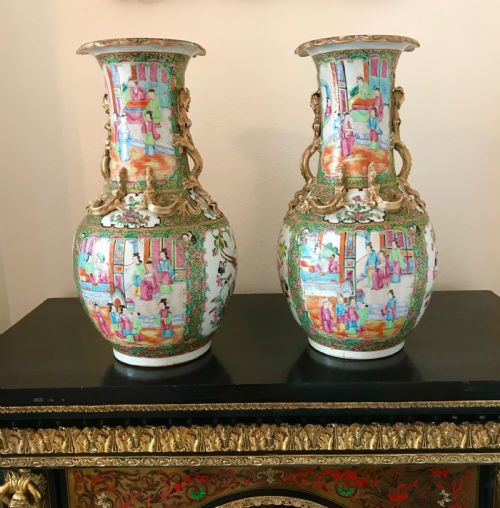
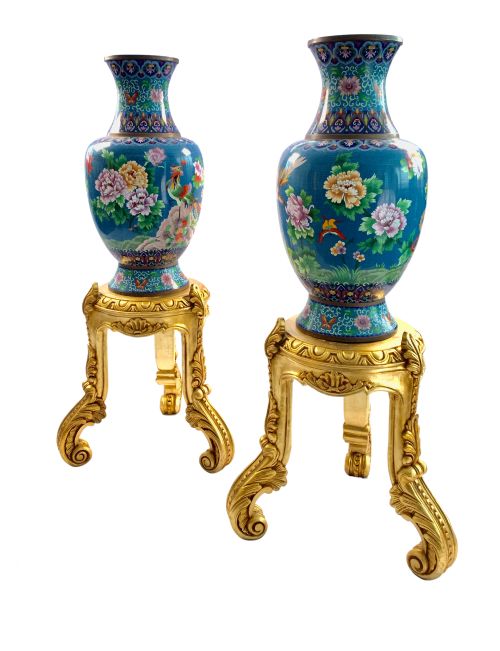
The selections on this page are dominated by Japanese cloisonne and Chinese enamel pieces dating from the Victorian and Edwardian eras, alongside European glass and porcelain. Buyers frequently find these items adapted into table lamps or preserved in their original lidded and vase forms.
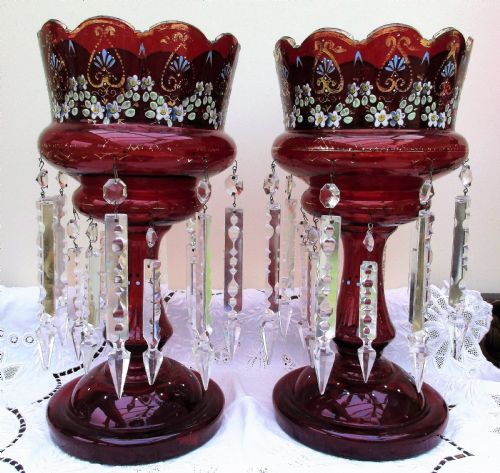
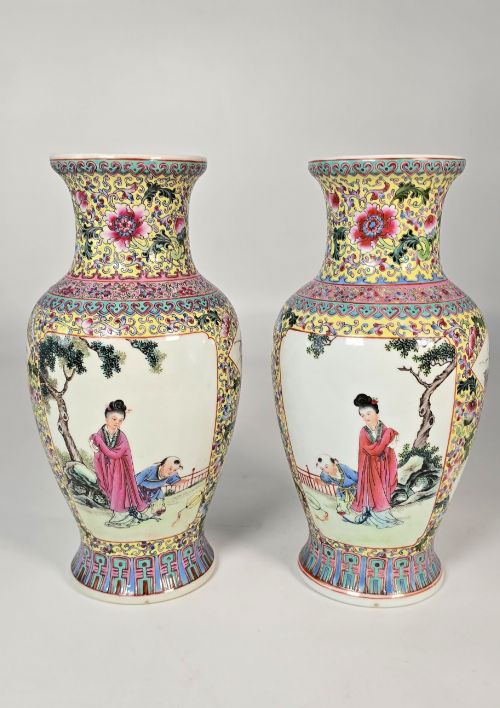
English and French makers also contribute to the selection through ruby glass lustres and hand-painted floral ceramics carrying raised enamel decoration. Each pairing offers symmetrical display potential for mantelpieces, sideboards, and occasional tables.
How they were made
Metal vessels take form through hammered brass, copper, or bronze foundations, providing a sturdy base for intricate surface decoration. Artisans apply fine wire partitions to outline motifs before fusing coloured enamel pastes into the resulting cells.
Ceramic and glass examples incorporate hand-painted pigments and raised enamel details fired onto porcelain, stoneware, or coloured glass bodies. Ormolu mounts and gilt accents frequently finish the rims and bases of these decorative items.
Pair Vintage Enamel Vases Retail Price Guide 2026
Typical asking prices for pair vintage enamel vases among the pieces listed under this phrase on Sellingantiques today, from the lower quarter to the upper quarter. They describe what is for sale here now, not the wider market.
Materials represented include cloisonne enamel, brass, copper, porcelain, stoneware, and ruby glass with gold leaf accents.
What varies in quality
The precision and complexity of the wirework in cloisonne pieces separate standard output from finer studio productions. Tighter cell alignment and smoother enamel polishing indicate greater craftsmanship by the maker.
Hand-painted depth and the richness of colour saturation distinguish superior porcelain and glass vessels from simpler decorative wares. The inclusion of original covers, matched proportions, and intact gilt or ormolu mounts elevates the standing of a pair.
Hakusan·Samson, Paris·Royal Doulton Lambeth
The Pair Vintage Enamel Vases Glossary
- Cloisonne enamel
- A decorative metalwork technique where thin metal wires form raised cells that hold coloured glass paste before firing. This method creates intricate patterns across vases and jars.
- Champleve
- An enamelling process where troughs or cavities are hollowed out of a metal surface to receive vitreous enamel colour. The surrounding metal remains visible as part of the design.
- Mantel lustre
- A decorative glass or porcelain vase hung with cut glass prisms, designed for display on a mantelpiece. Victorian examples often feature hand-painted floral motifs and ruby glass.
- Meiji period
- The era of Japanese history lasting from 1868 to 1912, known for exceptional metalwork and enamel production exported to Western markets. Pieces from this time show high technical skill.
- Ormolu
- Gilt bronze ornamentation applied to mounts, handles, and bases of decorative vessels. It adds a polished golden contrast to enamel and ceramic surfaces.
Pair Vintage Enamel Vases: Frequently Asked Questions
How do I identify Meiji period cloisonne?
Japanese pieces from the Meiji era display meticulous wirework forming complex floral and avian motifs across brass or copper bodies. The enamel surface often feels smooth and exhibits a subtle sheen rather than a heavy gloss.
Examining the base frequently reveals finished copper or counter-enamel work typical of nineteenth-century Japanese workshops. These items prioritised refined symmetry and detailed botanical imagery.
What is the difference between cloisonne and champleve?
Cloisonne relies on soldered wires applied to the surface of a metal vessel to create separate compartments for enamel pastes. This method produces crisp, fine outlines around every decorative element.
Champleve involves carving or etching the design directly into the thick metal body to form sunken channels for the enamel. The resulting lines appear broader and form part of the cast metal structure.
Can I safely use these vases as lamps?
Many antique enamel vessels arrive already converted into table lamps with wired fittings passing through the centre or mounted on bronze bases. This practice dates back to the late nineteenth and early twentieth centuries when households electrified gas lighting.
Careful placement away from direct heat protects the historic enamel and metal mounts from accidental damage. Professional rewiring ensures modern electrical safety while preserving the antique body.